
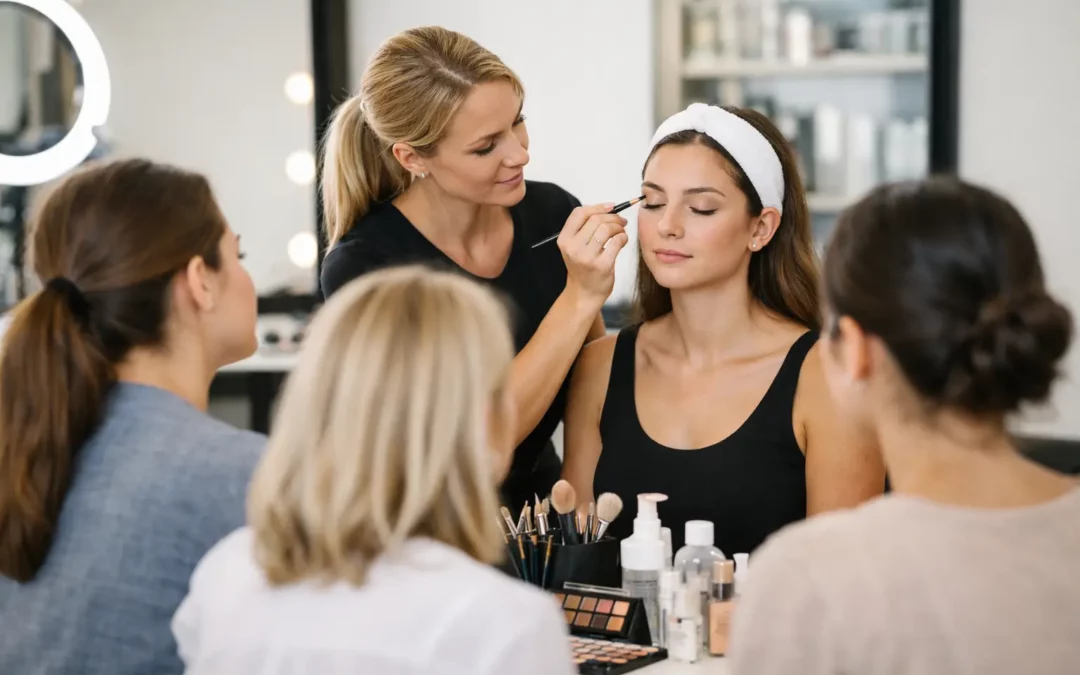
A packed training room can look impressive until it is your turn to hold tweezers, map a brow, or ask a question that actually affects someone’s face. That is where small class beauty training proves its value. In beauty education, the difference between “I watched it” and “I can do it safely and confidently” usually comes down to how much direct instruction you receive.
If you are investing in lash, brow, waxing, or permanent makeup education, class size is not a minor detail. It affects how much hands-on correction you get, how well your trainer can monitor sanitation, and whether you leave with real skill or just a certificate. For students who want a serious path into beauty, small classes are often the difference between a strong start and an expensive setback.
What small class beauty training actually changes
Beauty is not a theory-only industry. You can understand lash cycles, contraindications, pigment depth, or brow symmetry on paper and still struggle when a live model is in front of you. Technical services demand precision, judgment, and repetition under supervision.
In a smaller class, the trainer has time to catch the details that matter. They can see your hand position, your body posture, your tool control, and your setup. They can correct the angle of a waxing stick before you create unnecessary irritation, or stop a lash application habit that will slow you down for months if it goes unaddressed.
That level of attention is hard to fake. In larger classes, students often wait too long for feedback or receive broad advice that does not fully apply to their technique. Everyone hears the same general instruction, but not everyone gets coached through their own mistakes. Beauty work is too hands-on for that approach.
Small class beauty training and student safety
The beauty industry has no shortage of short-cut education. Some courses promise fast certification, low pricing, and instant income, but they skip the part that protects both the artist and the client – standards. When a class is too large, safety can become one more thing that gets rushed.
A qualified trainer should be able to monitor sanitation habits in real time. That includes glove use, workstation setup, cross-contamination prevention, tool handling, product dispensing, skin prep, and aftercare instruction. In services like facial waxing and permanent makeup, weak infection control habits are not small mistakes. They carry real risk.
Small classes make it easier to enforce professional discipline. Students are less likely to hide confusion, skip steps, or imitate poor habits from other beginners when the educator is actively present. That does not just create a better classroom. It helps build the kind of professional mindset clients trust.
Why hands-on correction matters more than extra seats
Many students compare courses by price first. That is understandable. Training is an investment, and most people are balancing tuition with equipment, licensing costs, and the pressure to start earning quickly. But a lower-cost class with limited attention can become more expensive if you need retraining, lose confidence, or perform services poorly.
Hands-on correction is what helps skills stick. Watching a brow lamination demonstration is useful. Performing it yourself while a trainer checks your timing, product placement, and processing decisions is what builds competence. The same is true for lash lifts, henna brows, waxing patterns, and permanent makeup fundamentals.
There is also a confidence factor that students underestimate. Real confidence does not come from being told you passed. It comes from doing the work correctly enough times, under enough supervision, that you know why you are making each decision. Smaller classes create more room for that repetition and feedback loop.
The business value of learning in a smaller class
The best beauty training should help you do more than complete a service. It should prepare you to build a reputation, retain clients, and protect your income. That business side is often where weak courses fall apart.
In a small class, students are more likely to ask practical questions they might avoid in a crowded room. How do you price a new service? How do you photograph results honestly? What should a consultation include? How do you handle a client who is not a candidate for treatment? These are business-building questions, not extras.
A trainer with fewer students can also speak more directly to your goals. Maybe you are a beginner trying to leave a traditional job. Maybe you already offer lashes and want to add brows. Maybe you want to expand into permanent makeup but need to understand regulation, healing expectations, and client screening first. Serious training should meet you where you are, not push everyone through the same generic formula.
That mentor-driven approach is one reason many students choose academies like Voila Academy over discount, high-volume training models. They are not looking for the fastest certificate. They are looking for education that supports actual career growth.
What to look for in a small class beauty training program
Not every course with a limited headcount is automatically high quality. Small classes only help if the instruction is structured, supervised, and taught by someone with real standards.
Start by looking at who is teaching. Is the trainer licensed where required, insured, and transparent about their professional background? Do they actively work in the services they teach? Can they explain sanitation, contraindications, and client safety clearly, or do they focus mostly on marketing language and social media appeal?
Then look at the training format. A strong course should include demonstration, guided practice, live feedback, and clear performance expectations. You should know whether you will work on mannequins, models, or both. You should also know what support exists after class, because new artists usually need reinforcement as they begin taking clients.
It is also worth asking how the class handles mistakes. Good educators do not embarrass students, but they do correct them. If a course promises a relaxed, easy day with guaranteed certification and no real evaluation, that is not a reassuring sign. Beauty services involve client trust, skin, eyes, and long-term results. Standards should be visible.
When small classes matter most
Small classes are especially valuable in services where precision and safety directly affect the outcome. Eyelash extensions require careful isolation, adhesive control, and client positioning. Lash lifts and tinting involve timing and product placement decisions that cannot be guessed. Brow services depend on symmetry, skin assessment, and clean execution. Permanent makeup carries even more responsibility because the work is advanced, invasive, and highly visible.
That said, small class training is not only for advanced services. Beginners often need it most. New students are still building hand skills, sanitation habits, and professional judgment. They need room to ask basic questions without feeling rushed or overlooked.
There are cases where larger formats can work well, especially for lecture-based topics such as theory refreshers, business workshops, or online education modules. But when the goal is technical skill development, smaller groups almost always give better conditions for learning.
The trade-off is real, and it is worth understanding
Small class beauty training is usually not the cheapest option. It may cost more because it requires more instructor time, more direct supervision, and more intentional course design. That can feel difficult if you are eager to get started and trying to keep expenses low.
But the cheaper route can carry hidden costs. Poor technique can damage client trust. Weak sanitation habits can create liability. Inconsistent results can slow your bookings. A rushed education can leave you spending more money later on mentorship, corrections, or additional training just to get where you hoped to be the first time.
The better question is not, “What is the lowest price?” It is, “What kind of training gives me the best chance to perform safely, earn confidently, and grow from here?” That is a very different standard.
Choose training that respects the career you want
If you want beauty to become a real source of income, independence, and professional pride, your education needs to reflect that goal. Small class beauty training sends a clear message: your technique matters, your safety standards matter, and your future clients deserve more than rushed instruction.
There is no shortcut that replaces supervision, repetition, and honest feedback. The right training environment should challenge you, support you, and prepare you to work at a level that protects both your reputation and your clients. When a program takes class size seriously, it is usually a sign that it takes your career seriously too.
Choose the room where you will actually be seen, corrected, and coached. That is where skill grows. That is also where confidence starts to become a business.