
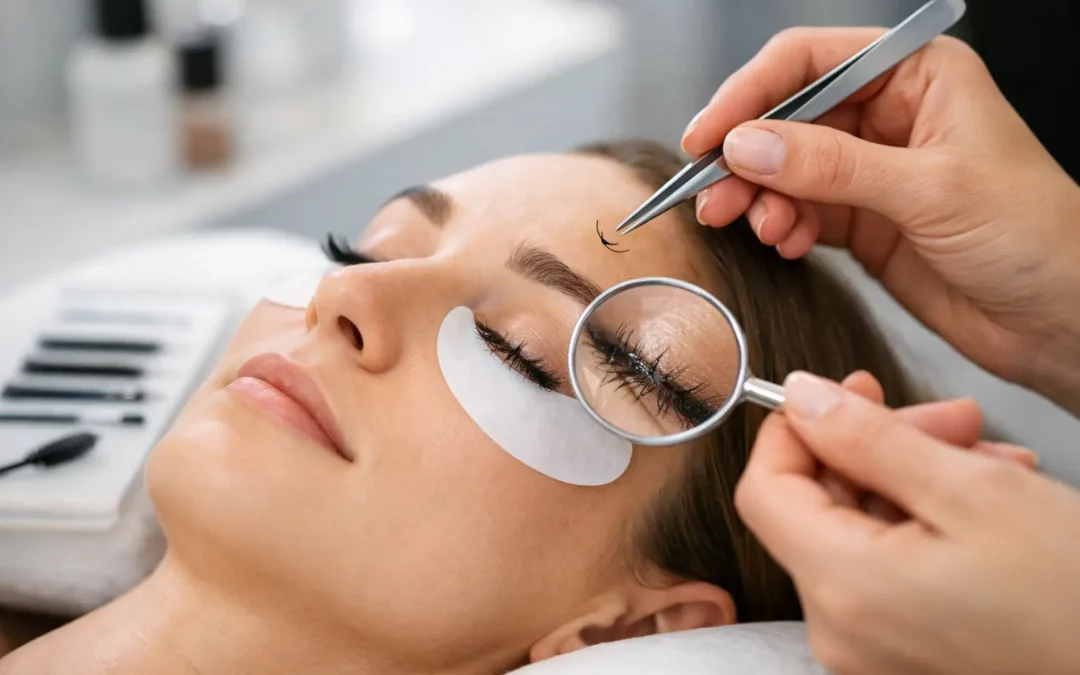
A client who returns after three days with sparse extensions is not just dealing with a cosmetic inconvenience. For a lash artist, it can affect trust, rebookings, referrals, and income. If you have been asking, “why do lash sets fail,” the answer is rarely one bad bottle of adhesive or one difficult client. Most retention problems begin earlier, in the technical decisions made before and during the appointment.
A lash set should not be judged only by how full it looks when the client leaves. It should be judged by attachment quality, lash health, styling suitability, client education, and how the work grows out over the next several weeks. Strong retention is a system, not a lucky result.
Why Do Lash Sets Fail? Start With the Attachment
The most common reason for premature shedding is poor attachment. An extension needs enough contact with the natural lash to remain stable through normal washing, sleep, makeup removal, and the natural lash growth cycle. When the bond is too short, too shallow, or sitting on only one side of the natural lash, it may look acceptable at the appointment but fail quickly.
This is especially common when a new artist is focused on speed. Rushing creates gaps in isolation, poor placement, and inconsistent adhesive control. A classic extension placed too far from the base may catch and twist. A volume fan that is too heavy or lacks a stable base may pop off. A narrow fan with too little bonding area may not hold as well as the same fan placed with correct wrap and contact.
Attachment is not one-size-fits-all. A straight natural lash, a highly curved lash, a downward-growing lash, and a fine baby lash each call for different placement decisions. The goal is never to force an extension into position. The goal is to create a clean, comfortable, secure connection that respects the natural lash.
Isolation Is a Safety Issue and a Retention Issue
Poor isolation does more than reduce retention. It can create stickies, discomfort, and damage as lashes growing at different rates pull against one another. When several natural lashes are accidentally bonded together, the client may feel tightness or irritation. In more serious cases, the natural lashes can become stressed or break.
Good isolation takes patience and a clear view of the lash line. It also requires knowing when to stop and reassess. If you cannot clearly isolate a lash, do not guess. Adjust your lighting, tape placement, tweezers, or client positioning. Clean isolation is part of professional lash work, not an optional advanced skill.
Adhesive Problems Are Usually Environment Problems
Artists often blame adhesive when retention drops, but adhesive is frequently reacting exactly as it should to an uncontrolled environment. Humidity and temperature affect curing speed. If the room is too dry, the adhesive may cure too slowly and create weak bonds. If humidity is too high or the adhesive is curing too quickly for the artist’s pace, the extension can be placed after the bonding surface has already begun to set.
A fresh adhesive bottle does not fix a room with unstable conditions. Use a reliable hygrometer, monitor your workspace throughout the day, and understand the recommended operating range for the adhesive you choose. Your personal application speed matters too. An adhesive that works beautifully for an experienced fast artist may be frustrating for a newer artist who needs more time to place each extension.
Adhesive handling matters just as much. Old adhesive, an improperly cleaned nozzle, excessive drops sitting out too long, or poor storage can all change performance. Replace your adhesive drop regularly during the service, wipe the nozzle properly, and store products according to manufacturer guidance. These habits are not glamorous, but they protect your work.
Prep Can Make or Break Lash Retention
Natural lashes collect oils, skincare residue, makeup, sweat, and dust. Even clients who arrive without eye makeup may have moisturizer, sunscreen, concealer, or cleansing balm residue around the eye area. If the lash surface is not properly cleaned, adhesive is bonding to buildup rather than the lash itself.
A thorough cleanse should be standard, not reserved for clients who look like they are wearing makeup. The lashes need to be clean and dry before application. Depending on the client’s needs and the products used, a professional lash prep product may help prepare the surface, but it cannot replace proper cleansing.
Be careful not to overcorrect. Harsh or unnecessary products can leave lashes brittle, irritate the eye area, or create inconsistent results. Every step of prep should have a purpose. This is where formal training matters: students need to understand what each product does, when it is appropriate, and when it is not.
Lash Sets Fail When Styling Ignores Lash Health
A dramatic set can be beautiful, but it has to be built for the client in front of you. Choosing lengths, diameters, curls, and volume density based only on a social media reference can lead to poor retention and compromised natural lashes.
Heavy extensions can twist as the natural lash grows, especially if they are attached to fine or weak lashes. Overly long lengths increase leverage, which places more stress on the bond. Dense volume work on an already fragile lash line may look impressive on day one but become sparse, uncomfortable, or damaging as the weeks pass.
A professional consultation includes asking about the client’s lash condition, lifestyle, previous extension history, medications, allergies, and desired maintenance level. Some clients are good candidates for a fuller set; others need a lighter style or a temporary break from extensions. Protecting the client’s natural lashes is never a reason to apologize. It is the standard.
Client Aftercare Has Limits, but It Still Matters
Not every retention concern is caused by the artist. Clients may sleep face-down, use oil-heavy eye products, rub their eyes, use waterproof makeup, expose lashes to steam, or skip cleansing altogether. Hormonal changes, medications, seasonal allergies, and naturally oily skin can also affect retention.
That said, aftercare should not become a convenient excuse for preventable application mistakes. If several clients are losing extensions early, investigate your technique, prep, adhesive, and room conditions before assuming everyone failed to follow instructions. Patterns tell the truth.
Clear aftercare education gives clients a better chance of success. Explain that clean lashes last better than dirty lashes, and show them how to cleanse without aggressively rubbing. Encourage regular fills based on their natural shedding cycle and set design. A client who understands normal lash shedding is also less likely to panic when a few extensions shed with mature natural lashes.
Incomplete Training Creates Expensive Mistakes
The beauty industry has no shortage of quick certifications that promise a new income stream in a day or a weekend. A certificate alone does not guarantee that someone can assess lash health, manage adhesive conditions, prevent stickies, troubleshoot retention, or work safely around the eyes.
Training should include supervised hands-on practice, sanitation, infection control, styling, consultation, contraindications, product knowledge, and real feedback on your application. It should also teach the business side: pricing, service timing, client communication, policies, photography, and retention tracking. A beautiful before-and-after photo is not proof of a stable, safe lash set.
Requirements can vary significantly across provinces and states, so artists also need to verify the licensing, insurance, and health requirements that apply where they work. Do not rely on social media advice or assume an online certificate automatically gives you permission to offer services. A serious beauty career is built on compliance as well as skill.
How to Troubleshoot Retention Without Guessing
When a client reports early shedding, ask targeted questions. Did the extensions come off attached to natural lashes, or were they clean extensions with no natural lash attached? Were losses happening across the whole set or in one area? Was the client using new skincare, dealing with allergies, or spending time in unusually humid conditions?
Then review your own process honestly. Check the date and storage of your adhesive, the humidity and temperature during the service, your cleanse and prep routine, the amount of adhesive used, placement distance, and isolation. Photograph your work consistently so you can evaluate attachment patterns over time rather than relying on memory.
Keep a simple retention log for repeat concerns. Document the adhesive used, room conditions, set type, client lash condition, and feedback at the next fill. This turns a frustrating complaint into useful technical information. The best artists do not defend every result automatically. They investigate, adjust, and improve.
At Voila Academy, the goal is not to send artists out with a fast certificate and hope for the best. It is to help them build the judgment, hands-on control, and professional standards that protect clients and support a real career. Every retention problem is an opportunity to strengthen your process, provided you are willing to look past the obvious answer and improve the foundation.