
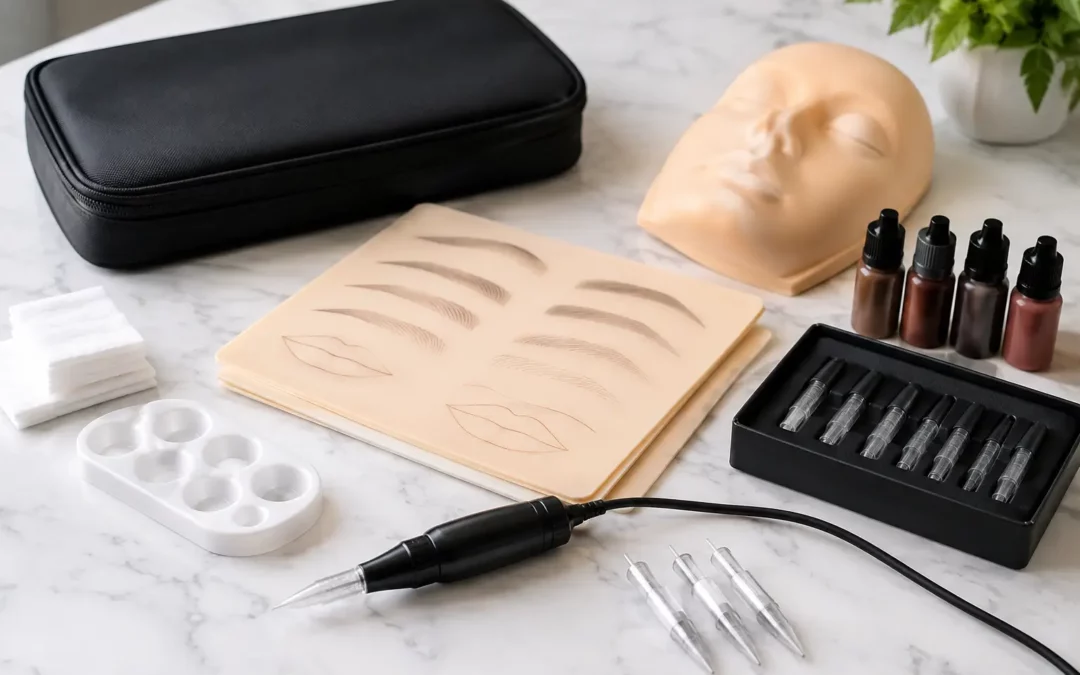
A permanent makeup kit can look impressive on a course sales page: a machine, pigments, needles, practice skins, mapping tools, and a branded case. But a PMU training kit review should ask a harder question: does this kit support safe, competent learning, or is it being used to make a thin course look more valuable?
For a new artist, the kit matters. It gives you the tools to practice, understand machine setup, and begin building muscle memory. It does not replace supervised technique, infection control education, color theory, contraindication screening, or honest feedback from an experienced trainer. If a provider treats the kit as the main selling point, slow down.
What a Professional PMU Training Kit Should Include
A useful starter kit should be built around the services you are actually learning. A powder brow kit will not be identical to a lip blush kit, and neither should be treated as a one-size-fits-all box. The goal is not to receive the largest pile of supplies. The goal is to receive appropriate, professional-grade supplies that let you practice the course method correctly.
At a minimum, expect a dependable PMU machine or hand tool that matches the program, compatible needle cartridges or blades, practice skins, pigment or training pigment, pigment cups, mapping supplies, measuring tools, disposable applicators, gloves, barrier film, and basic workstation protection. For brow training, this often includes brow pencils, string, calipers or mapping tools, and razors. For lips, you may also need lip mapping supplies and practice materials that help you understand shape, saturation, and needle movement.
The machine deserves more scrutiny than the branded carrying case. Ask whether it is a professional device suitable for the technique being taught, whether replacement cartridges are readily available, and whether the trainer explains voltage, needle depth, hand speed, and cartridge selection. A kit with an inexpensive machine is not automatically a bad kit, but it should never be presented as a shortcut to professional results.
Pigments also require straight answers. You should know whether the pigments are intended for training only or for work on clients after you are properly qualified and compliant. Ask about batch information, expiration dates, storage requirements, and how pigment choices relate to undertones, healed results, and the skin types you will serve. A course that skips pigment education is leaving out a major part of permanent makeup.
What Your PMU Training Kit Cannot Teach
Here is the part many beginners do not hear until they have already spent their money: tools do not create judgment. Permanent makeup is a technical service performed on living skin, with real health, aesthetic, and legal consequences.
A kit cannot watch your hand angle and tell you that you are working too deep. It cannot explain why a client’s skin may be unsuitable for treatment that day. It cannot correct a poor brow design before pigment is implanted, or help you manage a client who has unrealistic expectations. Those skills come from structured education, repetition, trainer feedback, and a willingness to be corrected.
Infection prevention is especially non-negotiable. Your training should clearly cover cross-contamination, single-use items, surface disinfection, barrier setup, bloodborne pathogen practices, client records, consent, aftercare, and safe disposal. Receiving gloves and barrier film in a kit is not the same as understanding how to maintain a clean field from setup through breakdown.
The same is true for skin theory and healing. Practice skins are useful for line control, pixel placement, machine rhythm, and pattern work. They do not react like real skin. They do not swell, bleed, retain pigment, heal, or reveal whether your technique was too traumatic. A responsible program is clear about that limitation and does not rush students from artificial practice to paid clients.
PMU Training Kit Review Questions to Ask Before Enrolling
Before you compare kit photos, compare the education behind them. Ask the provider for a detailed supply list, not just a photo of a box. You should be able to identify what is included, how much of it you receive, and what you will need to purchase later.
Ask whether the kit is included in tuition or added as a separate fee. Neither model is wrong, but the total investment should be transparent. A low advertised course price can become much higher once machine upgrades, pigments, cartridges, sanitation supplies, model fees, and ongoing mentorship are added.
You should also ask whether the kit supports hands-on training. If you are learning in person, will you use the same tools during class that you take home to practice? If the course includes a live model component, who supplies the materials and who supervises the procedure? If training is online, what feedback process exists when you submit your work? A certificate without evaluated practice is not the same as demonstrated competence.
A serious educator should welcome questions about their experience, licensing or registration where applicable, insurance, sanitation protocols, and the local rules that affect PMU services. Requirements vary significantly between provinces and states, and sometimes between local health authorities or counties. Do not assume that a certificate from any course automatically grants permission to practice where you live. Confirm your local requirements before enrolling and before accepting clients.
Red Flags Hidden Behind a Big Kit
More supplies are not always more value. Be cautious when a course leads with a large kit but provides little detail about curriculum, trainer access, safety instruction, or model supervision. You are investing in a career service, not buying a craft bundle.
Watch for vague claims such as “certified in one day” without a clear explanation of what you will be able to perform safely afterward. Be wary of providers who cannot explain their equipment, use unlabeled pigments, or avoid questions about hygiene and regulations. Another concern is a kit that contains so few consumables that you cannot complete meaningful practice after class. Permanent makeup requires repetition. A few cartridges and one practice skin will not carry you very far.
There is also a practical business issue. Some proprietary systems are excellent, while others make it difficult or expensive to restock supplies. Find out whether you can purchase compatible cartridges, pigments, and disposables reliably once your initial kit is used. You need a supply plan that supports consistent services, not a setup that stops when the course box is empty.
How to Judge Value Instead of Price
The best value is rarely the cheapest tuition or the biggest kit. It is the program that gives you a sound technical foundation, usable professional supplies, clear safety standards, and a realistic path from student practice to compliant client work.
For a true beginner, a guided in-person program with small class sizes may be worth more than a cheaper online package because immediate correction can prevent bad habits from becoming permanent. For an experienced artist adding a new PMU service, an advanced course may require fewer starter supplies but more focused education in design, skin behavior, and healed-result strategy. It depends on your current skill level, the service you want to offer, and the regulations where you plan to work.
At Voila Academy, the standard should always be bigger than a certificate and a take-home kit. Training should prepare you to protect your clients, respect your craft, and build a business with skills you can stand behind.
Before you enroll, look past the case, the machine, and the promotional extras. Choose the training that will still support you after the last cartridge in the kit is gone.