
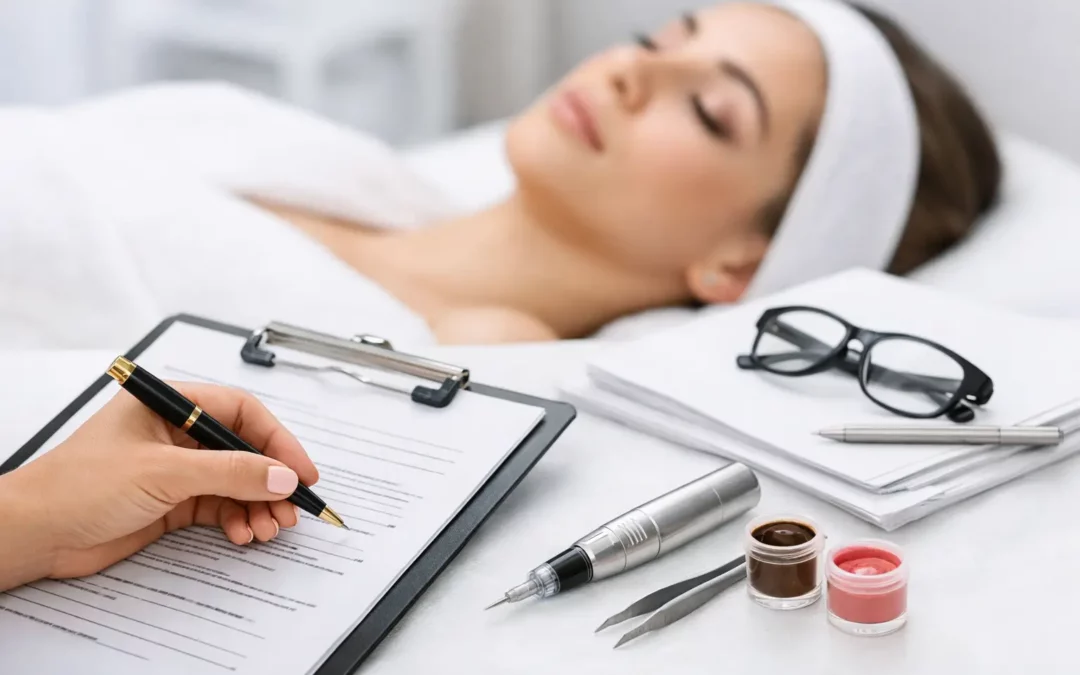
A client is excited for brows, signs a form in thirty seconds, and sits down for the procedure. That sounds efficient until she later says she did not understand healing, pigment retention, or who was responsible for aftercare. This is exactly why pmu consent form essentials are not paperwork for paperwork’s sake. They are part of safe practice, clear communication, and real business protection.
If you are training for permanent makeup or adding it to your service menu, your consent form needs to do more than collect a signature. It should show that you explained the procedure, screened for risk, documented expectations, and gave the client a fair chance to ask questions. A weak form leaves gaps. A strong one supports better decisions before, during, and after treatment.
Why PMU consent form essentials matter so much
Permanent makeup is not a casual beauty service. You are working with skin, bloodborne pathogen risk, pigments, needles, healing variables, and long-term cosmetic outcomes. Clients often come in excited, nervous, underinformed, or all three. Your form is one of the tools that slows the process down enough to make informed consent real.
That matters for the client and for the artist. If a client has a contraindication, if she is prone to keloids, if she is pregnant, recently used retinoids, or has had previous PMU in the area, those details can change whether you proceed at all. Consent is not a waiver that erases your responsibility. It is documentation that supports a professional standard of care.
It also matters because PMU rules are not identical everywhere. Artists often work, train, or relocate across provinces and states, and forms should reflect the regulatory environment where services are performed. One generic download pulled from the internet may not fit your local requirements, your insurance expectations, or your treatment protocols.
What a PMU consent form should actually include
The best forms are clear, readable, and specific to the service. They should identify the client, the artist, and the exact procedure being performed, whether that is microblading, powder brows, lip blush, eyeliner, or another PMU service. If you offer multiple services, one vague form for everything is usually not enough.
A solid consent form explains the nature of the procedure in plain language. That means describing that pigment is implanted into the skin, that more than one session may be needed, and that healed results vary based on skin type, lifestyle, previous work, aftercare, medications, and individual healing response. Clients should not be hearing those details for the first time after the service is over.
Your form should also cover the known risks. This includes swelling, redness, tenderness, patchy healing, fading, poor retention, allergic reaction, infection, dissatisfaction with shape or color, and the reality that touch-ups or correction work may be necessary. Some artists avoid direct language because they worry it will scare clients off. Usually, the opposite is true. Clear language builds trust because it sounds like professional care, not a sales pitch.
Medical disclosure is another non-negotiable part of pmu consent form essentials. A health questionnaire should ask about allergies, skin disorders, diabetes, autoimmune conditions, blood thinners, recent cosmetic procedures, active acne or irritation in the area, cold sores for lip blush clients, and anything else relevant to the service. This section should be reviewed, not just collected.
Informed consent is more than a signature
Many artists make the mistake of thinking a signed form equals informed consent. It does not. If the client was rushed, confused, pressured, or not given a chance to ask questions, your paperwork may look complete while your process is not.
A better approach is to treat the form as part of a conversation. Review the treatment plan with the client. Confirm the service area, shape goals, color expectations, pain management approach, healing timeline, and aftercare responsibilities. Ask if she has had previous PMU, laser removal, or old pigment that could affect the outcome. Then document that discussion.
It is also wise to include acknowledgment statements the client initials individually. This can cover points such as understanding that results are not guaranteed, perfection is not possible, healed color may differ from fresh color, and touch-up appointments may be recommended at an additional cost. Initial lines are useful because they show the client did not simply sign at the bottom without seeing the key points.
The sections too many artists leave out
One of the biggest problems in beauty education is shortcut culture. Students are handed a one-page consent form and told it is enough. It usually is not. A stronger form often includes image release language if you photograph work, a section on emergency contact information, and a statement confirming the client received pre-care and aftercare instructions.
Cancellation, late arrival, and touch-up policies can be referenced too, although policy language should not bury the medical and procedural content. Keep business terms separate enough that the client understands what is health and safety disclosure versus what is studio policy.
Another missed section is prior PMU disclosure. Correction work is not the same as virgin skin work. If a client has previous microblading, old tattooing, or migrated pigment, your form should document that. It can protect you from being blamed for outcomes caused by old work you did not create.
Minors present another area where artists need to be careful. Depending on the service and your local rules, PMU on minors may be restricted or prohibited. Your consent paperwork should align with those rules and your insurer’s requirements, not with what another artist in a Facebook group says she does.
Keep your forms compliant with local rules
This is where professionalism separates itself from imitation. Regulations for permanent makeup can differ by county, city, state, province, and health authority. Bloodborne pathogen standards, record retention periods, patch test expectations, licensing language, and infection control requirements are not universal.
That means your form should be reviewed with your local framework in mind. If you operate in more than one area, train students from different regions, or plan to expand, build the habit now of checking both provinces and states for the rules that apply where treatment happens. Compliance is not glamorous, but it is part of being a legitimate PMU professional.
If you are still in training, this is something a serious educator should teach you directly. At Voila Academy, we believe safe technique and business readiness belong together. A beautiful healed result means very little if your documentation, screening, and client communication are weak.
How to make your consent process stronger in real life
Start by matching the form to the service. Lip blush needs different risk disclosure than powder brows. Eyeliner has eye-specific considerations. Correction work needs its own language. The closer your form reflects the actual procedure, the more useful it becomes.
Next, write like a human. Clients should understand the document without needing legal interpretation. Plain English is not less professional. It is better communication. If your form is full of vague phrases and dense paragraphs, simplify it.
Then build time into the appointment for review. Sending forms digitally before the visit can help, but do not rely on that alone. People click through things. Take a few minutes in person to confirm key details, answer questions, and note anything that changes your plan.
Finally, store records properly. Signed consent forms, health disclosures, procedure notes, pigment details, lot numbers if applicable, and aftercare acknowledgment should be organized and retained according to your local standards and insurance needs. Good documentation supports continuity of care if the client returns months later for a touch-up or correction.
PMU consent form essentials protect more than liability
Yes, consent forms matter for legal and insurance reasons. But that is not the whole story. They also help you attract better clients, filter out unsafe situations, and establish yourself as a professional who takes this work seriously.
Clients notice when an artist is thorough. They notice when you ask the right questions, explain realistic outcomes, and refuse to cut corners just to make a sale. That kind of process builds the kind of reputation that lasts longer than a single appointment.
If you are building a PMU career, treat your paperwork like part of your craft. Clean linework matters. So does clean documentation. One protects the result on the skin. The other protects the standard behind your business.
A strong consent form will never replace judgment, training, or ethics, but it does something just as valuable. It forces clarity before the needle ever touches the skin.