
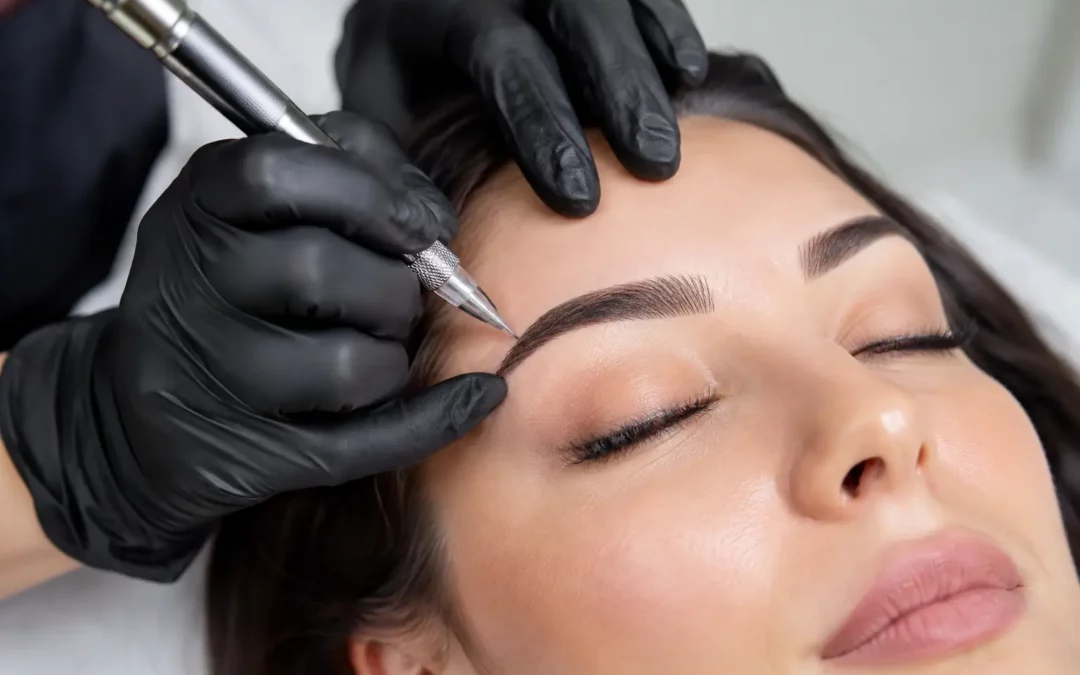
A hairstroke brow can look beautifully natural on day one and still heal too soft, too cool, or too patchy if the artist does not understand skin, pigment, and depth. That is where microblading machine shading changes the conversation. Used with skill, machine shading can add density, definition, and better visual balance without turning a soft brow into a heavy block.
For an artist building a serious brow business, this is not simply another technique to add to a service menu. It is a decision about client suitability, healed outcomes, sanitation, equipment control, and the standard of work your name will represent. A certificate alone does not prepare someone to make those decisions.
What Is Microblading Machine Shading?
Microblading creates hairstroke impressions with a manual blade. Machine shading uses a permanent makeup machine and needle cartridge to place pigment through controlled dotting, pendulum, whip, stipple, or pixelated motions. Together, the techniques can create what many clients recognize as a combination brow: realistic-looking strokes at the front or throughout the brow, supported by a soft shaded body and tail.
The goal is not to fill every space with pigment. It is to build a brow that has intentional contrast. The front should usually remain lighter and airy, while the arch and tail may carry more density. How much shading is appropriate depends on the client’s skin type, existing hair, makeup habits, natural brow shape, and willingness to maintain the result.
Machine shading is often confused with powder brows, but they are not identical services. Powder brows are generally designed around a fully machine-created makeup effect, which may range from soft and sheer to defined and polished. Combination brows use microblading and machine work together. The finished look can overlap, but the design logic and technical execution are different.
Why Machine Shading Can Improve Healed Results
The appeal of microblading is easy to understand. Clients love the idea of individual hairstrokes. But not all skin retains manual strokes predictably, especially oily, mature, sun-damaged, highly textured, or heavily worked skin. Strokes can expand, blur, fade unevenly, or disappear more quickly than expected.
Machine shading gives the artist another option. A light pixelated layer can create the appearance of fullness even when a client’s skin is not a good candidate for dense microblading. It can also support sparse areas where strokes alone would look disconnected after healing.
That does not mean machine shading is automatically better. On a client with dry-to-normal skin, good elasticity, and enough natural hair, a delicate hairstroke design may be the better choice. On oily skin or a client who fills in her brows daily, a soft powder or combination approach may offer more longevity and visual consistency. The right service is based on assessment, not on what happens to be trending online.
Density is not depth
A common beginner mistake is attempting to create a darker brow by working deeper. That is not density. That is trauma, and it can lead to poor retention, scarring risk, unwanted color shift, and difficult corrections.
Density comes from correct technique: appropriate needle selection, controlled hand speed, suitable machine speed and voltage, consistent stretch, proper pigment choice, and layered placement that respects the skin. An artist should be able to explain why a brow needs more visual weight without treating the skin more aggressively.
The Technical Decisions Behind Soft Shading
Machine shading looks simple when it is done well because the work appears soft and effortless. In reality, it demands steady technical judgment. The artist must control pressure, movement, saturation, and spacing while reading the skin in real time.
Needle configuration matters. A single needle may provide precision in narrow areas or delicate detail work. Larger round configurations can distribute pigment differently and may be useful for broader shading, depending on the machine, technique, and desired effect. There is no universal cartridge that produces perfect brows. Artists need to understand how their tools behave rather than copying another artist’s setup word for word.
Pigment selection also has to be deliberate. Brow pigment should be chosen with the client’s skin tone, undertone, Fitzpatrick type, natural hair color, and long-term healing in mind. A dark brow on day one is not proof of good work. Fresh pigment is expected to appear stronger before it settles. Promising an exact healed color is irresponsible, but a trained artist should know how to set realistic expectations and avoid choices that are likely to heal too warm, too cool, or too ashy.
Skin preparation influences everything that follows. Excessive numbing, poor cleansing, inadequate stretch, or failure to manage lymph and pigment buildup can interfere with implantation and visibility. The artist needs a disciplined process, not a rushed one.
Who Is and Is Not a Good Candidate?
A consultation is a safety measure, not a formality before collecting a deposit. Clients should be screened for skin condition, medication use, medical history, previous permanent makeup, allergies, pregnancy or nursing policies, and expectations. If a client arrives asking for bold strokes over old gray pigment, the answer may be correction planning, removal, or a referral – not an immediate procedure.
Artists should also be prepared to decline a service when the risk is not appropriate. Active acne, eczema or dermatitis in the treatment area, compromised skin, recent aggressive skin treatments, certain medications, or unclear medical history may require postponement or physician clearance according to local rules and your established policy.
Regulations are not identical everywhere. Permanent makeup requirements can vary by health authority, county, province, and state. A legitimate education provider does not pretend one rule applies across North America. Voila Academy helps students understand that professional practice means working within requirements across both provinces and states, then verifying the rules where they will actually serve clients.
Training Must Go Beyond a Brow Pattern
Watching an instructor create a few machine passes is not enough preparation to perform this service on paying clients. Good training addresses the full responsibility of the procedure: bloodborne pathogen awareness, infection prevention, cross-contamination control, consent, contraindications, client records, setup and breakdown, needle handling, pigment knowledge, skin theory, mapping, and aftercare.
It should also include hands-on feedback. A student may understand brow mapping on paper yet struggle with pressure, stretch, and machine rhythm on latex or live models. That gap is where mentorship matters. An instructor needs to correct the habit before it becomes part of the student’s work.
Be cautious of fast-food courses that promise advanced results in a few hours, offer no model practice, or avoid direct questions about licensing, insurance, and sanitation. Low tuition can become expensive when it leaves you unable to work safely, confidently, or legally. A serious education is an investment in your reputation and your clients’ trust.
Practice with purpose
Practice skin is useful, but random repetition does not build reliable technique. Train specific skills: consistent pixel placement, smooth fades, clean borders, gradual saturation, and controlled hand movement. Photograph your work under the same lighting, compare sessions, and ask for direct critique.
Then study healed results. Fresh brows are only the beginning of the service. The real education happens when you track retention, color, shape, client aftercare, and touch-up needs several weeks later. Artists who review healed work become better decision-makers. Artists who only post fresh work can miss the problems that matter most.
Building a Service Clients Can Trust
Microblading machine shading can become a profitable addition to a brow or permanent makeup business, but profitability should never come from overbooking or overpromising. Price for the time required to consult, prepare, perform the procedure, document the service, follow up, and complete touch-ups according to your policy.
Your client communication should be plain and honest. Explain that permanent makeup is a multi-step process, healing is individual, and results may need adjustment. Give clear pre-care and aftercare instructions, protect enough time for questions, and maintain records with the same care you bring to the procedure itself.
A strong brow artist is not the person who says yes to every request. She is the professional who can assess the skin, choose the right technique, respect local requirements, and recommend a different service when that is what protects the client. Build that level of judgment first, and your machine shading will become more than a beautiful finish – it will be work you are proud to stand behind.