
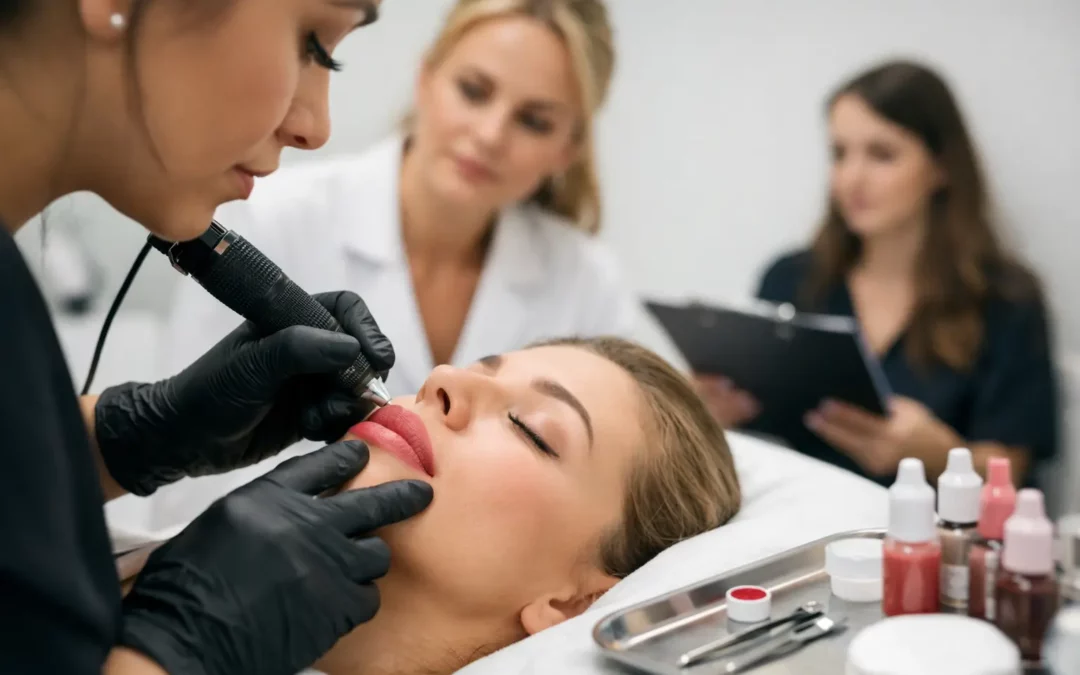
A certificate means very little if you leave training unsure how to map lips, control depth, prevent cross-contamination, or guide a client through healing. That is the real issue with lip blush certification training – not whether you get a printed credential, but whether you gain the skill, judgment, and safety habits to perform the service responsibly.
Lip blush is one of the most detail-sensitive services in permanent makeup. Clients are trusting you with facial symmetry, pigment choice, sanitation, and realistic healing expectations. A weak course can leave a beginner overconfident and underprepared, which is a bad combination in any beauty service but especially in cosmetic tattooing. If you are investing in training, you need more than a fast class and a certificate photo for social media. You need education that can hold up in real client work.
What lip blush certification training should actually teach
Good training starts with the foundation that many shortcut courses rush past. Lip blush is not just about making lips look brighter or more defined. It requires a clear understanding of skin behavior, color theory, machine handling, pressure control, lip anatomy, contraindications, healing stages, and client suitability.
That matters because lip tissue is not forgiving. Overworking the area can lead to poor retention, unnecessary trauma, or uneven healing. Choosing the wrong pigment family can create healed results that look too cool, too warm, or simply unnatural on the client. Even a beautiful procedure photo on day one tells you almost nothing if the student was not taught how results heal over time.
Strong lip blush certification training should also cover consultation skills in a serious way. Students need to learn how to screen for cold sores, prior filler history, medical concerns, medications, and unrealistic expectations. They need to know when to move forward, when to postpone, and when to decline a client. That is part of being a professional, not an optional extra.
Why cheap training often costs more later
A low-priced class can feel tempting when you are starting out or trying to add a profitable service quickly. But the beauty industry has a real quality problem when it comes to certification. Some programs are designed to sell access, not to build competence. They move too fast, skip supervised practice, and hand out certificates to students who have not developed control or judgment.
The damage shows up later. You may need retraining, waste money replacing poor supplies, lose confidence after bad results, or struggle to attract clients because your work is inconsistent. In more serious cases, poor training can expose you to sanitation failures, client complaints, or preventable corrections that hurt your reputation before your business has a chance to grow.
This is why standards matter. A credible program should not make lip blush look easy just to make enrollment easier. It should be honest about the learning curve and clear about the responsibility that comes with offering permanent makeup services.
How to evaluate a lip blush certification training program
If you are comparing courses, look past the marketing first. A polished class page is not proof of a strong education model. What matters is how the training is delivered, who is teaching it, and whether the program is built around student outcomes instead of speed.
Start with the trainer. Are they transparent about their experience, licensing, insurance, and actual work in the field? Do they actively perform services, not just teach them? Are they teaching within proper health and safety expectations? In permanent makeup, credibility should be visible and specific.
Then look at the class structure. Small class sizes usually matter more than people realize. In lip blush, students need hands-on guidance, correction, and direct feedback. If the class is too large, individual support drops fast. That may work for theory-heavy education, but not for a skill where hand speed, needle angle, stretch, and saturation need to be monitored closely.
Practical training is another major line in the sand. You want to know how much of the course is demonstration, how much is supervised practice, and whether there is a live model component. Watching is not the same as doing. Doing without feedback is not the same as learning.
Finally, check whether the course includes infection control and compliance education in a meaningful way. This should never be treated like a side topic. If a training provider talks mainly about income potential and barely addresses bloodborne pathogen awareness, setup, disposal, sanitation, and client safety, that is a warning sign.
The difference between learning a service and learning a career
A lot of beginners ask whether one course is enough to start offering lip blush. The honest answer is: it depends on the quality of the course and on how seriously you approach practice afterward.
Some students need a strong beginner framework because they are new to beauty altogether. Others already work in brows, lashes, esthetics, or tattooing and are adding lip blush to an existing skill set. The same certification will not land the same way for both people. That is why mentorship matters so much.
The best training does not stop at technique. It helps you think like a service provider and business owner. That includes client communication, pre-care and aftercare instruction, pricing logic, portfolio building, treatment timing, consent forms, and setting realistic expectations around touch-ups. A student who understands only the procedure is still missing half the job.
This is where Voila Academy’s approach stands out. Serious beauty training should prepare you to perform safely, serve clients professionally, and build a business you can be proud of. That means structure, accountability, and support, not rushed certification for the sake of a sales pitch.
What beginners should expect from lip blush training
If you are new to permanent makeup, expect lip blush certification training to challenge you. That is not a bad sign. It means you are learning a service that requires precision.
You should expect to spend time on theory before you ever touch a model. You should expect correction. You should expect your first attempts on practice material to feel awkward. You should also expect the course to answer practical questions that directly affect client results, like how to avoid patchy saturation, how to work with different lip tones, and how to prevent overworking delicate tissue.
What you should not expect is instant mastery. Any trainer promising that you will leave fully advanced after a very short, lightly supervised course is selling confidence faster than competence. Good educators build both, but in the right order.
Signs a program takes standards seriously
You can usually tell when a training provider respects the craft. They do not hide behind vague language. They explain what is included, how students are supported, and what safety standards are taught. They are clear about prerequisites if there are any. They do not treat permanent makeup like a casual add-on service.
A standards-driven course usually includes thorough theory, live demonstration, practical application, and real guidance on health procedures. It also tends to set expectations around professionalism. That includes proper setup, proper documentation, ethical consultation habits, and understanding the limits of your current experience level.
There is also a mindset difference. Serious training providers want students to succeed long term, not just enroll quickly. They know a student’s future work becomes part of the educator’s reputation. That changes how they teach.
Is online lip blush certification training enough?
For some parts of education, online learning is useful. Theory, contraindications, color principles, client communication, and business basics can absolutely be taught well in a digital format. But lip blush is a hands-on service. There is no honest way around that.
If a program is fully online, ask how practical skills are assessed and supported. Do you submit work for review? Is there instructor feedback? Is there a required in-person component? Are students expected to practice under supervision at any point? Without a meaningful hands-on standard, the certificate may not reflect real readiness.
That does not mean online learning has no place. It means online education works best when it is paired with strong mentorship, realistic expectations, and some form of accountable skills development.
Choosing training with your future business in mind
Lip blush can be a strong addition to a beauty business, but only when the work is consistent and trustworthy. Clients talk. Referrals depend on healed results, professionalism, and safe experiences. That is why your training decision affects more than your first few appointments. It shapes your reputation.
When you choose lip blush certification training, think beyond the certificate itself. Ask whether the course helps you protect clients, produce quality work, and grow with confidence. Ask whether the educator is trying to fill seats or build professionals. The difference is not small.
A good program should leave you feeling supported, challenged, and clear on what comes next. That is the kind of training worth paying for – the kind that respects the service, respects the client, and respects the career you are trying to build.
The beauty industry does not need more fast certificates. It needs better artists, better safety standards, and more professionals who were trained to do this work the right way from the start.