
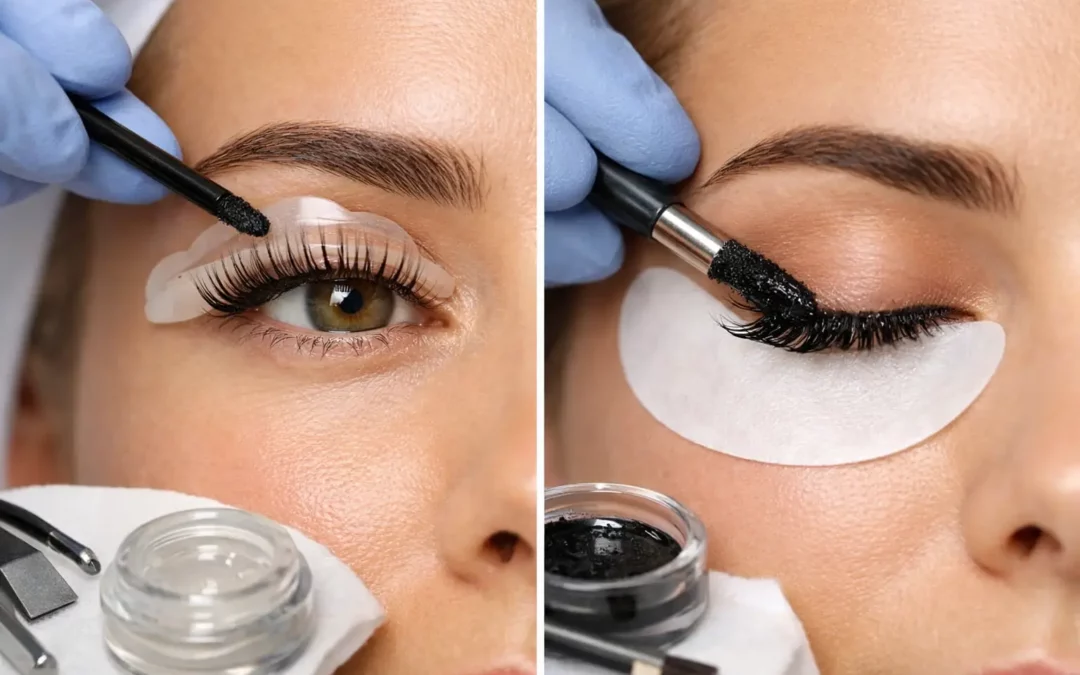
A client says she wants her natural lashes to look darker, longer, and more awake without extensions. That sounds simple, but lash lift vs lash tint is not a one-size-fits-all decision. The best recommendation depends on her natural lash direction, hair color, eye sensitivity, daily routine, and the result she actually expects to see in the mirror.
For beauty professionals, understanding the difference is bigger than memorizing a service menu. It affects consultation quality, timing, product selection, safety practices, pricing, and client retention. A well-trained artist knows when a tint is enough, when a lift will make the bigger visual difference, and when the client should receive both.
Lash Lift vs Lash Tint: The Core Difference
A lash lift changes the shape and direction of the natural lashes. The service uses shields or rods and a controlled chemical processing system to redirect lashes upward from the base, creating a lifted, more open-eyed appearance. It does not add artificial lashes, and it does not make the natural lash physically longer. It makes the existing length more visible.
A lash tint changes the color of the natural lashes. It is designed to darken lighter lash hairs, especially at the tips, where lashes can look almost invisible. Tinting can make the lash line appear more defined and reduce the need for daily mascara for clients who prefer a low-maintenance routine.
The services solve different problems. A client with dark but straight, downward-growing lashes may see a dramatic change from a lift and very little benefit from a tint. A client with naturally curled blonde lashes may need only a tint to create definition. Someone with light, straight lashes often gets the most noticeable result from a lift and tint combined.
What a Lash Lift Changes for the Client
A quality lash lift gives natural lashes a more elevated curl pattern. This can make the eyes appear more open and help clients see their own lash length without using a lash curler. The result is polished but still natural, which is why lash lifts appeal to clients who do not want the maintenance of extensions.
Results commonly last around six to eight weeks, but that is not a guarantee. Natural lash growth cycles, aftercare, product choice, processing accuracy, and the client’s hair texture all affect longevity. Clients with strong, coarse lashes may require a different approach than clients with fine, fragile lashes. Treating every client with the same shield size and processing time is shortcut work, not professional work.
A lift is especially useful for clients whose lashes point down or grow straight out. However, it is not automatically right for every person. Very short lashes, compromised lashes, recent eye surgery, active eye irritation, or an inability to keep the eyes comfortably closed can change the recommendation. A responsible artist does not force a service simply because it is popular.
The Lift Consultation Matters More Than the Before-and-After
Before beginning a lash lift, assess the lash health, density, growth direction, and eyelid shape. Ask whether the client uses retinoids near the eye area, has seasonal eye allergies, wears contact lenses, has had a reaction to beauty products, or has had a recent eye procedure. These details are not paperwork for paperwork’s sake. They protect the client and help you decide whether to proceed, postpone, or refer out.
Shield selection also matters. A larger shield can create a softer, lengthened effect, while a smaller shield may create more visible curl. More curl is not always better. An overly aggressive lift can look unnatural, make lashes appear shorter, or increase the risk of overprocessing when technique is poor.
What a Lash Tint Changes for the Client
A lash tint is about contrast. It deepens the color of the lash hair so the lashes are easier to see without makeup. The effect is often most dramatic on blonde, red, gray, or sun-lightened lashes, but dark-haired clients may still enjoy extra definition when their ends are lighter than their roots.
Tint results usually fade gradually as lashes shed and new lashes grow in. Many clients return in roughly three to six weeks, though their routine and natural lash cycle can change that timeline. Oil-based cleansing, frequent swimming, and regular exfoliation around the eye area may also influence how quickly the visible color softens.
Unlike a lift, a tint will not correct downward lash direction. It can make a straight lash look darker, but it will not make it look curled. Set that expectation clearly. When clients understand what tinting can and cannot do, they are much more likely to be happy with the result.
Tinting Requires Careful Product and Regulation Awareness
The eye area is not a place for improvisation. Use professional products exactly as directed, respect manufacturer instructions, maintain clean application practices, and follow your local rules. Requirements for offering lash tint services can vary across jurisdictions, including licensing, permitted products, and scope-of-practice expectations.
At Voila Academy, we emphasize that beauty professionals must verify the requirements where they work. We deal with both provinces and states, and regulations are not identical from one location to the next. A social media certificate or a cheap online course does not replace understanding your local health, licensing, insurance, and product-compliance responsibilities.
Patch testing policies should also be guided by the product manufacturer and your professional standards. Never minimize a client’s history of sensitivity. A beautiful result is never worth ignoring a possible reaction.
When Combining a Lash Lift and Tint Makes Sense
The combined service is popular because it addresses both direction and color. The lift raises the lashes, while the tint adds depth. For a client with fair, straight lashes, the combination can create the appearance of a darker, longer, more visible natural lash line without extensions or mascara.
That said, bundling should not become automatic. If a client’s lashes are already naturally dark, tinting may add little visible value. If the lashes are dry, brittle, or previously overprocessed, the priority may be to postpone chemical services and focus on lash health. Your job is not to sell the most steps. Your job is to make a technically sound recommendation.
During the consultation, use direct questions: Does the client want curl, darkness, or both? Does she wear mascara every day? Is she trying to replace extensions, reduce makeup time, or prepare for a vacation? Does she understand that natural-lash services are subtle compared with a full extension set? These answers help you match the service to the desired outcome.
How Professionals Should Price and Position Each Service
A lash tint is generally a shorter, lower-complexity service than a lift, but pricing should reflect more than appointment time. Account for quality products, sanitation supplies, insurance, consultation, training, professional overhead, and the skill required to work safely around the eyes.
A lash lift carries more technical responsibility because timing, placement, shield choice, lash direction, and product control directly affect the final result. Pricing it like a quick add-on can invite rushed work and weak margins. Instead, position it as a specialized natural-lash enhancement service delivered by a trained professional.
The combination service can be a strong menu option because it offers a complete natural look and gives clients a clear reason to return for maintenance. Be transparent about expected results, aftercare, and the fact that outcomes vary by lash type. Avoid promising identical results based on a heavily filtered photo of someone with entirely different lashes.
The Training Standard Behind a Safe Service
Lash lifts and tints may look simple in a short video, but the service involves close eye-area work, chemical exposure, timing decisions, and client-specific judgment. Poor education can lead to uneven lifts, missed lashes, overprocessing, irritation, disappointing retention, and a client who loses trust in professional beauty services.
Strong training should cover more than a kit and a certificate. Look for hands-on guidance in sanitation, contraindications, consultation, eye protection, product control, corrective decision-making, aftercare, photography, pricing, and client communication. Small classes and real feedback matter because they give you the space to ask questions before you are working independently.
The most successful artists do not treat a lash lift or tint as a fast service to rush through. They treat it as a professional assessment followed by precise execution. That mindset builds safer appointments, better results, and the kind of client confidence that grows a beauty business one return visit at a time.