
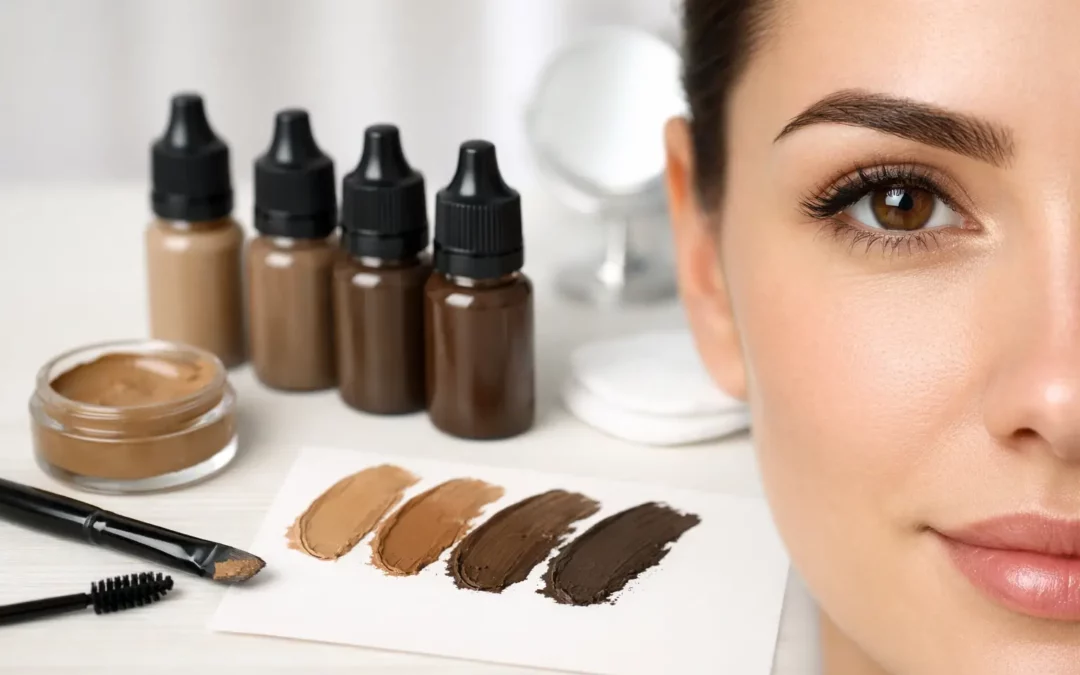
A pigment that looks perfect in the cup can heal too warm, too cool, too dark, or disappear too quickly. That is why learning how to choose brow pigments is not about collecting the biggest color range. It is about making a controlled decision based on the client’s skin, natural brow hair, desired result, technique, and the way pigment is likely to heal.
For permanent makeup artists, pigment selection is a safety and reputation issue as much as an artistic one. A weak color consultation can leave a client with unwanted tones and leave you performing difficult corrections. A thoughtful selection process supports cleaner healed results, stronger client trust, and a service menu you can confidently grow.
Start With the Healed Result, Not the Fresh Color
Freshly implanted pigment is not the final result. Swelling, redness, oxidation, skin regeneration, immune response, depth of implantation, and aftercare can all affect what you see after the appointment. The goal is not to match the pigment to the skin on appointment day. The goal is to predict how it will settle after healing.
A freshly applied brow often looks darker and warmer than it will at the follow-up appointment. As the skin heals, some intensity is lost. On certain skin types, warmth can become more visible; on others, ashiness may surface. This is why experienced artists avoid choosing a color solely because it appears to be an exact match when freshly applied.
Ask your client what “natural” means to them. One client may want a soft taupe shadow that blends into sparse hair. Another may want a defined brunette brow with visible structure. Their desired level of contrast matters. A technically suitable pigment can still be the wrong choice if it does not match their expectations for depth and definition.
Read Skin Tone, Undertone, and Overtone Separately
Skin tone is the overall depth of the skin, from fair to deep. Undertone is the subtle temperature beneath the surface – cool, warm, neutral, olive, or a combination. Overtone is what you visibly see on the surface, including redness, tanning, sallowness, rosacea, sun exposure, or post-inflammatory discoloration.
These details should not be blended into one quick judgment. For example, a client may have fair skin with a cool overtone from surface redness but a neutral or warm undertone underneath. If you select an overly cool pigment based only on the red surface appearance, the healed brow can look gray or dull.
Look at more than the face. Check the neck, chest, and natural brow hair. Ask whether the client tans easily, tends to look golden in the summer, or typically sees ashiness in previous brow makeup. If they have existing permanent makeup, identify the visible residual tone before promising a new color direction.
Natural brow hair is useful, but it is not a pigment formula. A client’s hair may be warm medium brown while their skin and desired makeup style call for a softer neutral brown. Use hair as one piece of evidence, not the only answer.
Why Fitzpatrick Type Is Helpful but Not Enough
Fitzpatrick skin typing can help you anticipate melanin level, sun response, and certain retention patterns. It is a valuable assessment tool, especially when used alongside a full skin consultation. It is not a shortcut for predicting every healed result.
Two clients with the same Fitzpatrick type can have very different undertones, skin thickness, oil production, medical histories, and lifestyles. A Fitzpatrick III client with warm, oily skin should not automatically receive the same pigment approach as a Fitzpatrick III client with dry, cool, thin skin.
Use the scale as part of your documentation, then make the final selection based on the whole canvas in front of you.
Match the Pigment Family to the Technique
The technique changes how color reads in the skin. A hairstroke pattern, powder brow, ombré brow, and combination brow do not all need the same pigment behavior or saturation.
Machine shading generally creates a more diffused visual field, so a pigment can appear denser once healed than it would in individual hairstrokes. For a soft powder brow, selecting too dark a formula can quickly make the result look blocky, especially on fair or mature skin. Build density through controlled layering instead of trying to force depth with a pigment that is too deep from the start.
For hairstrokes, the skin type is especially important. Oily, porous, or heavily textured skin can blur crisp strokes as they heal. In those cases, your pigment choice and technique may need to shift toward a softer shaded result rather than promising hairlike work the skin is unlikely to hold cleanly.
This is one of the most professional things an artist can say: “Your skin may not be the best candidate for that exact technique, but here is the result I can create beautifully and safely.” Strong artists guide the service. They do not let a reference photo override sound judgment.
Understand Organic, Inorganic, and Hybrid Pigments
Pigment labels can be confusing, particularly for newer artists. In simple terms, inorganic pigments often contain iron oxides and may heal softer or more muted. Organic pigments can offer stronger saturation and brighter color expression. Hybrid lines combine characteristics from both categories.
There is no universal “best” pigment type. The best choice depends on the client, the technique, the desired healed effect, your machine setup, and your training with that particular line. A high-saturation formula may be useful for a client who needs stronger visual impact, but it may be too intense for someone requesting a delicate, low-maintenance brow.
Do not assume every brand names colors the same way. One company’s “medium brown” can heal entirely differently from another’s. Learn your line through manufacturer information, color theory, healed-result records, and supervised practice. Swatching bottles on synthetic skin is not the same as seeing pigment heal in living skin.
Choose Warmth With Intention
Warmth is not automatically a correction, and coolness is not automatically sophistication. Both can be useful or problematic depending on the canvas.
A client with cool or rosy skin may need a balanced brown with enough warmth to prevent a gray healed cast. A client with strong warmth, golden skin, or a tendency toward orange may need a more neutral direction so the result does not become overly red. Olive skin requires particular attention because it can pull pigment in unexpected ways, often making a formula appear cooler or muddier than it looked before implantation.
Avoid adding a warm modifier out of habit. Overcorrecting with warmth can lead to brows that heal orange, red, or reddish brown. Likewise, reaching for an ashier pigment simply because the client has dark hair can create blue-gray results on the wrong skin. Your decision should be based on the client’s skin behavior and the formula’s healed history, not a one-rule-fits-all color chart.
Check the Skin Before You Commit to a Formula
A complete consultation should include a close skin assessment. Look for oiliness, dehydration, enlarged pores, scar tissue, active breakouts, dermatitis, visible sun damage, and previous tattoo work. Each can influence implantation, retention, and color clarity.
Oily skin may retain pigment less predictably and can soften the appearance of healed work. Mature or thin skin may need a gentler approach and a lighter visual plan. Scar tissue can retain unevenly. Previously tattooed brows may need neutralization, correction, removal planning, or a realistic conversation about what can be achieved in one session.
Do not try to camouflage every old brow tattoo with a darker pigment. If the previous work is gray, red, blue, or deeply saturated, adding more brown may create a muddier problem. Correction work requires advanced color theory, careful assessment, and honest client expectations.
How to Choose Brow Pigments With a Repeatable Process
Consistency comes from a consultation system, not from guessing well once. Before selecting a formula, document the client’s natural hair color, skin depth, undertone, surface conditions, desired brow intensity, previous PMU, and planned technique. Take clear photos in consistent lighting. Record the exact pigment formula, any modifiers used, needle configuration, machine settings, and healed outcome.
Those records become your personal reference library. Over time, you will see patterns in how a pigment performs on your client base and with your hand pressure. That knowledge is far more valuable than copying a formula from social media without understanding the client or product line behind it.
If you are new to permanent makeup, work within the pigment system taught in your course until you understand its behavior. Mixing brands or chasing viral formulas before you understand particle size, base tones, and healed shifts can create unnecessary risk. Professional training should teach color theory in real client terms, with feedback from an educator who has seen both fresh and healed work.
Stay Within Your Scope and Local Requirements
Pigment selection is also tied to professional compliance. Rules for permanent makeup, sanitation, bloodborne pathogen education, licensing, and permitted services vary across provinces and states. Do not rely on a course certificate alone to tell you what you are authorized to offer in your area.
Confirm local health authority requirements, insurance requirements, and product documentation before treating clients. Use properly labeled pigments from reputable professional suppliers, follow manufacturer guidance, and maintain batch and lot records. If a client has medical concerns, skin conditions, is pregnant or nursing, or is using medications that may affect healing, follow your training protocols and know when to postpone or request medical clearance.
At Voila Academy, we teach students to treat color selection as part of a complete professional standard: sanitation, consultation, technique, documentation, and honest client education all belong in the same service.
The best pigment choice is rarely the darkest brown or the trendiest bottle. It is the formula you can explain, document, and stand behind when the client returns with beautifully healed brows.