
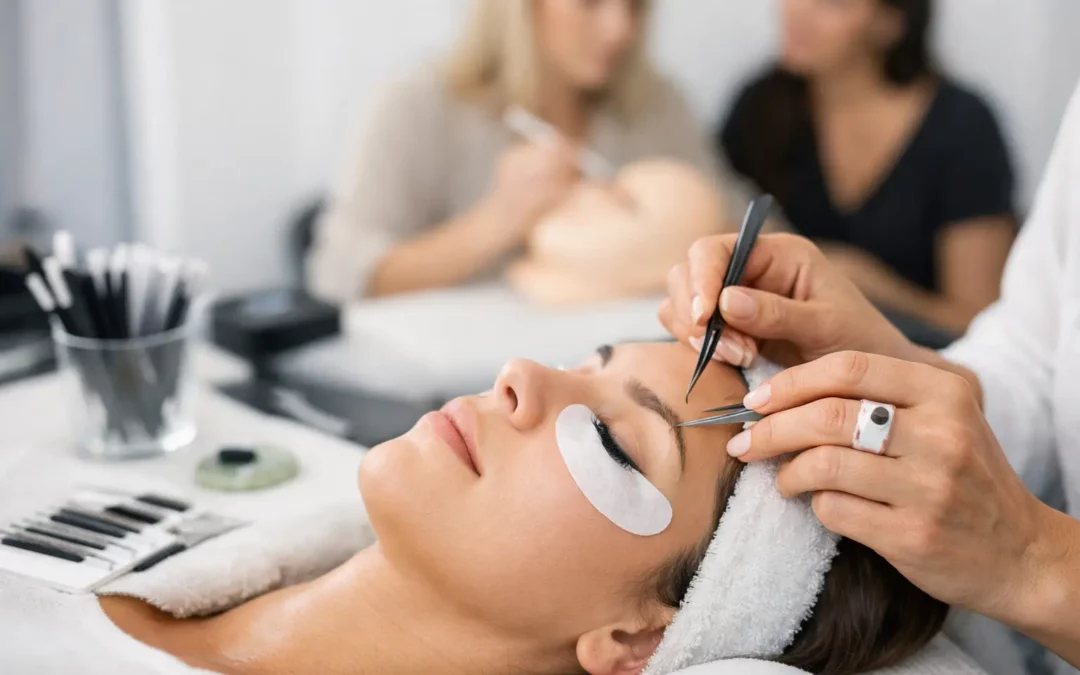
A mannequin can teach hand position. A video can explain lash mapping. But neither can tell you why your isolation keeps collapsing, why your adhesive is failing in real time, or why your sets look clean from one angle and messy from another. That is where a hands on lash extension workshop earns its value.
If you are serious about offering lash services professionally, the difference between passive learning and guided practice is not small. It affects client safety, retention, confidence, and income. A certificate earned without real correction may look fine on paper, but it does not protect your reputation once you start taking paying clients.
Why a hands on lash extension workshop matters
Lash extensions are precise work. You are working around the eye area, managing sanitation, product chemistry, timing, weight selection, styling, and client comfort all at once. That is not something most students master by watching a few demonstrations and practicing alone later.
In a strong hands on lash extension workshop, a trainer sees what you cannot always see in yourself. They catch poor pickup habits, too much adhesive, weak direction, stickies, rushed removals, and posture issues before those habits become your normal. That immediate correction saves time, money, and frustration.
This matters even more for beginners. Many new artists assume their biggest challenge will be speed. Usually it is not. The real challenge is consistency. Consistent isolation. Consistent placement. Consistent weight control. Consistent sanitation. Speed comes later, and only if the foundation is solid.
For working beauty professionals adding lashes to an existing service menu, the stakes are different but just as real. You may already know how to manage clients, schedule appointments, and sell services. What you need is technical accuracy under supervision so you can add a profitable service without compromising standards.
What good workshop training should include
Not every workshop deserves your tuition. Some are built to produce competent artists. Others are built to sell seats fast and move students through with minimal accountability. You need to know the difference.
A legitimate workshop should cover theory, but it should not hide behind theory. You should learn lash anatomy, growth cycles, styling basics, adhesive behavior, contraindications, infection control, allergies and sensitivities, and proper setup. Then you should apply that knowledge in supervised practice where correction happens in the moment.
Small class size matters here. In lash training, too many students means too little feedback. If one trainer is trying to manage a large room, students will miss the individualized correction that actually changes results. Close supervision is not a luxury. It is part of safe education.
Model work also matters. Practicing on a mannequin has a place, especially when learning grip, isolation, and placement rhythm. But real client variables are where training becomes useful. Watery eyes, sparse lashes, strong curl patterns, difficult direction, sensitivity, and asymmetry all change how you work. A workshop should prepare you for that reality instead of pretending every set happens under perfect conditions.
The strongest programs also address business readiness. That includes consultation, aftercare education, pricing logic, refill expectations, client retention, and the standards required to operate responsibly. A lash artist is not just attaching extensions. She is building trust and, often, building a business.
The trade-off between cheap training and real training
This is where many students get burned. Low-cost courses can look attractive because they promise a fast certification and a quick start. The problem is not that affordable education is always bad. The problem is that underqualified training is expensive in the long run.
If your course skips live correction, gives weak safety guidance, or leaves you unsure how to troubleshoot retention and application issues, you will pay for that later. You may spend money on retraining, waste product while guessing your way through mistakes, lose clients, or damage your confidence before your business even gets traction.
A serious academy takes a different approach. It treats beauty education as professional training, not a casual side purchase. That means standards, structure, mentorship, and accountability. It also means transparency about licensing, insurance, sanitation, and local compliance.
That last point matters more than many students realize. Requirements can vary depending on where you plan to work, and we deal with both provinces and states. A responsible educator should encourage you to verify the rules that apply to your region rather than making careless promises about what one certificate means everywhere.
How to choose the right hands on lash extension workshop
Start by asking how much actual supervised practice is included. Not just demo time. Not just kit review. Real hands-on work with trainer feedback. If the answer is vague, that is a warning sign.
Ask who is teaching the class and what their real-world background is. Trainer transparency matters. You should know whether the educator actively works in the industry, understands current standards, and can explain not just how to do a technique, but why one choice is safer or more effective than another.
Look at whether infection control is taught as a serious topic or treated like a quick add-on. Lash services are close-contact services. Clean tools, proper setup, disposal practices, patch testing guidance, and client screening are not optional details.
You should also ask what kind of support exists after class. A good workshop does not leave students stranded the moment training ends. Ongoing mentorship, feedback, or access to guidance can make a major difference as you start practicing independently.
One reason students are drawn to Voila Academy is that the training model is standards-driven and hands-on by design. It is built for people who want legitimate skill development, not shortcut certification. That distinction matters if your goal is to build a career instead of collecting a piece of paper.
What you should expect from yourself
The best workshop in the world cannot replace repetition. Hands-on training gives you direction, correction, and a safer learning curve, but you still need patience. Lash artistry requires focus and control, and most students are not polished after one class. That is normal.
What should change after quality training is your clarity. You should understand what correct isolation feels like, what proper placement looks like, how to avoid overloading natural lashes, how to troubleshoot common retention problems, and how to practice with purpose instead of randomly repeating mistakes.
It also helps to come in with realistic expectations about timing. Your first full sets may be slow. Your fan creation may feel awkward at first if you move into volume later. Your posture may need work. None of that means you are not capable. It means you are learning a skilled service properly.
Students who do best in a workshop are usually not the ones who expect instant perfection. They are the ones willing to be corrected. They ask questions, stay open, and care about doing things right before doing them fast.
Who benefits most from workshop training
Beginners benefit because they need a true foundation. If you are starting from zero, hands-on education reduces guessing and builds safer habits from day one.
Early-stage beauty entrepreneurs benefit because they need training that supports both service quality and business growth. If you want lashes to become a serious income stream, your training should help you protect retention, pricing, and reputation.
Existing beauty professionals benefit because adding lashes can expand revenue, but only if the service is executed well. A poor lash service can hurt an otherwise strong brand. A strong one can increase client loyalty and average ticket value.
Even artists who have already taken a course sometimes need a better workshop. If your first training left you confused, inconsistent, or afraid to work on real clients, retraining may be the smartest move. There is no prize for struggling through bad education just because you already paid for it once.
What success looks like after training
Success is not just posting a photo of your certificate. It is being able to set up professionally, consult responsibly, apply lashes safely, and know when a client is not a good candidate. It is understanding that beautiful work and safe work must be the same thing.
It is also being coachable enough to keep improving. The lash industry rewards artists who take standards seriously. Clients notice clean work. They notice comfort. They notice retention. And they absolutely notice when an artist works with confidence instead of hesitation.
A good workshop should leave you better prepared, but also more aware of the responsibility that comes with offering lash services. That is a good sign. Serious training should build confidence, not false confidence.
If you are choosing where to invest your time and tuition, choose the room where correction is honest, standards are high, and practice is real. Your future clients will never ask whether your course was cheap. They will only see the quality of your work.