
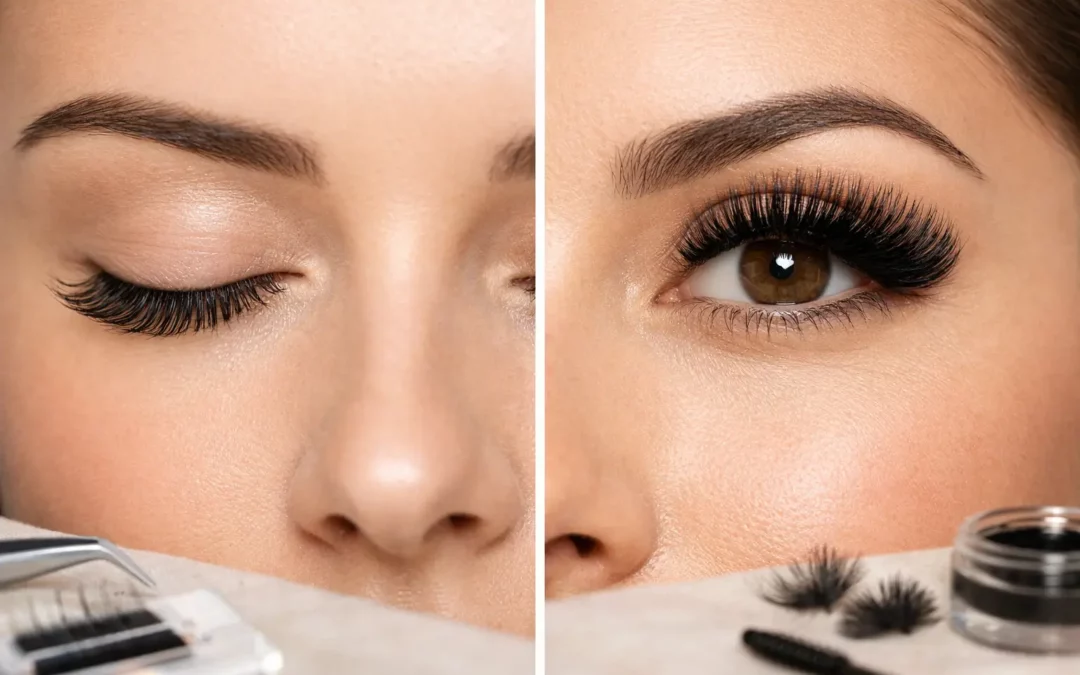
A client sits down and says, “I want lashes, but not too much.” That sounds simple until you realize “natural” means something different to everyone. This is where classic lashes vs volume becomes more than a style preference. It becomes a consultation skill, a pricing decision, and for newer artists, a test of whether your training actually prepared you to guide someone well.
If you are learning lash services or adding them to your menu, you need more than a quick answer like “classic is natural, volume is fuller.” That shortcut leaves out lash health, retention, mapping, client lifestyle, and the technical difference between applying one extension and building a safe fan. The better you understand these categories, the better your results, your client trust, and your long-term business.
Classic lashes vs volume: the real difference
Classic lashes use a 1:1 application. One extension is placed on one natural lash. The result is defined, clean, and mascara-like when done well. It enhances what the client already has, so the final set depends heavily on how many healthy natural lashes they start with.
Volume lashes use lightweight handmade or pre-made fans, with multiple fine extensions applied to one natural lash when the natural lash can safely support that weight. The goal is a fuller, fluffier look. Volume does not automatically mean dramatic. A well-designed volume set can look soft and airy, while a dense classic set on a client with strong natural lashes can still look bold.
That is the first thing professionals need to stop oversimplifying. “Classic” and “volume” describe technique, not just intensity. The client’s natural lash line, eye shape, styling goals, and maintenance habits all affect which option is the better fit.
How the finished look changes from one client to another
Classic sets show separation clearly. If your client has a lot of natural lashes, classic can look beautifully polished. If they have sparse lashes or visible gaps, classic may still look light because you can only place one extension where there is one healthy natural lash available.
Volume helps fill visual gaps more effectively because each fan creates softness and density around the lash line. That makes it especially useful for clients who want a darker lash line, a fluffier finish, or a more customized look without resorting to overly thick classic extensions.
This matters during consultation because many clients ask for “natural but full.” Sometimes that points to a light volume or hybrid set rather than classic. If you only understand the category names on a surface level, you may recommend the wrong service and disappoint the client even if your application is technically clean.
Lash health is where good training shows
A lot of poor-quality courses teach classic first and make volume sound like the next money move. That mindset causes problems. Volume is not just “more lashes.” It demands weight control, fan consistency, clean isolation, and a real understanding of what each natural lash can handle.
Classic can also damage lashes when artists use extensions that are too thick or too long. Volume can be very safe when the fan is properly built and the weight is appropriate. So the conversation is not “Which one is safer?” The better question is “Which one can this client safely wear based on their natural lashes and your actual skill level?”
That is where standards matter. A serious training program should teach styling, adhesive control, sanitation, infection control, and state or provincial compliance expectations, not just set photos for social media. If you plan to work across different provinces and states, that foundation matters even more because regulations, insurance expectations, and health requirements can vary.
Retention, maintenance, and lifestyle
Clients often choose based on appearance, but maintenance should be part of the decision. Classic lashes can look less dense between fills because every shed natural lash leaves a more obvious gap. Some clients love the crispness of classic on day one but feel the set looks sparse faster as they move through the lash cycle.
Volume tends to age more softly. Because each fan adds fluff, the set may continue to look fuller between appointments. That does not mean volume lasts longer in every case. Retention still depends on application, aftercare, adhesive performance, environment, and client habits. But visually, volume often hides normal shedding better.
Lifestyle matters too. A very low-maintenance client who will not brush, cleanse, or refill on schedule is not always the best candidate for a dense set. On the other hand, a busy client who wants to wake up looking finished may prefer volume because it gives more impact with less daily makeup.
Pricing is not just about time
Many newer artists underprice volume because they compare service time too narrowly. Yes, volume often takes longer, especially for beginners. But the bigger issue is skill. Proper volume requires advanced control, greater consistency, and more decision-making throughout the appointment.
Classic can be faster once your isolation and placement are strong, but it should not be treated like the cheap entry service by default. Clean classic work is harder than many people think. Direction matters. Attachment matters. Symmetry matters. A messy classic set exposes poor technique quickly because there is nowhere to hide.
When building your menu, price according to complexity, demand, product usage, appointment length, and your training level. Clients are not just paying for lashes. They are paying for judgment, safety, sanitation, and results that protect their natural lash health.
What artists should learn before offering both
If you are still deciding which service to train in first, start with the one that gives you the strongest foundation. For most students, that means learning classic thoroughly before moving into volume. Not because classic is “basic,” but because it teaches isolation, attachment, direction, symmetry, and discipline.
Volume should come next when your foundation is stable. Rushing into volume without strong classic technique usually creates bad habits – sticky lashes, uneven fans, poor retention, and overloading weak natural lashes. That is exactly how artists end up with a certificate but not real confidence.
A good educator will not just hand you a manual and call you certified after a few hours. You need feedback on placement, fan creation, mapping, fill work, and sanitation. You need correction in real time. You also need honest guidance about what you are ready to offer professionally and what still needs practice.
How to guide clients without guessing
The best consultations are specific. Ask what the client likes about lash extensions, what they dislike, how often they want fills, whether they wear liner or strip lashes now, and how much daily makeup they want to replace. Then assess their natural lashes carefully.
If they have strong density and want a clean enhancement, classic may be perfect. If they have sparse natural lashes or want a soft, fuller effect, volume may be the better recommendation. If they are in between, hybrid could be the bridge. What matters is that your recommendation is based on professional assessment, not on what is easiest for you to perform.
This is also where honesty protects your business. If a client brings in a dramatic photo but has weak natural lashes, say no to unsafe styling. A short-term booking is never worth long-term damage or a reputation for careless work.
Which one is better for your business?
Neither is automatically better. Classic attracts clients who want polished, wearable lashes and often serves as an accessible first booking. Volume expands your ability to customize, solve for sparsity, and offer higher-value services. Together, they create a stronger menu and a better consultation process.
For many artists, classic builds consistency and volume builds range. If you can perform both safely, you are in a better position to serve different eye shapes, budgets, and style goals. You are also less likely to force every client into the same look, which is one of the fastest ways to plateau as a lash artist.
At Voila Academy, that standard matters. Beauty education should prepare you to work professionally, safely, and confidently – not just pass a weekend course and hope for the best.
If you are choosing between classic and volume as a client, the right answer depends on your natural lashes and the look you actually want to maintain. If you are choosing as an artist, learn the technique deeply enough that you can explain the difference with authority, recommend with confidence, and deliver results that hold up after the appointment is over. That is how real careers are built.