
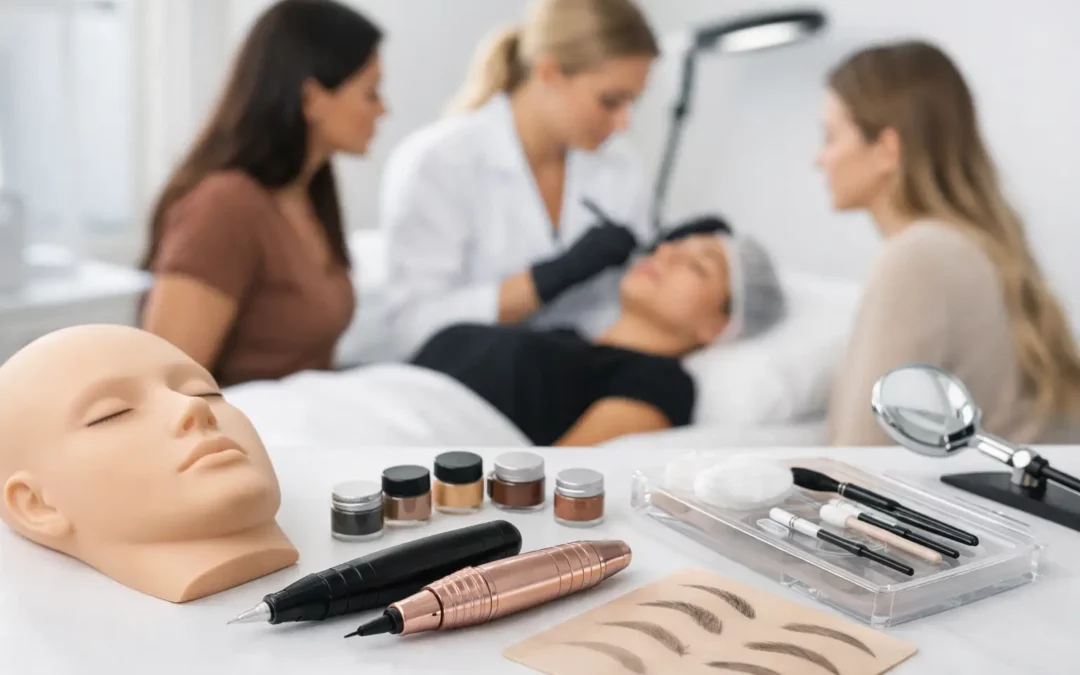
If a permanent makeup training course promises certification in a day, no live model practice, and little mention of sanitation, that is not a shortcut. It is a liability. In permanent makeup, weak training does not just create bad work. It can affect a client’s skin, health, trust, and your reputation before your business even has a chance to grow.
That is why choosing the right training matters so much. This is not a casual beauty service you can learn from a few videos and a starter kit. Permanent makeup sits at the intersection of beauty, skin integrity, infection control, facial design, and client communication. If you want to offer brows, lip blush, eyeliner, or full PMU professionally, your education needs to prepare you for the real treatment room, not just the marketing photos.
What a permanent makeup training course should actually teach
A legitimate permanent makeup training course should do far more than show you how to hold a machine or map a brow. Good training builds technical skill, but it also builds judgment. You need to understand who is a suitable candidate, when to refuse treatment, how skin type affects healed results, and what can go wrong when pressure, depth, or pigment choice is off.
That means strong training should include skin theory, color theory, facial symmetry, contraindications, sanitation, healing stages, consultation skills, consent, aftercare, and correction awareness. Students also need real discussion around retention, touch-ups, uneven healing, and client expectations. If a course only focuses on getting a pretty result on day one, it is skipping the part that determines whether your work still looks good weeks later.
Hands-on practice is equally important. Watching a trainer work is useful, but it is not enough. You need supervised practice, feedback in real time, and a learning environment where mistakes are corrected before they become habits. That is one of the biggest differences between serious education and low-quality certification mills.
The biggest red flags to watch for
A lot of students come to PMU after already wasting money on poor beauty education elsewhere. They have seen courses that look polished online but fall apart in person. The pattern is usually the same: vague promises, rushed timelines, little trainer access, and no accountability once tuition is paid.
Be careful with programs that are suspiciously cheap for what they claim to offer. Price alone does not determine quality, but permanent makeup is a high-risk, high-skill service. Proper education requires time, materials, oversight, insurance awareness, and live instruction. If the pricing sounds too good to be true, ask what has been removed from the learning experience to make it that cheap.
Another red flag is when a trainer avoids talking about licensing, health guidelines, bloodborne pathogen training, or infection control. That silence is telling. Any educator who takes PMU seriously should be clear about safety standards and legal responsibilities. You should also question programs with oversized classes where students receive minimal direct feedback. In a service this technical, crowded training usually means less correction, less model time, and less confidence when you start working on your own.
Then there is the issue of transparency. If you cannot clearly see the trainer’s work, experience, teaching process, and what is actually included in the course, do not fill in the blanks for them. Professional training providers should be comfortable answering direct questions because serious students deserve direct answers.
What to ask before enrolling in a permanent makeup training course
Before you commit, ask how much hands-on training is included and whether you will work on live models under supervision. Ask how many students are in each class and how much one-on-one guidance you can expect. Ask whether the course includes infection control education, client screening, contraindications, consent procedures, and aftercare instruction.
You should also ask what happens after class ends. Do you get ongoing mentorship, case review, or support while building confidence? That post-training window matters more than many new students realize. The first questions often come after you leave the classroom and start dealing with real clients, real healing outcomes, and real business decisions.
It is also smart to ask whether the course is designed for true beginners or for experienced artists adding PMU to an existing service menu. Those are not the same student profiles, and they should not be taught the same way. A beginner needs stronger foundations, more repetition, and more support. An established beauty professional may move faster in some areas but still needs proper safety and technique training specific to permanent makeup.
Why hands-on education beats shortcut learning
Online education can be valuable when it supports theory, pre-study, or continued development. But permanent makeup is not a category where online-only learning should be treated as complete preparation for paid client work. There is too much nuance in needle control, pressure, skin response, stretch, and implantation technique to learn responsibly without supervised hands-on instruction.
This is where many students get misled. They see a course that looks convenient and affordable, then realize later that convenience came at the expense of competence. A certificate may be emailed quickly, but confidence is earned slowly. And confidence in PMU should come from practice, correction, and standards, not from being told you are ready before you actually are.
A serious academy treats hands-on training as non-negotiable. It recognizes that students need a safe place to learn, ask questions, and develop discipline. That kind of education may feel more demanding, but that is exactly the point. Permanent makeup clients are trusting you with their face. Your training should reflect the weight of that responsibility.
Career value matters as much as technique
The right course should not only teach you how to perform a treatment. It should help you build a service that clients trust and that can support your income. That includes consultation skills, pricing confidence, photography standards, client communication, treatment planning, and understanding when someone is not an appropriate candidate.
This is where many low-quality courses fail. They sell the fantasy of instant business ownership but ignore the structure required to sustain one. Learning PMU without learning professionalism is a setup for frustration. Strong educators prepare students for the realities of building a beauty business, including policies, compliance, client retention, and reputation management.
For many aspiring artists, permanent makeup is not just another certificate. It is a path toward self-employment, a more specialized service menu, or a more profitable beauty business. That deserves training built around long-term success, not just fast enrollment.
The best fit depends on your starting point
Not every student needs the same course, and that is worth saying clearly. If you are completely new to beauty, you may need a more structured path with foundational support and close mentorship. If you already work in brows, esthetics, or cosmetic tattooing, you may be ready for more specialized PMU training. Neither path is better. What matters is whether the course meets you where you are without pretending experience you do not yet have.
The same goes for pace. Some students want to move quickly because they are eager to launch. That ambition is understandable, but speed should never replace depth. A better question than “How fast can I get certified?” is “How well will I be prepared to perform this service safely and confidently?”
That shift in thinking protects your investment. It also protects your future clients.
What serious training looks like in practice
A high-standard academy creates a learning environment where accountability is part of the process. That means clear expectations, direct feedback, sanitary procedures, realistic model work, and educators who do not hesitate to correct poor habits early. It also means small enough class sizes that students are seen, coached, and challenged.
At Voila Academy, that standards-first approach is central to how beauty education should work. Students need more than a manual and a photo op. They need mentorship, technical guidance, and honest instruction that prepares them for real treatment room decisions.
When you compare courses, look for the provider that treats permanent makeup with the seriousness it deserves. The right training may ask more of you, but it will give more back in skill, confidence, and credibility.
A permanent makeup career can be incredibly rewarding, but only when your foundation is solid. Choose the course that respects the craft, respects the client, and respects the professional you are trying to become.