
A permanent makeup certificate can look impressive on a wall. It cannot, by itself, tell a client whether you understand skin, pigment behavior, healing, cross-contamination prevention, or when to refuse a service. That is why Chilliwack permanent makeup training should be chosen as career preparation, not a quick weekend purchase.
Permanent makeup is a serious service category. You are working on the face, often creating results that remain visible for years. Clients trust you with their appearance, comfort, and safety. The training you choose has to prepare you for that responsibility long before you take a paying appointment.
What quality permanent makeup training should teach
A legitimate course goes beyond showing a few attractive healed-result photos and handing out a kit. It should build your decision-making skills from the ground up. Technique matters, but so does knowing why a technique is appropriate for one client and a poor choice for another.
Your foundation should include skin structure, skin types, contraindications, color theory, facial mapping, pigment selection, machine handling, needle and cartridge knowledge, depth control, client consultation, informed consent, aftercare, and photographic documentation. Infection prevention must be taught as a working habit, not as a rushed slide at the beginning of class.
For brows, that means learning how to assess natural hair patterns, facial balance, mature skin, oily skin, and previous work. For lip blush, it means understanding lip anatomy, pre-care, color correction considerations, and realistic healing expectations. For eyeliner, it means working with exceptional care around a sensitive area and recognizing when a client is not a suitable candidate.
The goal is not to copy one trainer’s strokes or machine movement. The goal is to develop controlled, repeatable technique and sound professional judgment.
Hands-on work is where confidence becomes competence
Watching a demonstration is useful. It is not the same as performing a procedure under qualified supervision.
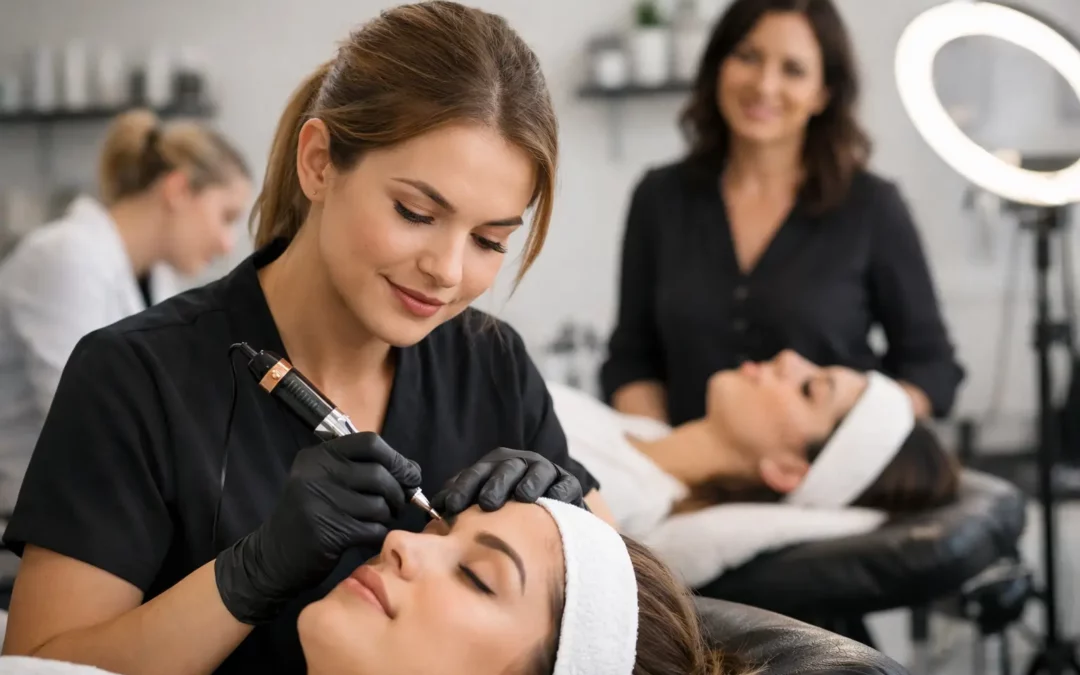
Before working on a live model, students need time with mapping exercises, latex practice, machine control drills, and instructor feedback. These steps may not feel as exciting as posting a first model result, but they are where precision is built. A trainer should correct hand position, speed, pressure, stretch, outline placement, symmetry, and saturation before weak habits become expensive problems.
Live model experience is equally important, provided it is structured properly. You should not be left alone with a model simply because the class schedule is moving fast. Strong instruction includes a thorough consultation, a clear treatment plan, sanitation setup, direct supervision, and a discussion afterward about what went well and what needs improvement.
Small classes make a meaningful difference here. In a packed room, a student can easily leave with unanswered questions and very little individual correction. In a focused setting, your trainer can see the details that a social media video cannot: inconsistent depth, uneven stretching, rushed passes, or a color choice that may heal cooler or warmer than expected.
Safety is not an add-on to your certification
Poor training tends to make sanitation sound simple: wear gloves, wipe down the station, and move on. Real infection control is more detailed. It involves understanding clean and contaminated zones, preventing cross-contamination, handling single-use items correctly, preparing a treatment area, managing sharps, and following proper procedures from setup through cleanup.
A professional artist also needs to understand the legal and health requirements that affect where and how they can work. Permanent makeup regulations are not identical everywhere. Requirements may vary by municipality, health authority, province, or state, and the rules can change as the industry evolves.
At Voila Academy, we deal with both provinces and states because many students are building careers across North America or need clarity about requirements beyond their immediate area. Training should give you a compliance-minded foundation, while also teaching you to confirm the current rules that apply to your own business location.
Be cautious of any course that treats licensing, insurance, bloodborne pathogen education, or health guidelines as an inconvenience. These are not barriers to getting started. They are part of protecting your clients, your reputation, and the business you are working to build.
Choosing the right Chilliwack permanent makeup training program
The best program for you depends on your experience, the services you plan to offer, and how much mentorship you need. A working esthetician may be ready to add a focused permanent makeup specialty. A complete beginner may need more time with foundational concepts, client care, sanitation, and service readiness.
Start by asking direct questions. Who is teaching the course, and what is their active professional experience? How many students are in each class? How much supervised hands-on practice is included? Are live models part of the program? What does the kit contain? Is support available after class? Can the school clearly explain its insurance, operations, and safety standards?
Pay attention to how transparent the answers are. A credible trainer does not need to promise that you will become fully booked overnight. They should be able to explain what the course covers, what practice will still be required, and what professional steps come next.
Price deserves context, too. Low-cost training can be tempting when you are investing in a new career. But a cheaper course that skips live support, proper materials, sanitation education, or post-course guidance can cost much more later in retraining, lost confidence, corrective work, and damaged client trust. Good training is not about paying for a fancy certificate. It is about paying for the instruction and accountability that make that certificate mean something.
Certification is the beginning of your practice, not the finish line
No responsible educator should suggest that one class replaces ongoing practice. Your first months after certification should be intentional. Continue practicing approved techniques, reviewing healed results, documenting your work carefully, and seeking feedback when something does not heal as expected.
Healed results are where permanent makeup artists learn the most. Fresh work can look polished immediately after an appointment, but the real evaluation comes after the skin has healed. Was the color retained appropriately? Did the shape remain balanced? Did the client follow aftercare? Was the skin type suited to the chosen technique? These questions help you improve treatment planning instead of relying on guesswork.
You will also need the business fundamentals that turn a new skill into a sustainable service. That includes setting policies, pricing for your time and supplies, scheduling touch-ups, maintaining client records, building a portfolio honestly, and communicating expectations before the appointment. A client who understands healing, fading, and touch-up needs is more likely to feel cared for and return with realistic expectations.
Build a reputation before you build a menu
It can be tempting to offer brows, lips, eyeliner, corrections, and every trending technique as soon as you finish training. A smarter approach is to become excellent at the services you have been thoroughly trained to perform. Add new procedures only when your education, practice, and confidence support them.
This protects your clients and gives your business a stronger foundation. A reliable artist is remembered for clean work, thoughtful consultations, consistent healed results, and honest recommendations. Sometimes the most professional answer is not yes. It is explaining that a client needs more time, a different service, medical clearance, removal consultation, or no treatment at all.
That kind of judgment is what separates a trained technician from a professional permanent makeup artist.
If you are considering a career in permanent makeup, choose education that is willing to slow you down long enough to make you safe, skilled, and accountable. The right training does more than help you perform a service. It gives you the standards to protect every client who sits in your chair and the confidence to build a business you can be proud of.