
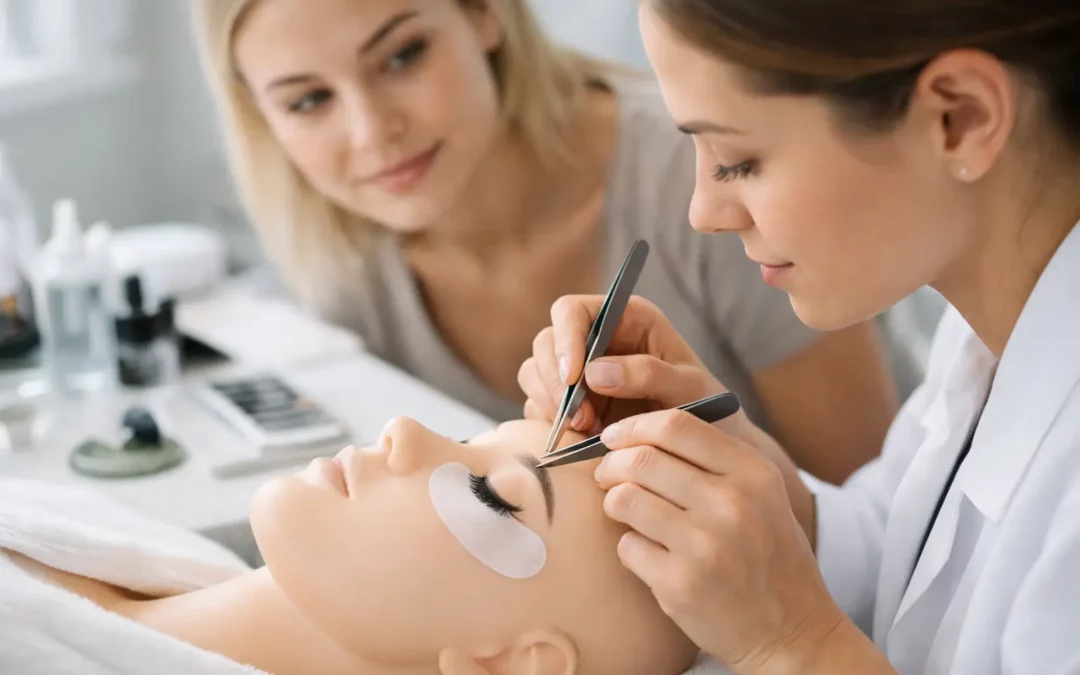
A first lash set can look deceptively simple from across the room. Up close, it is a precision service performed around a client’s eyes, with adhesive chemistry, isolation, styling, sanitation, and comfort all happening at once. So, can beginners learn lash extensions? Absolutely. But beginners should learn them through structured, hands-on education, not by treating a short online video or bargain kit as a professional qualification.
Lash artistry is a learnable skill, not a talent people are either born with or without. The catch is that confidence has to be earned through correct technique and repeated practice. A beginner who starts with strong fundamentals can build a safe, profitable service. A beginner who skips those fundamentals may develop habits that are difficult to correct and risky for clients.
Can Beginners Learn Lash Extensions Without Beauty Experience?
Yes. You do not need to be a cosmetologist, makeup artist, or salon owner before learning classic lash extensions. Many successful lash artists begin with no prior beauty background at all. What matters more is your willingness to practice carefully, follow health and safety procedures, accept correction, and keep learning after certification.
There are also real advantages to starting fresh. You have fewer habits to unlearn. A quality educator can teach you proper posture, tweezer control, adhesive use, lash direction, and client care from the beginning instead of trying to repair technique built from guesswork.
That said, lash extensions are not a “learn it in an afternoon and start taking clients tomorrow” service. Even after a strong beginner course, most new artists need dedicated model practice before they work efficiently and consistently. Expect early sets to take longer. Expect isolation to feel awkward at first. Expect to need feedback. That is normal, and it is exactly why mentorship matters.
What Beginners Actually Need to Learn
The visible result is beautiful lashes. The professional work behind it is much more detailed. A legitimate beginner program should teach the technical, safety, and business foundations that protect both the artist and the client.
A beginner needs to understand natural lash anatomy and growth cycles before choosing extension length, curl, diameter, or weight. Applying lashes that are too long or heavy can stress the natural lash. Creating fans that are too wide, poorly attached, or stuck to neighboring lashes can cause discomfort and damage. A full set is never worth compromising natural lash health.
Isolation is one of the most important skills. Each extension should be applied to one healthy natural lash, without adhesive bonding multiple lashes together. This is harder than it looks, particularly on clients with dense, fine, curly, or layered natural lashes. It takes time to train your eyes and hands to work accurately.
Beginners also need practical knowledge of adhesive conditions. Humidity, room temperature, product freshness, application speed, and adhesive amount affect retention. When retention is poor, new artists often blame the adhesive. Sometimes it is the product, but often the issue is surface preparation, placement, too much adhesive, or working outside the product’s ideal conditions.
Sanitation and contraindications cannot be treated as an afterthought. Professional training should cover disinfection, single-use items, safe tool handling, patch testing policies where appropriate, consultation, aftercare, and when to refuse or postpone a service. A client with an active eye infection, certain skin conditions, or signs of irritation needs responsible direction, not a lash appointment.
Why Cheap, Shortcut Training Can Cost More
Low-cost courses can be tempting when you are excited to start a new career. The problem is not that every affordable course is poor. The problem is that many shortcut programs provide a certificate without providing enough supervised practice, health education, or honest correction to make that certificate meaningful.
A course that promises instant expertise should raise questions. Lash extensions require close work around the eyes. No serious educator should suggest that a few hours of watching pre-recorded content makes someone ready for every client, every eye shape, and every retention challenge.
Before enrolling, ask what happens after the lesson. Will you receive live feedback on your application? Are models included or required? Does the instructor explain sanitation procedures, contraindications, styling, fills, removals, and client consultation? Can you see the trainer’s own work and teaching background? Is there a clear path to ask questions when you begin practicing?
At Voila Academy, the goal is not to push students through fast-food training and hand them a certificate they cannot confidently use. Strong education gives you a technical base, accountable practice, and the professional judgment to know when a result needs correction rather than a quick cover-up.
Your First Months as a Lash Artist
A realistic early plan helps beginners avoid burnout and protect their reputation. Start by practicing on mannequins or training strips to develop hand position and placement control, then move to approved live models under the guidance of your course requirements. Models are not simply free appointments. They are part of your education, so give yourself enough time to work slowly and correctly.
Photograph your work in consistent lighting. Look beyond whether the set appears full. Check direction, symmetry, attachment, clean isolation, inner and outer corner work, and whether the design suits the client’s natural lashes and eye shape. Your photos will show progress that you may not notice day to day.
Keep a simple record of every appointment. Note the adhesive used, room conditions, lash mapping, client feedback, retention, and any issues you encountered. Over time, patterns become clear. You may find that your retention changes on humid days, that a certain curl works better for a particular eye shape, or that you need more practice on inner corners.
Do not rush into volume lashes before you can create clean, safe classic sets. Volume requires fan control, weight calculations, and even more disciplined isolation. Building a solid classic foundation first makes future advanced training more valuable and far less frustrating.
Licensing, Insurance, and Local Rules Matter
Before offering paid lash services, check the requirements where you plan to work. Lash extension regulations are not identical across North America. Requirements can vary between provinces and states, as well as between local health authorities, licensing boards, salons, and home-based businesses.
Some areas may require a specific esthetics or cosmetology license. Others may allow a separate lash certification but still expect compliance with sanitation, insurance, business registration, and facility rules. If you are renting a chair, working from home, or opening a studio, additional requirements may apply.
Do not rely on social media comments for legal or health guidance. Contact the relevant regulatory body and your insurer directly. Proper liability insurance, consent forms, sanitation procedures, and clear client records are part of operating professionally. They also tell clients that you take their comfort and safety seriously.
How to Choose a Beginner Lash Course
The best beginner course is not necessarily the shortest, cheapest, or most heavily advertised. Look for a program that is transparent about what you will learn and what you will still need to practice afterward. Honest education does not sell fantasy. It gives you a path.
A strong course should include hands-on application, close instructor observation, sanitation and infection-control instruction, product knowledge, consultation and aftercare, and guidance on building a client-ready portfolio. Small class sizes can be especially valuable because lash application is detail work. You need an instructor who can see your placement, correct your grip, and explain why a technique is not working.
Also consider the educator’s standards. Are they clear about safe extension selection and isolation? Do they discuss the difference between a certification of completion and meeting local requirements to work? Do they offer ongoing support, advanced education, or access to professional supplies as your skills grow? These details separate career-focused training from a one-time transaction.
The Right Mindset for Learning Lashes
Beginners succeed when they stop measuring themselves against edited social media photos and start measuring themselves against professional standards. Your first sets do not need to be fast. They need to be clean, safe, and improving.
Lash extensions can become a meaningful career, a valuable addition to an existing beauty menu, or the first step toward business ownership. Start with education that respects the service, the client, and your future reputation. Skill grows one correctly placed lash at a time.