
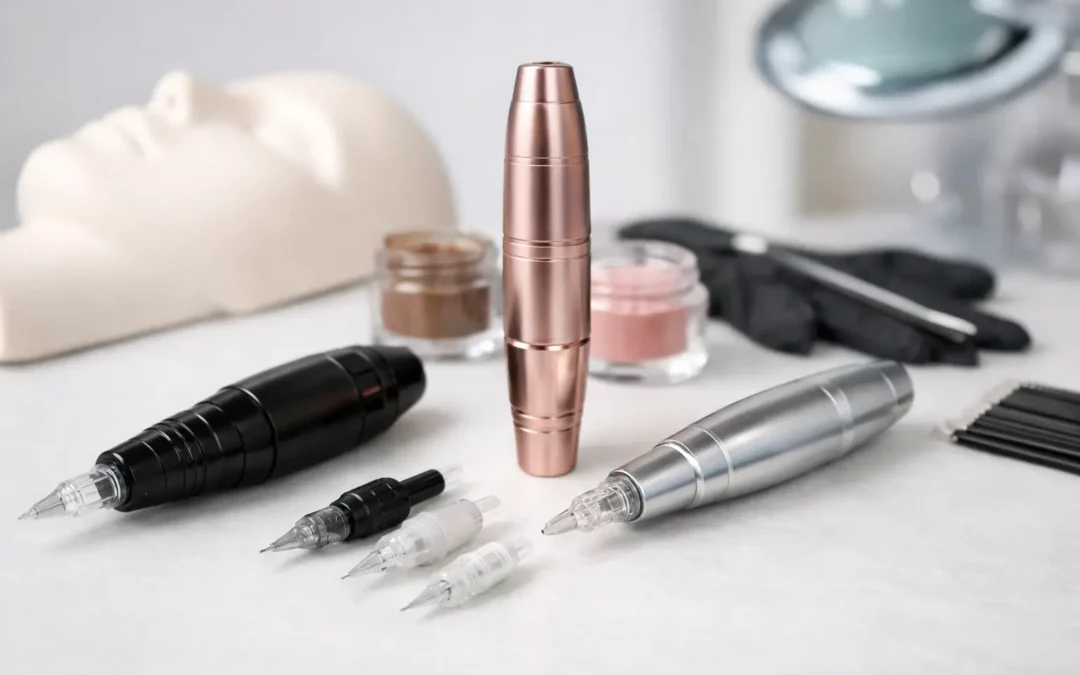
A PMU machine can make a beginner feel more capable than they are. That is exactly why choosing the best PMU machine for beginners is not about buying the strongest, most expensive, or most heavily advertised device. It is about choosing a machine that gives you control while you learn proper depth, hand speed, stretch, pigment behavior, and healed results.
Permanent makeup is not a service where equipment can compensate for weak fundamentals. A quality machine supports good technique. It does not create it. Before investing, make sure your training includes hands-on supervision, infection control, consultation skills, contraindications, color theory, and clear guidance on local requirements.
What Makes a PMU Machine Beginner-Friendly?
For a new artist, predictability matters more than power. You need a machine that starts consistently, runs smoothly, and allows you to make controlled adjustments without fighting the device. When your hand is still developing muscle memory, an overly aggressive machine can encourage trauma, shaky saturation, and the habit of working too deep.
A beginner-friendly PMU machine should have a moderate, consistent stroke, low vibration, a comfortable grip, and dependable cartridge compatibility. It should also be simple enough that you can focus on your technique instead of constantly troubleshooting settings.
Do not confuse “simple” with cheap. Extremely low-cost machines often come with questionable internal components, inconsistent needle movement, poor battery life, or cartridges that do not fit securely. Those problems can interrupt a procedure and make it harder to understand whether an issue came from your technique, pigment selection, skin type, or equipment.
Start With Stroke Length, Not Marketing Claims
Stroke length describes how far the needle moves in and out of the cartridge. It affects how the machine delivers pigment, how it feels in the skin, and which procedures it may suit best.
For most beginners learning powder brows, lip blush, and soft eyeliner, a moderate stroke is usually the most forgiving place to start. A stroke in the approximate 2.5 mm to 3.5 mm range often provides enough versatility for soft pixelation and controlled saturation without feeling unnecessarily aggressive. Exact preferences vary by artist, technique, cartridge grouping, and procedure area, but a moderate stroke gives many students room to develop.
Shorter-stroke machines can feel gentler and may suit delicate shading approaches. Longer-stroke machines can be useful for certain techniques and experienced hands, but they may deliver pigment more forcefully. If you do not yet understand depth and skin response, more force is not automatically an advantage.
A machine marketed as suitable for every PMU procedure deserves a closer look. Brows, lips, and eyeliner are not the same service. Skin thickness, sensitivity, tissue movement, pigment needs, and healing expectations differ. A versatile starter machine can be a smart purchase, but it should not replace procedure-specific education.
The right voltage range matters too
Look for a device with adjustable voltage and a display that is easy to read during service. Beginners often benefit from working within a conservative range and adjusting based on the skin, technique, needle configuration, and machine behavior.
There is no universal “correct” voltage for every client. Copying a number from social media without understanding why it works can lead to poor implantation or unnecessary trauma. Your trainer should teach you how to recognize when a machine is moving too slowly, too aggressively, or not matching your hand speed.
Wired or Wireless: Choose Reliability First
Wireless PMU machines are convenient. Fewer cords can make your station feel cleaner and give you more freedom of movement, especially around lips and eyeliner. For a working artist, that convenience can be valuable.
But wireless is not always the best first purchase if the battery is unreliable, the device is unbalanced, or replacement batteries are difficult to source. A wired machine with a stable power supply can be an excellent training tool because it provides consistent performance for long practice sessions.
If you choose wireless, check the real battery runtime, charging method, availability of backup batteries, weight distribution, and whether the machine remains comfortable after several hours. Do not choose a device simply because it looks sleek in a video. Your wrist will have a more honest opinion after repeated brow, lip, and eyeliner practice.
Cartridges Are a Safety Decision, Not an Accessory
A PMU machine is only as dependable as the cartridges you pair with it. Beginners should choose a system with secure, compatible, single-use needle cartridges from a reputable professional source. Cartridge fit should be firm, stable, and free from wobble. A loose cartridge can affect consistency and create avoidable risk.
Pay attention to membrane design. A high-quality safety membrane helps prevent backflow into the grip or machine. That does not eliminate the need for proper barrier protection, cleaning, disinfection, and disposable setup. It is one layer in a complete infection-control system.
Do not build your service kit around random bargain cartridges from unknown sellers. Saving a few dollars on needles is not worth compromising client safety, pigment placement, or your professional reputation. A PMU career is built on trust, and clients deserve to know that you use appropriate single-use supplies and follow sanitary protocols.
Comfort Protects Your Technique
A lightweight machine with low vibration can make a meaningful difference during the learning stage. When your hand is tense or fatigued, your movements become less controlled. That can show up as uneven pixels, inconsistent saturation, harsh edges, or overworking the skin.
Hold the machine before purchasing if you can. Notice the grip diameter, overall weight, balance, and how easily you can control it with a relaxed hand. Smaller hands may prefer a narrower grip, while some artists find a slightly larger grip reduces finger tension. There is no single best shape, but there is a wrong choice for your body if it causes strain.
Be cautious with machines that are very heavy, loud, or highly vibrating. A beginner may assume these are minor inconveniences, but long-term comfort affects both your work quality and your ability to practice consistently.
Do Not Buy a Machine Before You Understand Your Training Requirements
The best PMU machine for beginners should match the curriculum you are learning. If your course teaches a specific powder brow method, ask which machine characteristics and cartridge groupings support that method. If you plan to add lip blush later, ask whether the same setup is appropriate or whether you will need additional cartridges, pigments, and technique training.
Training should also cover what happens outside the treatment room: informed consent, pre-care, aftercare, documentation, client screening, photography, touch-up policies, and managing expectations. Equipment is only one part of professional readiness.
Requirements can vary significantly between provinces and states, and they can change by municipality, health authority, licensing body, or local public health department. Before offering services, verify the rules that apply where you operate. That may include bloodborne pathogen education, facility requirements, inspections, permits, insurance, waste disposal, and restrictions around who may perform specific procedures.
A certificate alone does not automatically mean you are legally ready to work. Legitimate education prepares you to ask the right questions and build a compliant business, not just collect a piece of paper.
A Smart Starter Budget Includes More Than the Machine
New artists sometimes spend their entire budget on a premium device, then cut corners on education, cartridges, pigments, sanitation supplies, and model practice. That approach puts the investment in the wrong place.
Plan for a complete professional setup: a reliable machine, compatible cartridges, quality pigments, barrier products, proper cleaning and disinfection materials, disposable supplies, lighting, consent forms, insurance, and continued mentorship. You also need time. Practice on appropriate training materials and supervised models is where your hand begins to understand what theory alone cannot teach.
At Voila Academy, the goal is not to rush students into performing PMU because they bought a machine. It is to build artists who understand why each choice matters, from setup and skin preparation to healed outcomes and client safety.
Questions to Ask Before You Buy
Ask the seller whether the machine has a warranty, whether replacement parts or batteries are available, and which cartridges are officially compatible. Ask your trainer what stroke range, voltage control, and grip style best support the procedures you are learning. Then ask yourself whether you can afford to maintain the system with professional-grade supplies.
Also consider your near-term service plan. If you are starting with powder brows and intend to become proficient before adding other PMU services, you may not need every feature on the market. Buy for the next stage of your career, not for an imaginary full menu you have not yet been trained to perform.
The right first PMU machine should feel like a dependable extension of your education: controlled, safe, serviceable, and appropriate for the work you are qualified to do. Choose the machine that helps you practice deliberately, respect the skin, and earn your confidence one healed result at a time.