
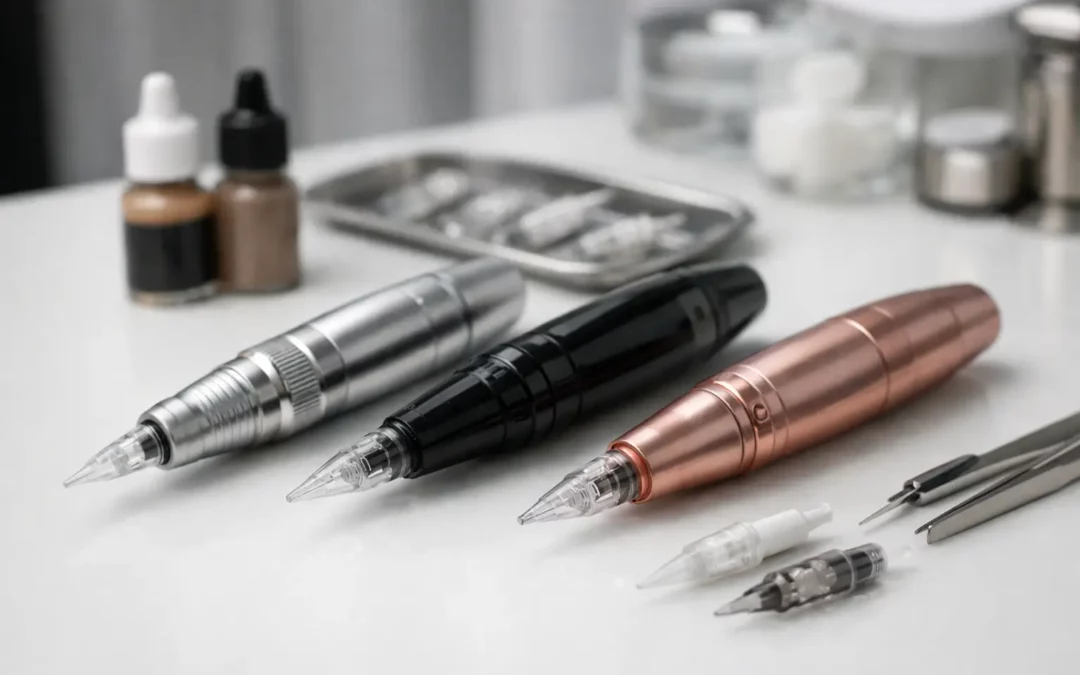
A permanent makeup machine can make your work feel controlled and refined, or it can fight you through every brow stroke, lip pass, and eyeliner detail. That is why searching for the best permanent makeup machines should never start with a trendy name or the lowest price. It should start with the procedures you are trained to perform, the skin you will work on, and the level of consistency your clients deserve.
For new artists especially, a machine is not a shortcut to beautiful healed results. Your hand speed, depth control, pigment knowledge, needle selection, skin assessment, and aftercare guidance still do the real work. But the right machine supports those skills. The wrong one can make learning harder, compromise your results, and create an expensive problem after the purchase.
What Makes the Best Permanent Makeup Machines Worth Buying?
The best permanent makeup machines are not automatically the most expensive machines on the market. They are the ones that offer dependable performance, appropriate needle compatibility, consistent power delivery, and a setup you can confidently maintain between clients.
Look first at how the machine performs in the procedures you plan to offer. Powder brows generally require a machine that can create smooth pixelation without excessive trauma. Lip blush calls for controlled saturation and a gentle, even hand feel across delicate tissue. Eyeliner requires precision, visibility, and a machine that does not feel bulky or unpredictable during detailed work near the lash line.
A quality PMU machine should also be built for professional sanitation. Cartridges need to be single-use and ideally include a reliable membrane system that helps prevent pigment or fluid from moving back into the handpiece. This does not replace proper barrier protection, cleaning, disinfection, and infection-control procedures, but it is an essential layer in a responsible setup.
Do not overlook service support and warranty coverage. A machine can look polished in a social media video, but if there is no clear manufacturer support, accessible replacement parts, or warranty process, you may be left with a costly tool that cannot be repaired. Professional equipment should be treated like a business investment, not an impulse purchase.
Machine Features That Affect Your Results
Stroke Length and Skin Response
Stroke length influences how the needle delivers pigment into the skin. A shorter stroke can offer a softer, more delicate feel and may suit fine detail work or sensitive areas. A longer stroke may provide more power and can be useful for denser saturation, but it can also be less forgiving in untrained hands.
There is no universal “best” stroke length for every artist and every procedure. An artist focused on machine hairstrokes may prefer a different setup than an artist who specializes in soft powder brows and healed lip color. The goal is not to chase a specification. The goal is to understand how your machine, needle configuration, hand movement, and client’s skin work together.
Voltage and Consistent Power
Voltage settings affect needle speed, but higher voltage does not mean better work. Turning up the machine to force pigment into the skin can lead to unnecessary trauma, patchy healing, or color that heals too cool, too warm, or unevenly because the skin was overworked.
A reliable machine gives you stable power at lower and moderate settings. That stability helps you work with intention rather than constantly compensating for a machine that stalls, jumps, or changes speed. As your technique develops, you will learn when to adjust voltage for different areas, skin types, and needle groupings.
Weight, Balance, and Ergonomics
A handpiece that feels too heavy can create fatigue during long appointments. One that is too wide or poorly balanced can affect your grip and make detailed work harder. This matters more than many beginners expect.
If possible, hold a machine before buying it. Notice whether it feels steady in your hand, whether the cord pulls against your movement, and whether the grip supports the way you naturally work. Wireless machines can reduce cord drag and improve mobility, but they also need dependable battery life and a backup power plan. A dead battery in the middle of a procedure is not a professional experience for you or your client.
Rotary, Digital, and Wireless: Choose for Your Workflow
Most professional PMU artists work with rotary-style machines because they are generally quiet, versatile, and capable of smooth pigment implantation. Within that category, you will find corded and wireless options, as well as machines with simple controls or digital displays.
Corded machines are often a smart choice for artists who value uninterrupted power and a lower initial investment. They can be practical for a dedicated treatment room, provided your cable management and barriers are handled correctly.
Wireless machines are attractive for their freedom of movement and clean-looking setup. They can be excellent tools when the battery is reliable, the machine is properly balanced, and you have a charged backup available. They are not automatically superior. If a wireless machine feels top-heavy or loses consistency as the battery drains, it may not be the right fit for precise facial tattooing.
Digital displays can make settings easier to track, especially for students learning how voltage changes their technique. Still, a screen does not replace education. A beginner who does not understand depth, stretch, and skin response can cause damage with a digital machine just as easily as with a basic one.
Do Not Buy a Machine Before You Understand Cartridges
Your machine and cartridge system must work together. Cartridges vary by needle diameter, taper, configuration, membrane quality, and how securely they fit the handpiece. Small differences can affect pigment flow, visibility, and the way the needle interacts with skin.
For example, a single needle may be selected for precise hair-stroke work, while round shaders and magnum-style configurations can support shading and saturation. That does not mean every artist should purchase every configuration at once. Building a thoughtful starter setup is better than buying a drawer full of cheap cartridges you do not understand or trust.
Avoid unverified cartridges with inconsistent manufacturing. A low-cost cartridge may seem like a savings until you experience unstable needle movement, poor fit, faulty membranes, or unpredictable results. Your client’s face is not the place to test questionable supplies.
A Professional PMU Setup Requires More Than a Machine
A machine is only one part of a safe permanent makeup service. Artists also need appropriate pigments, single-use supplies, barriers, topical products used within local rules, sharps disposal, informed consent forms, pre-care and aftercare materials, and a sanitation process that can stand up to scrutiny.
Requirements vary widely. Permanent makeup regulations can differ between provinces and states, and they may also change by county, city, health authority, or licensing board. Before offering services, verify the rules that apply to your location, your facility, your training, and the procedures you intend to perform. Do not assume that a certificate alone gives you permission to work everywhere.
This is where legitimate education protects your investment. Training should include practical machine handling, skin theory, contraindications, color principles, infection control, client consultation, and supervised feedback. A cheap course that hands you a certificate after a few videos may leave you with a machine but no real ability to use it safely.
How to Shop Without Falling for Hype
When comparing machines, ask practical questions. Is the manufacturer transparent about technical specifications? Are compatible cartridges easy to source from reputable professional suppliers? Is there a warranty? Can the machine be serviced? Does your educator use or recommend it for the procedures you are learning?
Be cautious with oversized “starter kits” that include a machine, pigments, practice skin, cartridges, and dozens of extras for a suspiciously low price. Some kits are useful for practice, but many contain supplies that are not appropriate for professional client work. Saving money on a machine is never worth risking a client’s health, your reputation, or your ability to produce healed results you are proud to show.
At Voila Academy, we encourage students to choose equipment after they understand the fundamentals, not before. The goal is to build a career with standards, confidence, and a service menu that supports long-term growth.
The right machine should feel like a dependable extension of trained hands. Invest in education first, choose equipment with care, and let your healed work – not a flashy tool – become the reason clients trust you.