
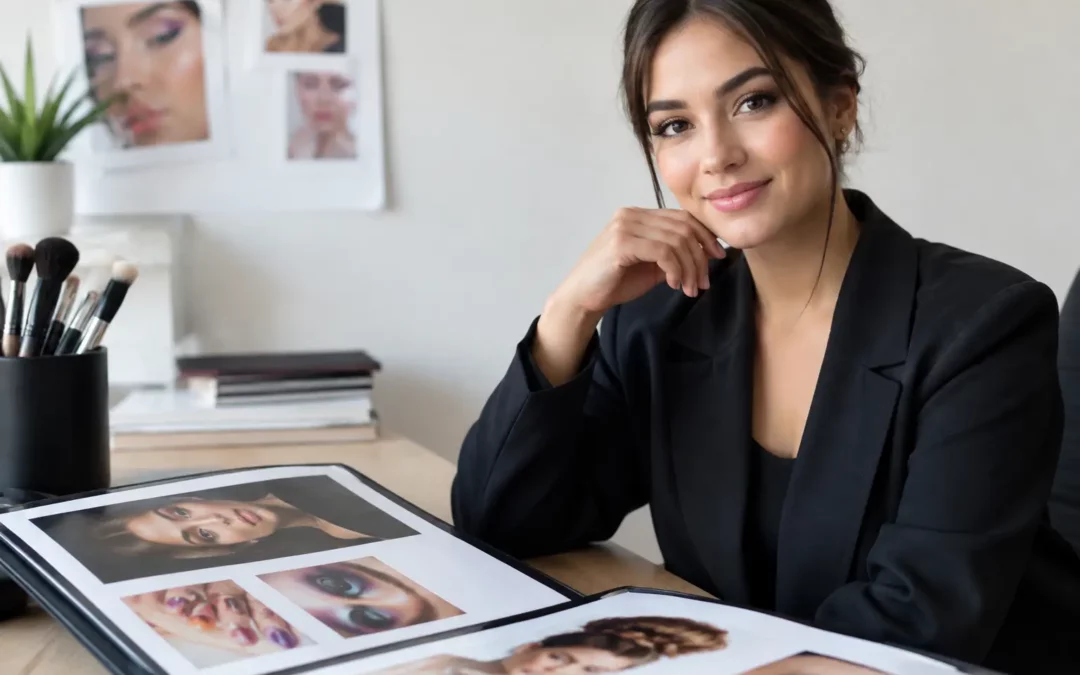
A certificate tells a potential client what you studied. Your portfolio shows whether they can trust you with their face, eyes, skin, and confidence. The strongest beauty student portfolio examples do not rely on filters, borrowed photos, or one lucky model. They make your technical progress, sanitation habits, attention to detail, and service direction easy to see.
That distinction matters. A beautiful social media grid may earn likes, but a professional portfolio should answer the questions that matter before someone books: Can this artist create consistent work? Do they understand safe application? Can they work across different features, skin types, and client goals? Are they ready to build a real business rather than collect another certificate?
What Makes a Student Portfolio Credible
Your portfolio is evidence, not an advertisement with perfect lighting. You do want polished images, but polish cannot cover poor isolation, uneven brow mapping, irritated skin, patchy tint, or lips photographed before they are fully healed. Clients and potential employers may not know every technical term, yet they can recognize care, symmetry, cleanliness, and consistency.
Start with your strongest work, but include enough variety to prove that your results are repeatable. A new lash artist who posts six nearly identical classic sets on the same model has not shown the full picture. A more convincing collection includes different eye shapes, lash conditions, styling choices, and lengths that remain appropriate for the natural lash.
The same principle applies to brows, waxing, and permanent makeup. Show that you can assess the client in front of you instead of forcing every person into one trend. A soft brow lamination may suit one client, while another needs a more conservative finish. A powder brow should be designed around facial balance, skin characteristics, and the client’s existing hair pattern – not copied from a template.
Beauty Student Portfolio Examples Worth Including
Lash extensions: safety and styling in one frame
For lash extensions, a quality portfolio example includes a clear before photo, an after photo with the eyes open, and a close-up that shows clean styling. The before image is not optional. It demonstrates your ability to work with the natural lash line rather than hiding it.
A short caption can explain the set choice: classic set for a client with healthy but sparse natural lashes, for example, or a textured hybrid set designed to add softness without excessive weight. Avoid making dramatic claims about retention if the client has not returned for a fill. Instead, let your placement, direction, and balanced design speak for themselves.
Do not post images where the client’s eyes are red, watery, or visibly irritated without addressing the issue. Better yet, do not use questionable work as content. Learning requires practice, but your public portfolio should reflect work you are prepared to stand behind.
Lash lifts and brow services: show the details that change the result
Lash lift portfolios are often weakened by poor angles. Photograph the eyes closed before and after, then show an open-eye image in even lighting. This helps viewers see the lift from the root and the effect on the client’s eye shape. If tint was part of the service, make sure the image accurately shows the color rather than relying on heavy editing.
For brow lamination, henna brows, and tinting, include the natural brow before cleanup and product application. Then show the mapping or design stage when appropriate, followed by the finished result. The best examples demonstrate restraint. Brows should look intentional and flattering, not overly dark, blocky, or identical from client to client.
A useful caption might note that the shape was adjusted to preserve fullness, soften an asymmetry, or work with a client’s preferred maintenance level. That language signals consultation skills, which are just as valuable as a clean final photo.
Waxing: professionalism clients can recognize
Waxing is not always the most photogenic service, but it deserves a place in a student portfolio when it is part of your business plan. You can show a clean brow wax transformation, a well-shaped upper lip result, or a polished facial waxing service with client permission.
The image should never compromise dignity or privacy. Do not post graphic photos, sensitive areas, or anything that makes a client feel exposed. A professional waxing portfolio communicates clean results, careful shaping, and appropriate aftercare – not shock value.
Permanent makeup: document the full process responsibly
Permanent makeup requires more context than nearly any other portfolio category. Before-and-after photos alone are not enough because fresh results and healed results can look very different. Whenever possible, include a healed image at the appropriate follow-up point, clearly labeled as healed. This is especially important for powder brows, lip blush, and eyeliner.
Show a range of work, including different skin types, undertones, ages, and starting points. A client with mature skin may need a different approach than a client with dense, youthful skin. A healed portfolio proves you understand pigment behavior, depth, shape planning, and realistic expectations.
Never imply that permanent makeup is risk-free or suitable for everyone. Your consultation process, contraindication screening, informed consent, and aftercare guidance are part of professional practice. They may not all appear in a photograph, but your captions and client experience should reflect that standard.
How to Build Your Portfolio While You Are Still Learning
Students often wait until they feel “ready” to document their work. That is a mistake. Start documenting from your first supervised model, but be selective about what becomes public-facing content. Keep a private training record of every service, including what went well, what you would change, products used, and instructor feedback. This record helps you see real progress instead of judging yourself against edited online images.
For public work, create a simple system. Take before photos in the same area and lighting whenever possible. Capture the finished service from consistent angles. Ask the model to remove sunglasses, keep makeup appropriate to the service, and follow your photo instructions. Consistency makes even a small portfolio look more professional.
Get clear photo consent before posting. Explain where images may appear, whether the client’s face will be visible, and how they can decline. Never assume that a model appointment gives you unlimited permission to use someone’s image. Trust is hard to earn and easy to lose.
Use captions to add professional context, not to oversell. State the service performed, the goal, and one thoughtful choice you made. For example: “Customized hybrid lashes with a soft kitten shape to complement a slightly downturned outer corner.” That tells a client more than “Obsessed with this set!” ever could.
Keep Your Portfolio Honest About Your Level
There is nothing weak about identifying yourself as a student or newly certified artist. What damages credibility is pretending to have years of experience you do not have. Be clear about the services you are building, the models you are seeking, and the standards you follow.
As you gain experience, remove work that no longer represents your best level. This does not mean erasing your learning journey. It means respecting the client who is deciding whether to book with you now. Keep older photos in a private progress album if they help you remember how far you have come.
Be cautious with heavily edited images, smoothing apps, and color changes. Editing can correct a distracting background or improve exposure, but it should not alter skin texture, erase uneven work, sharpen lash lines that are not actually clean, or change pigment color. If a result only looks good after editing, it is not ready for your portfolio.
Build for the Rules Where You Work
Beauty regulations are not identical everywhere. Requirements can differ between provinces and states, and they may also vary by service category, county, city, or local health authority. Permanent makeup, for example, often carries stricter requirements than noninvasive beauty services.
Before accepting paying clients, confirm the rules that apply to your location, scope of practice, sanitation requirements, insurance, consent forms, and any required licensing or registration. A portfolio can bring in demand quickly. You need the education, setup, and legal foundation to serve that demand safely.
This is why serious training should include more than a technique demonstration. At Voila Academy, students are encouraged to build work they can be proud of while understanding infection control, client care, professional accountability, and the business decisions behind a sustainable service career.
A Portfolio Should Grow With Your Standards
Your portfolio is not a one-time school assignment. It is a living record of the standards you choose every time a client sits in your chair. Review it regularly, replace work that no longer reflects your ability, and keep adding examples that show thoughtful decision-making rather than just trendy results.
The right clients are not looking for the loudest page. They are looking for an artist whose work feels careful, skilled, honest, and safe. Give them proof of that from the very first photo.