
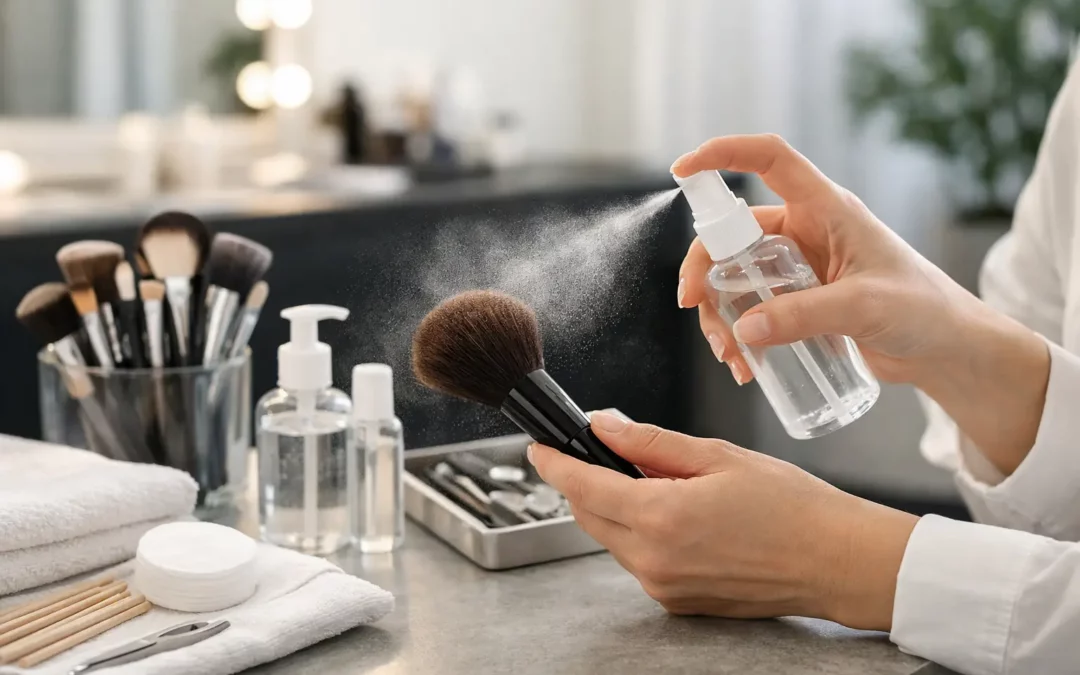
A certificate does not protect a client. Clean hands, correctly disinfected tools, controlled products, and a student who knows when to stop a service do. That is why a beauty class sanitation checklist belongs in every serious training room, whether students are learning lashes, brows, waxing, or permanent makeup.
Poor sanitation is not a minor classroom mistake. It can lead to cross-contamination, skin irritation, infections, complaints, failed inspections, and a reputation that is difficult to rebuild. The habits students practice during training become the habits they bring into their own treatment rooms. At Voila Academy, we teach sanitation as part of professional competency, not as an afterthought at the end of a course.
What a Beauty Class Sanitation Checklist Should Cover
A useful checklist does more than remind students to wipe down a bed. It creates a repeatable system for before, during, and after every service. It should also reflect the service being taught. A lash extension class will manage adhesives, tweezers, eye-area safety, and disposables differently than a waxing or permanent makeup class.
The non-negotiable principle is simple: clean first, then disinfect when disinfection is required. Cleaning removes visible debris and product residue. Disinfection uses an approved product for the required contact time to reduce germs on nonporous surfaces and reusable tools. Sterilization is a separate, higher-level process that may be required for specific regulated services or equipment.
Never let a student treat these words as interchangeable. That shortcut is exactly how sanitation standards get watered down.
Before Class: Set Up a Controlled Training Space
Sanitation begins before the first model walks through the door. Instructors should inspect the classroom, treatment stations, supply storage, and handwashing area before students begin setup. A beautiful classroom is not automatically a sanitary one. The workflow has to make sense.
Each student station needs clean, organized supplies and a clear separation between unused products and anything that has touched a client, tool, or work surface. Beds, stools, trays, lamps, magnifying equipment, and frequently touched surfaces should be cleaned and disinfected according to the product label before class begins.
Use this opening checklist at every station:
- Wash hands thoroughly before setting up, then dry them with a clean disposable towel.
- Inspect tools for damage, residue, rust, or product buildup. Remove anything that cannot be properly cleaned and disinfected.
- Cover treatment beds with fresh linens or a disposable barrier for each model.
- Prepare only the products needed for the service. Keep bulk containers closed and protected from contamination.
- Confirm that disinfectants are approved for the intended surface or implement, mixed correctly if applicable, and within their expiration date.
- Set up labeled containers or areas for clean tools, used tools, single-use disposables, and waste.
This setup takes time. It should. Students who rush sanitation in class often rush it when they are booked back-to-back later. A well-run beauty business builds service timing around safety rather than treating safety as a delay.
Know What Is Single-Use
Anything designated for one client or one use must be discarded after use. This often includes mascara wands, lip applicators, microbrushes, wax sticks, pigment cups, needle cartridges, cotton rounds, spoolies, and certain files or buffers. Do not “save” a disposable because it looks clean.
For products such as creams, wax, pigments, or adhesives, students must avoid double-dipping. Dispense a workable amount into a clean secondary container, then discard the remaining portion after the service if it may have been exposed. The original product container should never become a source of contamination.
During the Service: Protect the Client and the Student
The middle of a service is where good intentions can break down. A student adjusts a lamp, picks up a phone, touches a drawer, then reaches back toward the client. This is why classroom sanitation needs active supervision, not just a checklist posted on the wall.
Students should wash or sanitize hands at the appropriate times and wear gloves when the service, product, local regulation, or potential for contact with blood or body fluids requires them. Gloves are not a substitute for hand hygiene. They must be changed when contaminated, torn, after touching non-clean surfaces, and between clients.
For treatments near the eyes, mouth, broken skin, or mucous membranes, instructors should be especially direct about cross-contamination. A client-facing service is not the place to learn by guessing. If a student is unsure whether an item is clean, contaminated, reusable, or single-use, the answer is to stop and ask.
Keep Clean and Used Tools Separate
A clean tool tray should stay clean. Once a tweezer, brow tool, or implement has been used on a model, it goes immediately into the designated used-tool container. It does not return to the tray. It does not sit loose on a towel. It does not get wiped quickly and used on another model.
This matters in lash, brow, and waxing courses, where small tools can easily get mixed together. It matters even more in permanent makeup education, where infection control protocols, barrier protection, approved disposable components, and local regulatory requirements must be followed without exception.
After Every Model: Reset the Station Properly
The service is not finished when the client leaves the bed. The station is finished only when it has been reset safely for the next model or closed down for the day.
Students should remove and discard single-use items, bag waste as required, and place reusable implements into the correct cleaning process immediately. Delaying this step allows product and debris to dry on tools, making proper cleaning harder and less reliable.
Then, clean and disinfect all relevant nonporous surfaces. This usually includes the treatment bed or chair, tray, lamp handles, work surfaces, product bottle exteriors, stool, and any equipment touched during the service. Follow the disinfectant label exactly, including the required wet contact time. Spraying and immediately wiping is not the same as disinfecting.
Fresh linens and barriers must be used for every client. If a blanket, pillow, or reusable comfort item cannot be cleaned between clients, it should not be used in a treatment setting.
Tool Processing: Where Shortcut Training Shows Up Fast
Reusable tools need a written processing sequence. The exact process depends on the tool material, the service, manufacturer instructions, and your local rules, but the order matters: remove visible debris, wash as appropriate, rinse, dry completely, disinfect or sterilize when required, and store in a clean protected area.
Do not place dirty tools directly into a disinfectant solution without cleaning them first. Disinfectant cannot reliably work through wax, adhesive, skin oils, pigment residue, or visible debris. Also, never reuse a disinfectant solution beyond its labeled instructions or assume that a stronger mix is safer. Incorrect dilution can reduce effectiveness or damage tools and surfaces.
Instructors should inspect student tools before they are returned to clean storage. This is a teaching moment, not busywork. Students need to understand what clean actually looks like and what can happen when a tool is processed carelessly.
Match Your Checklist to Local Rules
Beauty regulations are not identical everywhere. Licensing, infection control requirements, approved products, and scope-of-practice rules can differ between states and provinces, and sometimes between local health authorities. Students planning to serve clients across a border or move after certification need to verify the rules where they will actually work.
That does not mean sanitation becomes optional when regulations vary. It means your baseline training should be high, and your operating procedures should be adjusted to meet the stricter requirements that apply to your service and location. Serious educators teach students how to read regulations, follow manufacturer directions, and document their sanitation process rather than handing them a vague one-size-fits-all script.
For services involving permanent makeup, microblading, or other procedures that may be regulated differently from esthetics, confirm all local permits, bloodborne pathogen requirements, disposal protocols, and health authority expectations before accepting clients.
Make Accountability Part of the Classroom Culture
A sanitation checklist works only when someone uses it consistently. Instructors should observe setup, watch service flow, inspect breakdown, and correct mistakes in real time. Students should expect this level of accountability. It prepares them for professional work, inspections, and the responsibility of caring for paying clients.
Keep a simple classroom log for disinfectant preparation when required, equipment maintenance, incidents, and corrective training. Documentation is not glamorous, but it demonstrates that your business takes health and safety seriously.
The beauty professional clients trust is not the one with the fastest setup or the cheapest course certificate. It is the one whose standards stay steady when nobody is watching. Build those habits in class, and every service you offer starts on safer ground.