
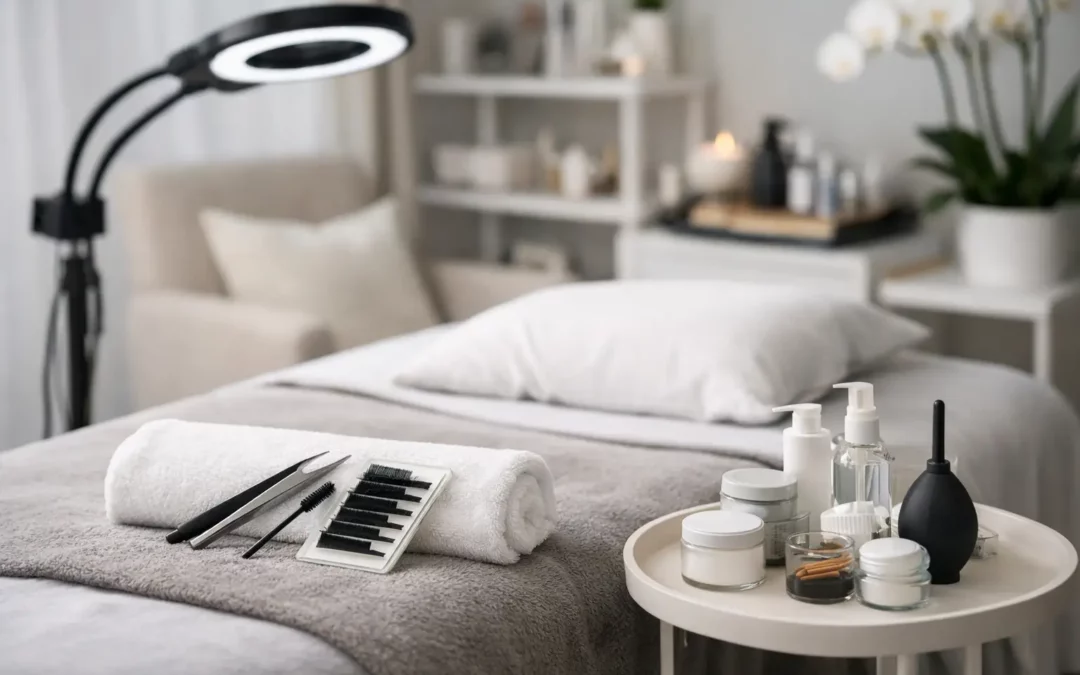
A lash room is not just a pretty corner with a bed and a ring light. It is where clients decide whether they trust your hands, your hygiene, and your business. This lash room setup checklist helps you build a space that supports safe application, smoother appointments, and the kind of professional reputation that brings clients back.
If your room is cramped, poorly lit, or missing basic sanitation systems, your work will suffer. More importantly, you may be putting clients and your license at risk. Start with standards, then add the aesthetic details that make the room feel like your brand.
Start With Your Local Rules, Not Social Media Trends
Before buying furniture or stocking trays of lashes, find out what applies where you work. Licensing, sanitation, insurance, and workspace requirements can vary by city, county, province, and state. A setup that is acceptable in one location may not meet the rules in another.
Contact your local health authority, cosmetology board, esthetics regulator, or licensing office and ask direct questions. Do you need a sink inside the treatment room? Are disposable applicators required? Is a home-based studio permitted? What records must you keep? You need real answers, not assumptions from a viral video.
This matters especially for artists who plan to rent a suite, work from home, or offer multiple services. Lash extensions may have one set of requirements, while waxing, brow tinting, or permanent makeup can trigger additional rules. Build your room around the strictest applicable standard instead of trying to retrofit it after an inspection or client complaint.
Lash Room Setup Checklist: The Non-Negotiables
Your room does not need to be oversized or expensive. It does need to be cleanable, organized, well lit, and designed so you can work without constantly breaking your posture or reaching across your client.
A Professional Treatment Area
Your lash bed should be stable, supportive, and easy to sanitize between appointments. A hydraulic bed is convenient, but a quality stationary bed can work well when paired with the right stool and pillows. Choose nonporous surfaces whenever possible. Fabric that cannot be properly cleaned becomes a liability.
Set up a supportive lash pillow or ergonomic headrest so your client can rest comfortably without turning their head. You should be able to access both eyes without twisting your own neck, shoulders, or wrists. If you are bending over a low bed for six appointments a day, the problem is not your endurance. The setup is wrong.
Keep these essentials within reach:
- A lash bed, clean linens or disposable bed covers, and a client blanket
- An adjustable artist stool with lumbar support and wheels that move smoothly
- A bright task lamp with adjustable positioning and neutral light output
- A rolling cart or closed storage unit for tools, products, and disposables
- A small covered trash can and a separate container for any required waste
A ring light can be useful for before-and-after photos, but it is not a replacement for a proper task light. Your application lighting needs to help you see natural lashes clearly without creating harsh shadows or eye strain.
Hand Hygiene and Sanitation Access
Handwashing access is a baseline, not an upgrade. If a sink is required in your room, install one. If local rules permit shared access, make sure it is genuinely practical to use between every client. A sink down a hallway, behind a busy reception area, may not support proper workflow.
Your sanitation station should include soap, disposable towels, hand sanitizer, disinfectant approved for your jurisdiction, and a clear process for cleaning reusable tools. Read the label on every disinfectant. Contact time matters. Spraying a surface and wiping it immediately is often not disinfection.
Store clean and used tools separately. Tweezers that have been cleaned and disinfected should never sit in the same tray as tools waiting to be processed. Label containers clearly so there is no confusion when you are busy.
Single-use items such as microbrushes, mascara wands, lip applicators, under-eye pads, tape, and spoolies should be dispensed in a way that prevents cross-contamination. Do not return unused items from a client tray to your main supply container.
Product Storage That Protects Performance
Lash adhesive is not a decorative product. Temperature, humidity, and storage habits can change how it performs. Keep it away from direct sunlight, heat sources, and uncontrolled moisture. Follow the manufacturer’s storage instructions, track opening dates, and avoid buying more adhesive than you can use before it expires.
Use a hygrometer and thermometer in the room. They are inexpensive tools that can save you from guessing why retention has suddenly changed. If your environment is consistently too dry, too humid, too warm, or too cool for your adhesive, address the room condition rather than blaming your technique.
Organize lashes by curl, diameter, and length in labeled trays. Keep primers, cleansers, bonder, remover, and other liquids upright and secured. If you carry retail aftercare products, separate sale inventory from backbar supplies so you always know what is available for clients.
Design the Room Around Your Appointment Flow
The best rooms make your process feel calm because everything has a place. Think through your appointment from the moment a client enters to the moment you reset the bed.
Place your consultation forms, consent documents, and aftercare cards where they are easy to access but protected from public view. Client records should be stored securely, whether they are digital or paper. A beautiful open shelf is not the place for confidential information.
Create a landing spot near the entrance for purses, coats, and phones. Clients should not have to balance their belongings on your product cart or lash bed. A small chair, hook, or clean side table makes the room feel considered without taking up much space.
During the service, your most-used items should be available with minimal movement: tweezers, lashes, adhesive, wipes, tape, spoolies, and a mirror. Less reaching means a more efficient service and fewer opportunities to contaminate supplies. Keep backup stock stored separately so your active work area stays uncluttered.
At the end of every appointment, build in reset time. Remove disposables, process tools, disinfect approved surfaces, replace linens, restock the client tray, and check your adhesive environment before the next booking. Do not schedule so tightly that cleaning becomes optional. It is part of the paid service.
Make Comfort Part of Your Business Plan
A client who leaves with beautiful lashes but a sore back, cold feet, or a pounding headache may not rebook. Comfort is not separate from results. It is one of the reasons clients choose a professional over a rushed, low-cost experience.
Control room temperature as much as possible. Offer a clean blanket, use a pillow that supports the neck, and keep music low enough for clients to relax. Strong fragrances can be a problem in a lash room, particularly for clients with sensitivities, so choose a clean-smelling space over heavily scented sprays or candles.
Ventilation deserves serious attention. Adhesive fumes, cleaning products, and poor airflow can make both you and your client uncomfortable. The solution depends on your room and local regulations, but an air purifier, appropriate ventilation, and sensible product handling can improve the experience. Do not place a fan where it disrupts adhesive performance or blows directly onto the client.
Build a Room That Supports Your Growth
Your first room does not need every luxury item. Spend first on safety, sanitation, lighting, ergonomics, and products from professional suppliers. Trendy décor can wait. An expensive neon sign will not improve retention, protect your posture, or satisfy a health inspection.
As your client list grows, track what slows you down. You may need a better cart, more storage, an upgraded bed, or a dedicated retail display. Buy based on a real workflow problem, not because another artist posted a shopping haul.
At Voila Academy, we teach artists to see their workspace as part of their professional standard. Technical skill matters, but so do infection control, client communication, business systems, and the environment where every service takes place.
Your room should make a client feel cared for before the first lash is isolated. When every surface, tool, and product has a purpose, you are not merely setting up a room. You are setting the standard for the business you want to build.