
A lash certificate is easy to print. The skill to safely create clean, lasting sets on real clients is not. When you are looking for a Chilliwack lash training academy, the decision should come down to more than price, a pretty classroom, or a promise that you can be certified in a day. Your education becomes the foundation of your reputation, your client retention, and the business you build afterward.
Lash extensions can become a profitable, flexible career path. They can also become expensive and stressful when a new artist is taught shortcuts instead of professional standards. The difference is visible in the work: poor isolation, damaged natural lashes, inconsistent retention, and artists who freeze when a client has a reaction or asks a question they were never taught to answer.
A serious academy prepares you for the service, not just the certificate photo.
What a Chilliwack Lash Training Academy Should Teach
A proper lash education begins before you pick up tweezers. Students need to understand the natural lash growth cycle, eye shapes, contraindications, adhesive behavior, sanitation, and consultation procedures. These are not extra modules to rush past. They determine whether your work is safe, customized, and worth returning for.
Technical practice should cover more than placing extensions on a mannequin. A beginner needs repeated guidance on isolation, attachment direction, extension weight, lash mapping, adhesive control, and styling. Classic lashes require clean one-to-one application. Volume and hybrid techniques introduce further variables, including fan creation, weight calculation, and maintaining the health of each natural lash. If the fundamentals are weak, adding advanced techniques only makes the weak work harder to correct.
A credible course should also teach removal, fills, troubleshooting, and aftercare. Clients do not always arrive with a perfect set from the same artist. You may need to assess grown-out extensions, poor application from another provider, sensitivity concerns, or a client whose retention changed because of lifestyle, hormones, skincare, or aftercare habits. Training that ignores these realities leaves new artists unprepared the moment they begin taking paying clients.
Safety is part of the service, not a side topic
Lash artists work close to the eyes. That fact should shape every part of training. Infection control, hand hygiene, workstation setup, tool disinfection, disposable supplies, product storage, patch test protocols, and recognizing when not to perform a service all matter.
No instructor should suggest that a lash artist can diagnose a medical condition. Your role is to work within your scope, identify contraindications, document concerns, and refer clients to an appropriate medical professional when needed. That professional boundary protects your client and protects your business.
Requirements can differ by location, which is why generic online advice is not enough. Beauty professionals who plan to work across provinces and states need to understand that licensing, sanitation rules, insurance expectations, and permitted services may change from one jurisdiction to another. A responsible educator helps students think beyond the classroom and verify the rules that apply where they will practice.
Why Hands-On Training Changes Everything
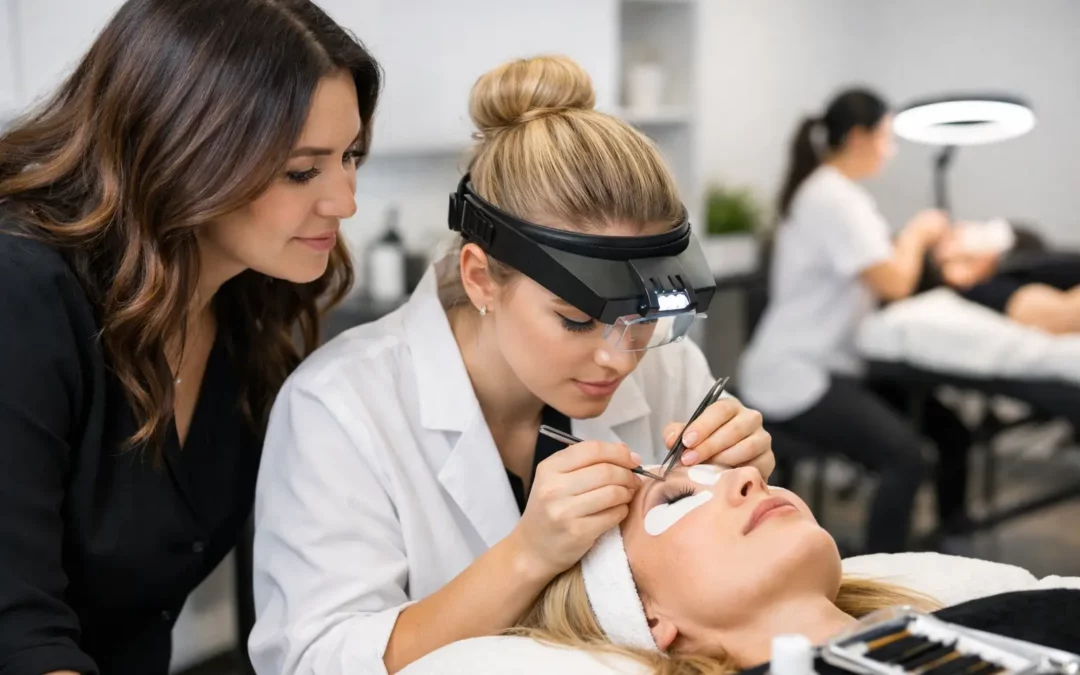
Watching a demonstration can make lash application look simple. Performing it while maintaining isolation, controlling adhesive, checking symmetry, and protecting a live client’s comfort is another matter entirely. Hands-on education gives students the chance to make small mistakes where an experienced trainer can catch them early.
Small class sizes matter here. In a crowded class, it is easy for an instructor to demonstrate a technique and move on while students struggle quietly at their stations. Individual feedback is where growth happens. A trainer should be able to look at your placement and explain why it is too far from the lash line, why the direction is pulling, why a fan is too heavy, or why your mapping is not balancing the client’s features.
Model work is especially valuable because it teaches more than application. You learn how to conduct a consultation, explain aftercare, manage timing, position a client comfortably, and remain professional when the result does not look exactly as you expected. Real confidence comes from doing the work under supervision, then understanding how to improve it.
That said, online learning can still have a place. It can be useful for theory, refreshers, ongoing technique review, and business education. It is not a full replacement for supervised practical work when you are new to a service performed around the eyes. The strongest training approach uses online resources to support hands-on development, not avoid it.
Be Careful With Fast, Cheap Certification Promises
Low-cost courses can look appealing when you are trying to enter the industry quickly. The problem is not that every short course is automatically poor. The problem is what gets left out when the course is built around speed, high enrollment, and a certificate as the main product.
Ask direct questions before you enroll. How much practical time is included? Will you work on a live model? Who is the trainer, and what is their professional background? Is there feedback during the course? Are sanitation and client safety taught in detail? What does support look like after graduation? If an academy cannot answer clearly, that lack of transparency is your answer.
Be equally cautious about a course that promises instant income without discussing the work required. Building a lash business takes skill, consistency, client service, marketing, scheduling, supply costs, and patience. A legitimate educator should be honest about that. Career-focused training is encouraging, but it does not sell fantasies.
Training Should Prepare You to Run a Business
A beautiful set of lashes is only one part of becoming a working professional. New artists also need a realistic understanding of pricing, policies, client records, rebooking, retail recommendations, photography, and creating a service environment that feels clean and trustworthy.
Your first pricing structure should account for more than the time spent applying lashes. Consider product use, replacement tools, sanitation supplies, insurance, rent or suite costs, taxes, software, training, and the time required for consultations and messages. Underpricing may bring initial bookings, but it can make it difficult to sustain the business or invest in better education and supplies.
Clear policies are another mark of a professional service. Deposits, late arrivals, cancellations, fill eligibility, and aftercare expectations should be explained before the appointment, not argued about afterward. Clients usually respect boundaries when they are communicated with confidence and consistency.
At Voila Academy, the goal is not to push students through a fast-food version of beauty education. It is to help future artists build technical judgment, safe habits, and the confidence to grow a real service business. That includes mentorship, standards-driven instruction, and a clear connection between certification and the work that comes next.
The questions worth asking before you commit
Before choosing a program, look for evidence rather than marketing language. Review the curriculum, ask how hands-on practice is structured, and find out whether the academy is properly insured and operating responsibly. Ask whether you will receive ongoing support when you begin serving clients and whether professional products are available as you continue building your kit.
You should also consider your own goals. A beginner may need a comprehensive classic foundation before considering volume. An established esthetician may be ready to add lash services but still need a program that respects what they know while correcting gaps in their application technique. The right course depends on your current experience, the services you want to offer, and the standard you want your name to represent.
Build a Career You Can Stand Behind
The right lash training does more than teach you how to attach an extension. It teaches you when to slow down, when to say no to an unsafe service, how to correct your work, and how to make clients feel cared for from consultation through aftercare.
Choose education that challenges you, gives you real practice, and stays grounded in professional responsibility. A strong foundation takes more effort than a quick certificate, but every clean set, loyal client, and confident business decision will show why that effort was worth it.