
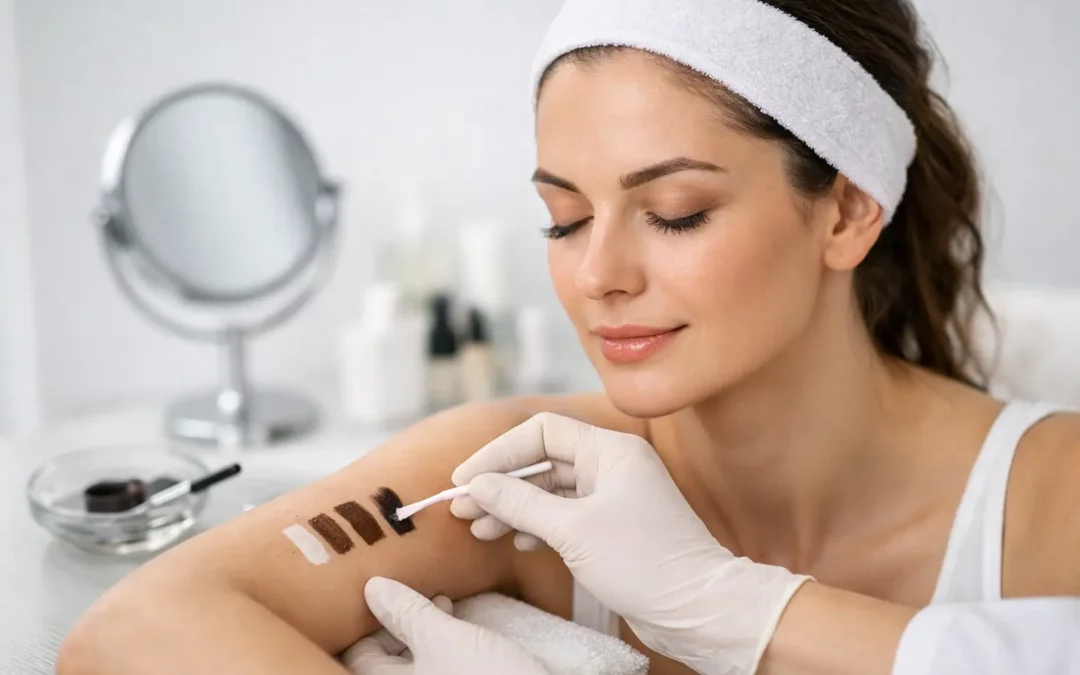
A brow appointment can look simple from the outside: choose a shade, apply tint, refine the shape, and reveal fuller-looking brows. But a brow tint patch test guide belongs in every professional’s treatment protocol because an allergic reaction can turn a profitable service into a serious client safety issue. Patch testing is not an optional shortcut to skip when the schedule is full. It is part of protecting your client, your reputation, and the business you are building.
At Voila Academy, we teach beauty professionals to think beyond the finished photo. Clean technique, consultation skills, product knowledge, and proper documentation are what separate trained artists from fast-food certification culture.
Why Brow Tint Patch Tests Matter
Brow tints and hybrid dyes may contain ingredients that trigger sensitivity or allergic reactions in some clients. A client can react even if she has colored her hair before, used brow products for years, or had a previous tint appointment without an issue. Sensitization can develop over time, and formulas vary by brand and product line.
A patch test is designed to identify a possible delayed skin reaction before placing product across the brow area. It is a risk-reduction step, not a guarantee that a client will never react during or after a service. That distinction matters. A negative patch test does not replace a complete consultation, following manufacturer directions, or watching for signs of discomfort during the appointment.
For working artists, the practical value is just as clear. A consistent patch-test policy helps set boundaries with clients, gives your team a defensible safety process, and shows that your business does not compromise standards for convenience.
Brow Tint Patch Test Guide: The Professional Process
Always begin with the specific product manufacturer’s instructions. Processing times, mixing ratios, application locations, and required waiting periods can differ. Do not borrow instructions from a different tint, henna, or dye system simply because the products appear similar.
1. Start with a real client consultation
Before mixing anything, ask direct questions. Has the client had an allergic reaction to hair color, brow tint, henna, cosmetics, adhesives, latex, or skincare ingredients? Is she currently experiencing eczema, dermatitis, a rash, sunburn, broken skin, or irritation near the brows? Has she recently used retinoids, exfoliating acids, prescription acne treatments, or undergone a chemical peel?
Also ask whether she is pregnant, nursing, taking medication that affects the skin, or under medical care for allergies or a skin condition. These answers do not automatically mean the client cannot receive a service. They do mean you should work within your training, your product instructions, and your local requirements. When there is uncertainty, postponing the service and asking the client to seek medical guidance is the professional choice.
2. Obtain informed consent and record the details
Explain what the patch test is for, where you will apply it, and when the client needs to report back. Have the client complete a consultation and consent form that identifies the exact product used, shade, developer or activator, batch or lot number when available, date, and technician name.
Documentation may feel administrative when you are starting out, but it is business protection. If a client returns months later for another service, you should be able to see what was used, when she tested, and whether she reported any reaction. A verbal note in your phone is not a professional client record.
3. Mix a small amount exactly as directed
Use clean, disposable tools and mix only the small quantity needed for the test. Follow the same ratio required for the actual service. Changing the ratio, skipping the developer, or testing one component on its own can make the result less meaningful.
Treat hygiene seriously here. Cross-contamination can create its own problems and makes it harder to identify what caused a reaction. Dispose of single-use supplies, clean and disinfect reusable tools according to your infection-control protocol, and never return unused mixed product to its original container.
4. Apply to the manufacturer-approved test area
Many systems direct artists to apply the mixed product behind the ear or on the inner arm. Some have product-specific instructions that differ, so the manufacturer always leads. Apply a small amount to clean, dry, intact skin. Avoid skin that is scratched, inflamed, freshly shaved, or already irritated.
Do not test directly on the brow unless your product instructions specifically call for it. The goal is to screen for a potential reaction while avoiding unnecessary exposure on a highly visible facial area.
5. Give the patch test enough time
This is where rushed service providers make mistakes. Many reactions are delayed, which is why a patch test often requires a waiting period of 24 to 48 hours, depending on the brand. A test performed 15 minutes before an appointment is not a valid substitute for the stated waiting time.
Tell the client what to watch for: redness, swelling, itching, burning, soreness, blistering, hives, or a spreading rash. She should contact you if any symptom appears and should not proceed with the brow tint service. If symptoms are severe, involve swelling of the face or throat, trouble breathing, dizziness, or widespread hives, she should seek urgent medical help immediately.
6. Review the result before the appointment
At the service, ask the client how the test area felt and inspect it when possible. If she reports a reaction, do not tint her brows. Do not attempt to “make it safer” by leaving the product on for less time, using a lighter shade, or adding more barrier cream. That is not a professional workaround.
If the test appears clear and the client has no concerning changes in her health or skin, document the negative result and proceed only as the product manufacturer directs. Continue monitoring throughout the service. Stinging, burning, unusual redness, or swelling during application means remove the product promptly according to the manufacturer’s removal guidance and reassess.
Common Patch-Test Mistakes That Put Clients at Risk
The first mistake is treating a previous tint as permanent clearance. A client who tolerated one formula in March may react to a different formula in July, or develop sensitivity after repeated exposure. Your policy should account for the product being used, not just the client’s memory of past appointments.
The second is allowing clients to waive the patch test because they are in a hurry. A signed waiver does not erase your responsibility to follow safe practice, product directions, insurance requirements, or local rules. If your stated policy requires a test, hold the line. Clients who value professional care will understand.
The third is confusing a patch test with a full allergy diagnosis. Beauty professionals do not diagnose allergies. Your role is to use approved products correctly, identify visible concerns, stop when a reaction is suspected, document what happened, and refer the client to a medical professional when appropriate.
Build a Patch-Test Policy That Supports Your Business
Your brow tint policy should be clear before a client books. State when a patch test is required, how far ahead it must be completed, what happens if the client misses the testing window, and when retesting is needed after a formula change or extended gap between services. Make the policy visible in your booking process and repeat it during confirmation messages.
Requirements can vary by product, insurer, and local jurisdiction. Beauty regulations are not identical across states and provinces, so do not build your procedure around social media advice or another artist’s policy. Confirm the rules that apply where you practice, maintain your insurance requirements, and keep your training current. For professionals serving clients across North America, this attention to regional compliance is part of operating legitimately.
A well-run brow service is not just about crisp mapping and a flattering shade. It is about knowing when to move forward, when to pause, and when client safety needs to lead the appointment. That level of judgment builds trust – and trust is what turns a one-time brow guest into a long-term client.