
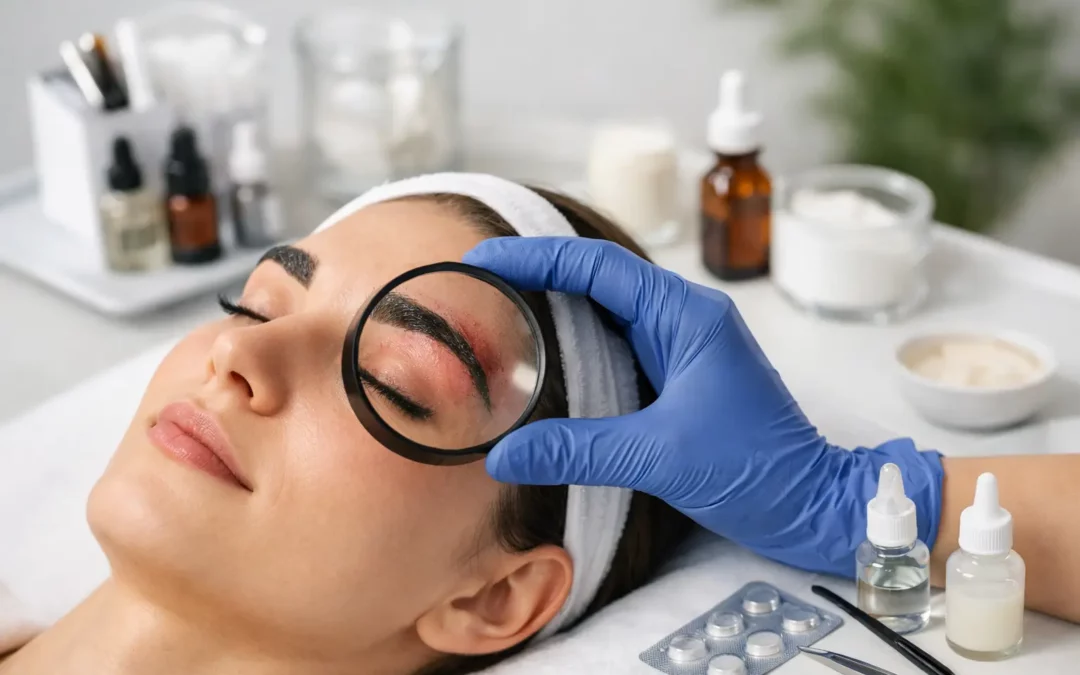
A client sits down for a quick brow tint, says she has never had a reaction before, and 24 hours later her eyelids are swollen and burning. That is exactly why a brow tint allergy protocol cannot live in your head as a vague checklist. It needs to be written, taught, repeated, and followed every single time.
In beauty, small services can create big liability when training is weak. Brow tinting looks simple from the outside, but allergic reactions can escalate fast, especially around the eye area. If you are adding tinting to your menu or teaching it inside a brow course, your protocol is part of your professionalism. It protects the client, the artist, and the business.
What a brow tint allergy protocol actually covers
A real brow tint allergy protocol is more than a patch test. It starts before the appointment, continues during the service, and includes a clear response plan if a reaction happens later. That means client screening, informed consent, product knowledge, patch testing, safe application, aftercare guidance, documentation, and escalation when symptoms move beyond mild irritation.
This is where many new artists get tripped up. They rely on a product box instruction sheet and assume that is enough. It is not. Manufacturers provide a baseline, but your professional protocol has to reflect your local health requirements, insurance expectations, and scope of practice. We deal with both provinces and states, so this matters even more for artists training or working across different regulatory environments. Rules, forms, and documentation standards can vary.
Why brow tint allergies are taken so seriously
Most tint allergy concerns come back to ingredient sensitivity, often involving oxidative dyes. A client may have had hair color, lash tint, or brow tint before and still react later. Sensitization can build over time. That is one reason you never promise that a previous good experience guarantees future safety.
There is also a practical issue with location. The brow area is close to the eyes, and even a moderate reaction can feel severe to the client. Redness, itching, swelling, stinging, rash, watery eyes, and delayed inflammation are not small problems when they happen on the face.
Good artists understand the difference between irritation and allergy, but they also respect that the line is not always obvious at the first sign. If symptoms are significant, worsening, or affecting the eyes or breathing, this moves out of the beauty room and into medical territory fast.
Pre-service screening is the first line of defense
Before you ever mix color, screen the client properly. This is where serious training beats shortcut training. A rushed intake form with one box that says “allergies: yes or no” is not enough.
Ask whether the client has reacted to hair dye, brow tint, lash tint, henna, black temporary tattoos, adhesives, skincare, latex, or cosmetics. Ask about eczema, psoriasis, dermatitis, recent retinol use, broken skin, eye infections, recent cosmetic tattooing, and current medications that may affect skin response. You are not diagnosing. You are identifying risk.
If a client reports a previous tint reaction, that is not something to talk your way around. It is a stop sign unless cleared appropriately and unless your product instructions and professional judgment support moving forward. Some clients will minimize prior symptoms because they want the service. Your job is not to make the sale at any cost. Your job is to protect the client, your license or certification pathway, and your business.
Patch testing should be consistent, not casual
One of the biggest mistakes in this category is inconsistent patch testing. Some artists do it only for new clients. Others skip it when they are busy. That is not a protocol. That is improvising with liability.
Your brow tint allergy protocol should define when patch testing is required, where it is placed, what product mixture is used, how long it remains, and how the result is documented. Follow manufacturer directions first. If the brand requires a test 24 to 48 hours before service, that is the standard. Not 20 minutes before the appointment because the client drove in from far away.
A patch test should also be recorded clearly. Note the date, product brand, shade, developer used if relevant, application site, and client response. If no reaction is reported, document that. If there is redness, itching, swelling, or delayed discomfort, do not perform the service.
There is a business lesson here too. Good records protect you when memories get fuzzy later. If a client claims she was never tested, your documentation matters.
During-service safety matters just as much
Passing a patch test does not eliminate all risk. It lowers risk. That is an important distinction.
During the service, examine the skin again. If the brow area is irritated, sunburned, freshly waxed to the point of visible inflammation, or compromised in any way, postpone the tint. This is one of those moments where confidence matters. New artists often feel awkward saying no. Professionals do it calmly and without apology.
Use clean tools, measured mixing, and proper timing. Do not leave tint on longer than directed because you want a stronger result. Do not layer incompatible products without understanding the chemistry and skin impact. If you pair brow waxing, lamination, or exfoliating products too aggressively around the tint service, you increase the chance of irritation and client dissatisfaction.
Also watch the client while the tint is processing. If she reports burning, intense itching, or unusual discomfort, remove the product immediately. Do not try to “wait it out” for one more minute to save the result.
What to do if a reaction happens in the salon
A strong brow tint allergy protocol includes exact response steps. In the moment, clients take their cues from you. If you panic, they panic.
Stop the service immediately and remove the product thoroughly according to product safety guidance. Avoid introducing random products that are not part of your protocol. Assess symptoms carefully. Mild redness alone is different from swelling, hives, eye involvement, or breathing concerns.
Document what happened in real time. Record the product used, timing, observed symptoms, client statements, actions taken, and any aftercare advice provided. Take photos if your policy and consent process allow it.
If symptoms are severe, rapidly progressing, involve the eyes significantly, or include any breathing difficulty, advise urgent medical care immediately. Beauty professionals are not emergency responders, but we are responsible for recognizing when a situation needs escalation.
The delayed reaction protocol matters too
Many tint reactions show up hours later, after the client has left. That means your aftercare instructions are part of your safety system, not a throwaway script at the front desk.
Tell clients what to watch for over the next 24 to 48 hours: itching, rash, swelling, heat, discomfort, blistering, or eye irritation. Make sure they know to contact you if they experience symptoms and to seek prompt medical advice for anything significant or worsening.
When a client reports a delayed reaction, respond professionally and without becoming defensive. Gather facts. Ask when symptoms started, what they are experiencing, whether they used any other products on the area, and whether they have sought medical care. Do not diagnose and do not recommend medication outside your scope. Document the report and follow your incident procedure.
This is also the point where weak businesses make a second mistake. They either disappear or they argue. Neither helps. A calm, documented, professional response is what protects your reputation.
Training gaps are where most protocol failures begin
Most reaction problems are not caused by one dramatic mistake. They come from a chain of smaller ones: incomplete intake, skipped patch test, poor timing, weak documentation, or an artist who does not know when to stop a service.
That is why hands-on education matters. A serious training environment should teach not just how to apply tint, but how to screen, document, communicate, sanitize, and respond when something goes wrong. It should also address local expectations, because health guidance, insurance language, and operating rules can differ between provinces and states.
At Voila Academy, that standards-driven mindset is the difference between being casually certified and being genuinely prepared. Clients are trusting you with services near the eyes. You should be trained like that responsibility is real, because it is.
Build a protocol your future business can grow on
If you are an aspiring beauty professional, create your brow tint allergy protocol before you start booking heavily, not after your first incident. Write it down. Train on it. Use the same forms every time. Keep product information organized. Review your manufacturer instructions regularly. Make sure your consent, patch testing, incident records, and aftercare language all match the level of professionalism you want your brand to represent.
A well-run beauty business is not built on hoping nothing goes wrong. It is built on knowing exactly what to do if it does – and being disciplined enough to do it every time.