
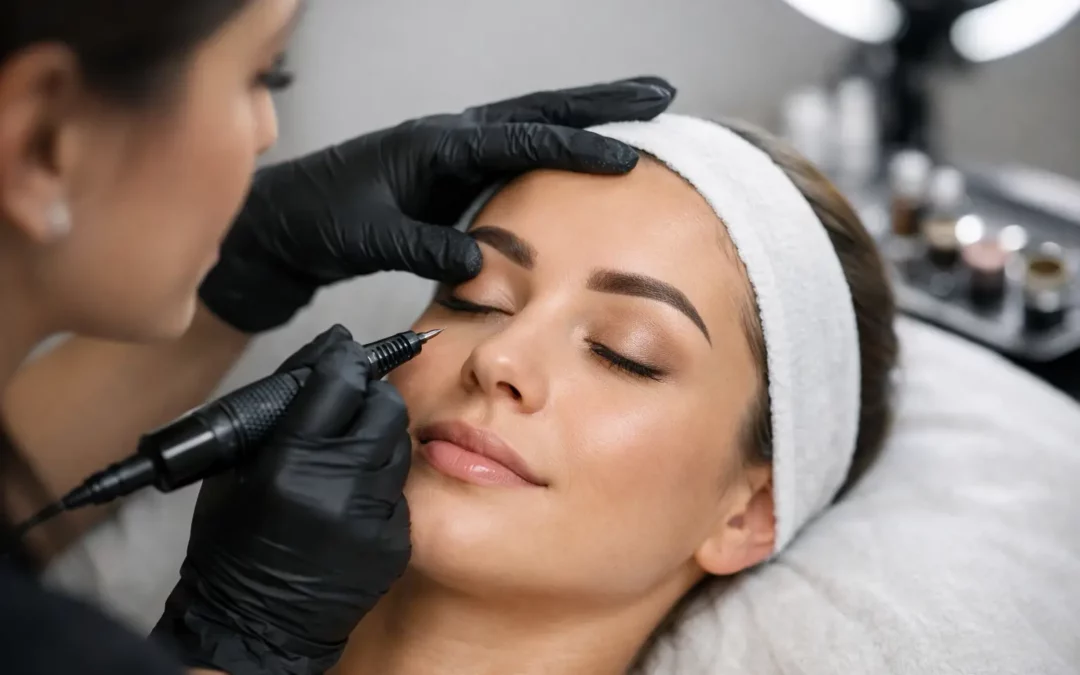
You can spot weak powder brow training fast. It usually promises quick certification, barely covers skin theory, skips infection control, and leaves students practicing shaky machine work on paper for a few hours before calling them “ready.” If you’re serious about how to learn powder brows, you need more than a certificate. You need real technique, safety standards, supervised practice, and a trainer who prepares you for actual clients.
Powder brows sit inside the permanent makeup category, which means the learning curve is higher than many new artists expect. This is not just a beauty service you can improvise your way through. You’re implanting pigment into skin, making design decisions that affect facial balance, and working in a field where poor training can lead to bad healed results, unhappy clients, and compliance issues. That is why the quality of your education matters so much.
How to learn powder brows without wasting money
The first step is understanding what you’re actually learning. Powder brows are not simply “soft shading.” A good course should teach brow mapping, machine handling, needle theory, skin anatomy, pigment behavior, color theory, saturation, pressure control, and healed result assessment. If a program focuses mostly on social media marketing and only lightly touches the technical side, that is a warning sign.
You also need to verify what is required where you plan to work. Rules can vary by province and state, and sometimes even by local health authority. Some areas have specific permanent makeup requirements around bloodborne pathogens, sanitation, licensing, or facility setup. Serious educators make this part of the conversation because compliance is part of your career, not an afterthought.
A lot of beginners shop by price first. That usually backfires. Cheap training often becomes expensive once you factor in poor habits, repeat education, bad supply choices, or the cost of fixing work that should never have been done on clients. It is smarter to pay for structure, mentorship, and accountability once than to rebuild your foundation later.
Start with the right foundation
If you’re brand new to beauty, that does not mean powder brows are off limits. It does mean you need training that starts at the beginning instead of assuming you already understand skin, sanitation, or client care. The strongest beginner programs teach the why behind every step. That matters because technique falls apart fast when you do not understand the reason for it.
You should expect to learn consultation skills, contraindications, consent, pre-care, aftercare, and what makes someone a poor candidate for the service. Many struggling artists focus so much on getting a pretty result during the appointment that they never learn to screen properly. A good artist knows when to say yes and when to say no.
If you already work in brows, lashes, esthetics, or beauty services, you may move through some parts faster. Even then, don’t assume adjacent experience replaces proper PMU education. Brow shaping helps. Client communication helps. None of that replaces pigment implantation technique.
What quality powder brow training should include
Hands-on practice matters, but hands-on without guidance is not enough. You want a course that teaches theory first, then builds controlled practice, then supervised model work when appropriate. That sequence protects both the student and the model.
A legitimate training experience should include live demonstration, machine setup, needle and cartridge education, skin depth control, stretch technique, pressure consistency, and pattern building. It should also cover healed results, because fresh results can be misleading. If a trainer only shows same-day photos, you are not getting the full picture.
Small class sizes matter too. Powder brows are technical, and students need correction in real time. In oversized classes, many people leave with unanswered questions and uncorrected habits. That is exactly how shaky linework, patchy saturation, and poor retention start.
Practice is where most students either grow or stall
Learning powder brows is a skill-building process, not a one-day transformation. Early on, your biggest challenge is usually machine control. Most beginners either work too shallow and get weak retention or too deep and create trauma. Neither issue gets fixed by watching more videos. It gets fixed by repetitive, informed practice and feedback.
Your practice should move in stages. Start with controlled pattern work, then simulated skin, then brow templates, then full procedure flow. This sounds basic, but skipping stages is one of the fastest ways to stay inconsistent. Strong artists usually look “naturally talented” from the outside. In reality, they spent time refining hand speed, whip shading movement, angle, and spacing until the technique became reliable.
Take photos of your practice work and healed results as you progress. That record helps you spot recurring mistakes. Maybe your fronts are too dense, maybe your tails fade, maybe your saturation is uneven through the arch. Improvement comes faster when you can identify a pattern instead of just feeling frustrated.
Mentorship changes everything
This is where many online-only students hit a wall. Information is easy to buy. Correction is harder to find. A mentor can see problems you may not recognize in your own work, including machine angle, overworking, poor skin stretch, or inconsistent layering. That kind of feedback can save you months.
Mentorship also matters on the business side. New artists need guidance on pricing, model policies, documentation, sanitation logs, insurance, consultation flow, and client expectations. Technical skill gets clients results. Professional standards keep your business stable.
At Voila Academy, that standards-first approach is central to how training is delivered. The goal is not to push students through fast. It is to build competent professionals who understand safety, technique, compliance, and the real responsibility that comes with offering permanent makeup.
Choosing a trainer for powder brows
If you’re comparing programs, ask direct questions. Who is teaching the course? Are they licensed and insured where required? How much real-world PMU experience do they have? Will you receive support after class? Are students taught infection control properly? Will you practice on models with supervision, or are you mostly left on your own?
You should also ask to see healed work, not just fresh brows under bright lights. Healed results show whether the artist truly understands saturation, shape, and skin response. A trainer who cannot show healed outcomes is not someone you should trust with your education.
Be careful with programs that market only speed, income potential, or luxury lifestyle. Powder brows can become a strong revenue stream, yes, but this field has to be approached with maturity. A serious educator will talk about safety and responsibility just as much as income.
How long does it take to learn powder brows well?
Most students want a timeline. The honest answer is that it depends on your starting point, your training quality, and how consistently you practice after certification. You can learn the fundamentals in a course, but confidence usually develops over time through supervised work, repetition, and review.
Some students build good beginner control quickly. Others need longer to refine pressure and pixel consistency. That is normal. What matters is not pretending you’re advanced before you’re ready. There is no prize for rushing into paid clients with weak fundamentals.
If your goal is to build a long-term beauty business, think beyond the first certificate. Plan for continued education, case reviews, better photos, stronger consultation skills, and a setup that meets health requirements in your province or state. That mindset will take you much further than chasing shortcuts.
The smartest way to approach your first powder brow course
Go in ready to be coached. Ask questions. Accept correction. Slow down enough to understand what your hand is doing. Focus less on looking polished right away and more on becoming technically sound. Students who stay teachable improve faster than students who only want quick validation.
Also, choose education that matches the level of career you want. If you want powder brows as a side service, you still need real standards. If you want to become known for PMU, your training has to be even more intentional. Either way, your reputation starts with your foundation.
Powder brows can absolutely become a profitable, confidence-building service, but only when they are learned properly. The right training will challenge you, slow you down where needed, and make you earn your confidence honestly. That is a good thing. In beauty, the artists who last are usually the ones who respected the process from the beginning.