
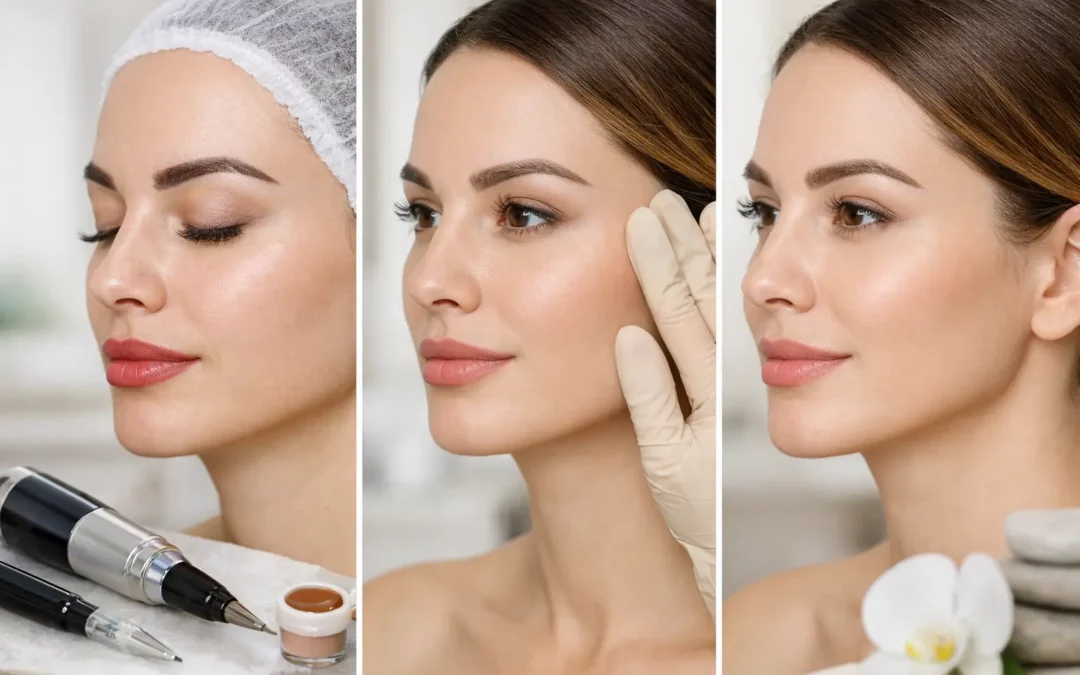
The panic usually starts on day three. Brows look too dark, lips feel tight, eyeliner seems uneven, and the client is convinced something went wrong. If you work in permanent makeup, or you are training to offer it professionally, this guide to PMU healing stages will save you a lot of unnecessary stress and a lot of confused aftercare messages.
Healing is not a side note in PMU. It is part of the result. A beautiful procedure can heal poorly if aftercare is ignored, and a client can mistake normal healing for a bad outcome if nobody prepared them properly. That is one reason serious PMU education matters. You are not just learning how to implant pigment. You are learning how skin behaves, how to coach clients, and how to recognize the difference between expected healing and a real concern.
Why PMU healing never looks linear
Many new artists expect healing to move in a neat, predictable line. It rarely does. Skin can look darker before it looks lighter. It can flake before it smooths out. Color can seem to disappear and then return more softly once the skin settles.
That back-and-forth is normal because PMU is a controlled skin injury. The body responds with inflammation, repair, exfoliation, and tissue remodeling. The exact pace depends on skin type, placement depth, pigment choice, technique, lifestyle, medical history, and aftercare compliance. Oily skin often heals differently than dry skin. Lip blush tends to swell more early on. Eyeliner may feel more dramatic at first because the eye area is delicate.
This is also why artists need to think beyond one city or one rule set. Standards, consent requirements, infection control expectations, and training regulations can vary across both provinces and states. A professional PMU education should prepare you to work safely and responsibly within your own local requirements, not just teach a technique and send you on your way.
Guide to PMU healing stages by timeline
A realistic guide to PMU healing stages starts with one truth: timelines are averages, not guarantees. Some clients heal fast. Others need more time, especially if they have sensitive skin, mature skin, oily skin, or a history of slow wound healing.
Days 1 to 3: bold, swollen, and fresh
Right after the procedure, the area usually appears more intense than the final healed result. Brows can look sharply defined and several shades darker. Lip blush can appear bright, swollen, and uneven. Eyeliner may look puffy, especially the first morning.
At this stage, mild redness, tenderness, tightness, and slight lymph fluid are common. The client may think the result is too strong. In most cases, that reaction is emotional rather than clinical. What matters is whether symptoms stay within normal healing ranges.
Artists should be clear here. Swelling and intensity are expected. Oozing that is excessive, heat that increases, or pain that worsens instead of improving deserve attention.
Days 4 to 7: flaking and second-guessing
This is the stage clients hate most. The treated area starts to dry, tighten, and flake. Brows may become patchy. Lips may peel in uneven sections. Eyeliner can shed tiny dry particles that make the line look broken.
This is where poor aftercare does real damage. Picking, scratching, over-moisturizing, sweating heavily, or returning too quickly to makeup and active skincare can pull pigment before the skin is ready. Clients need direct instructions, not vague advice.
As an artist, you also need to manage expectations before this stage begins. If a client is surprised by flaking, you did not educate them well enough.
Days 8 to 14: the ghost phase
Once the flakes come off, many clients assume all the pigment has disappeared. This is often called the ghost phase. The color can look faded, cloudy, cool, or almost absent because fresh skin is still covering the implanted pigment.
This phase causes more unnecessary panic than almost anything else in PMU healing. Clients start comparing their day-one photos to day-ten healing and decide the treatment failed. In reality, the skin is still regenerating.
This is why touch-up timing matters. If you judge retention too early, you can overwork the area or promise corrections before the tissue has stabilized.
Weeks 3 to 6: color settles and texture improves
Around this point, the skin usually starts to look smoother and the pigment becomes more visible again. Brows soften. Lip blush settles into a more natural tone. Eyeliner sharpens as residual dryness fades.
This is the stage where the true healed result begins to show, but it is still not necessarily the final version. Small gaps, uneven retention, or areas that healed lighter are common and often addressed at the perfecting appointment.
Good artists do not oversell one-session perfection. PMU is a multi-step service. Healing and refinement are part of the process, not proof that something went wrong.
Weeks 6 to 8: ready for assessment
Most artists schedule the touch-up after enough time has passed for the skin to recover and the pigment to settle. By this stage, you can evaluate shape, saturation, retention, and whether any adjustments are needed.
If a client comes in too soon, the tissue may still be healing beneath the surface. That can increase trauma and compromise the final result. Waiting can feel inconvenient, but it protects the skin and supports better work.
What changes by service type
Not all PMU heals the same way. Brows, lips, and eyeliner each have their own patterns, and your client guidance should reflect that.
Brow PMU
Microblading and powder brows often heal darker first, then lighter, then more balanced. Scabbing should be minimal when technique and aftercare are correct. Thick, heavy scabs can signal overworking, poor aftercare, or skin that is struggling to recover.
Oily skin may heal softer and retain less crisp detail, especially with hair stroke work. That does not mean the service failed. It means technique selection and client candidacy matter.
Lip blush
Lip blush usually involves more swelling and a brighter early appearance. Clients often worry the color is too intense on day one and too pale a week later. Both reactions are common.
Lips are also sensitive to friction, dehydration, spicy foods, and a history of cold sores. This is a service where medical intake and pre-appointment instructions matter more than many beginners realize.
Eyeliner PMU
Eyeliner can heal with noticeable puffiness in the first 24 to 48 hours. Watering, mild tenderness, and tightness are common. What is not normal is severe pain, spreading redness, or signs of infection.
Because the eye area is involved, artists need to be especially disciplined about sanitation, contraindications, and referral decisions. Confidence without caution has no place here.
Normal healing vs red flags
A professional artist should know how to reassure and how to escalate. Normal healing can include tenderness, dryness, flaking, temporary patchiness, and color that looks too dark or too light before stabilizing.
Red flags include worsening pain, unusual swelling after the first few days, pus, fever, strong odor, increasing heat, or a rash-like reaction. Clients should also be told to report anything that feels significantly off, especially around the eyes or lips.
This is where weak training shows. A low-standard course may teach the procedure itself but barely cover skin response, infection control, documentation, and aftercare troubleshooting. That is risky for the client and for your business.
At Voila Academy, this is exactly why we teach PMU as a professional service built on standards, safety, and mentorship, not rushed certification. A serious career needs more than a kit and a certificate.
How artists can make healing easier for clients
The best healing support starts before the appointment. Clear screening, realistic expectations, detailed aftercare, and honest discussion about the touch-up process all reduce panic later.
After the procedure, keep communication simple and specific. Clients do better when they know what they may see on day two, day five, and week three. They also do better when they understand what not to do. Vague advice leads to preventable mistakes.
Photos help too, but only when they are used responsibly. Show healed results, not just fresh work. Fresh PMU is not the final result, and too many new artists market intensity instead of healed quality.
If you are learning PMU or adding it to your menu, make healed results part of how you judge both your own progress and any training program you are considering. Anyone can post a fresh set. A trained professional can explain the healing process, spot a problem early, and produce work that still looks good after the skin has done its part.
Clients remember how you guided them just as much as they remember the procedure itself. When you understand healing well, you protect the result, build trust, and separate yourself from the artists who only know how to work until the machine turns off. That is where a real PMU career starts.