
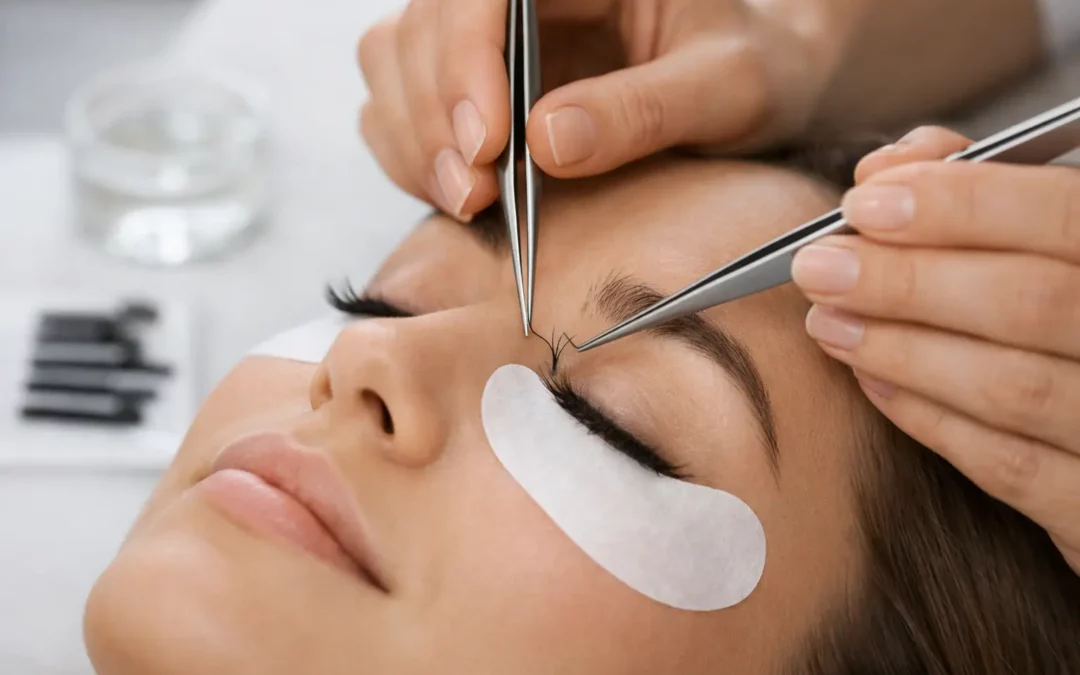
If your clients are messaging three days after an appointment saying half their set is gone, you do not have a “bad luck” problem. You have a retention problem, and retention problems usually come from process, not mystery. Knowing how to improve lash retention is what separates a beginner who is guessing from a lash artist who can build a loyal, high-return client base.
A full set can look beautiful on day one and still fail by day five if the natural lash was not properly cleansed, the humidity was off, the adhesive was mishandled, or the client was not a good candidate for that style in the first place. Good retention is never one trick. It is the result of standards, consistency, and enough training to know what to adjust when something is off.
How to Improve Lash Retention at the Appointment
Retention starts before the first extension touches the natural lash. If your prep is rushed, your adhesive bond is already compromised. Oils, makeup residue, skin care, protein buildup, and even leftover saline from eye rinsing can interfere with bonding.
Start with a thorough lash cleanse. Not a quick wipe. A real cleanse that removes oil, debris, and hidden residue along the lash line. Clients often say they arrived with clean lashes, but many are judging that by whether they wore mascara that day. Lash artists need to judge cleanliness by what will allow adhesive to cure properly.
After cleansing, the lashes need to be fully dry. Even a small amount of moisture can affect how the adhesive behaves. This is where newer artists make preventable mistakes. They clean well, then move too fast. The result is poor attachment, stickies, or weak bonds that look fine for a moment and fail early.
Isolation matters just as much as prep. If the natural lash is not isolated cleanly, the extension may not sit flush to the lash. That means less contact, a weaker bond, and more twisting or popping off during the shed cycle. A beautiful fan means very little if the attachment is poor.
Placement also needs to respect the natural lash. An extension that is too long, too heavy, or poorly balanced creates stress on the natural lash and shortens wear. This is why retention cannot be separated from styling. If you build a set for social media instead of for the client’s lash health, retention usually tells on you.
Adhesive Control Is Where Many Retention Issues Start
Adhesive gets blamed for a lot of problems it did not create. Yes, sometimes the glue is old, improperly stored, or simply wrong for your room conditions. But often the real issue is technique.
The bond should be intentional and consistent. Too little adhesive can lead to poor attachment. Too much can cause slow curing, stickies, and clumping. The sweet spot depends on your adhesive, your pickup method, and the diameter and style you are working with, but the principle is always the same: enough for a strong bond, not so much that the adhesive works against you.
Humidity and temperature also matter more than many artists want to admit. Adhesive does not perform the same way in every room. If your glue is curing too fast, you may end up with weak bonds before you can place properly. If it is curing too slowly, you risk poor attachment and more movement at the bond point. Professional lash artists monitor the room instead of working on guesswork.
Storage matters too. Adhesive that is exposed to air, heat, moisture, or sunlight can break down long before the bottle is empty. Trying to save money by stretching old adhesive is one of the fastest ways to create expensive retention issues.
How to Improve Lash Retention With Better Client Selection
Not every client is the right fit for every set. This is where professional judgment matters. If a client has weak, damaged, sparse, or downward-growing lashes, your application plan should change. If you ignore the condition of the natural lashes and apply a heavy set anyway, you are setting both the client and yourself up for disappointment.
Lifestyle matters too. Clients who work out daily, use steam rooms, sleep face-down, wear heavy eye makeup, or have oilier skin may need a different approach and more realistic expectations. That does not mean they cannot wear lash extensions. It means the service has to be customized.
Hormones, medications, seasonal shedding, and general lash health can all affect retention. This is one reason serious training matters. Lash artists need to understand what they can control, what they can improve, and what they need to explain clearly to clients. Retention is not about making promises. It is about creating the best possible conditions for wear and being honest about the factors that influence results.
Aftercare Is Part of the Service, Not an Extra
Some artists treat aftercare as a quick speech at checkout. Then they wonder why clients come back with buildup, twisted lashes, or major fallout. If you want to know how to improve lash retention in a real business setting, start treating client education as part of the appointment.
Clients need simple, direct instructions. Clean your lashes regularly with a lash-safe cleanser. Avoid rubbing, picking, and sleeping directly on the lashes when possible. Be careful with oily products around the eye area. Brush lashes gently. Book fills on time.
This is also where you need to protect your standards. If a client insists she never washes her lashes because she is afraid they will fall out, explain that dirty lashes create retention and hygiene issues. If she uses cotton pads, waterproof makeup, and thick eye creams right on the lash line, explain how that affects bonding and wear. Clear communication prevents blame later.
Not every retention issue is your fault, but clients should still feel guided. That is part of being a professional, not just a service provider.
The Lash Map Can Help or Hurt Retention
Artists often talk about styling as if it is separate from retention. It is not. Your mapping choices affect how much tension sits on the natural lash and how well the set holds up over time.
Very dramatic lengths, dense volume on weak natural lashes, and sharp transitions can all create instability. Sometimes the fix is not a better glue or a stronger primer. Sometimes the fix is building a set that the client’s lashes can realistically support.
This is where experience changes everything. An artist with strong fundamentals knows when to scale back length, adjust curl, reduce diameter, or shift the design to protect both retention and lash health. Clients may ask for maximum drama, but your job is to give them the best outcome, not just the biggest look.
Training Gaps Show Up as Retention Problems
A lot of artists search for product fixes when they really need skill correction. They change glue brands, buy new tweezers, and test every bonder on the market, but the retention issue stays. Why? Because the problem is in prep, isolation, placement, environmental control, or client assessment.
This is exactly why low-standard lash education creates long-term frustration. Fast certification often teaches just enough to complete a set, not enough to troubleshoot when things go wrong. Real lash training should teach you why retention fails, how to identify the cause, and how to work within professional standards in both provinces and states where health expectations, licensing requirements, and business compliance can vary.
At Voila Academy, that standard matters because artists need more than a certificate. They need judgment, accountability, and repeatable technique they can build a business on.
A Smarter Way to Troubleshoot Retention
When retention is poor, change one variable at a time. If you change your adhesive, cleanser, humidity setup, lash brand, and prep routine all at once, you will not know what fixed the issue.
Track patterns. Is retention poor across all clients or just a few? Is one eye shedding faster? Are classic sets holding better than volume? Are problems happening more on oily-skinned clients or morning appointments? Details matter. Retention troubleshooting should be methodical, not emotional.
Photos help. Notes help. So does honesty. If your placement is inconsistent, face that early. If your room conditions are unstable, fix them. If clients keep returning with heavy buildup, improve your aftercare conversation. The strongest artists are not the ones who never run into retention problems. They are the ones who know how to diagnose them without guessing.
Better retention is rarely about chasing hacks. It comes from doing ordinary things at a higher standard, every single appointment. That is less exciting than miracle products, but it is what builds trust, stronger reviews, and clients who keep coming back because their lashes actually last.