
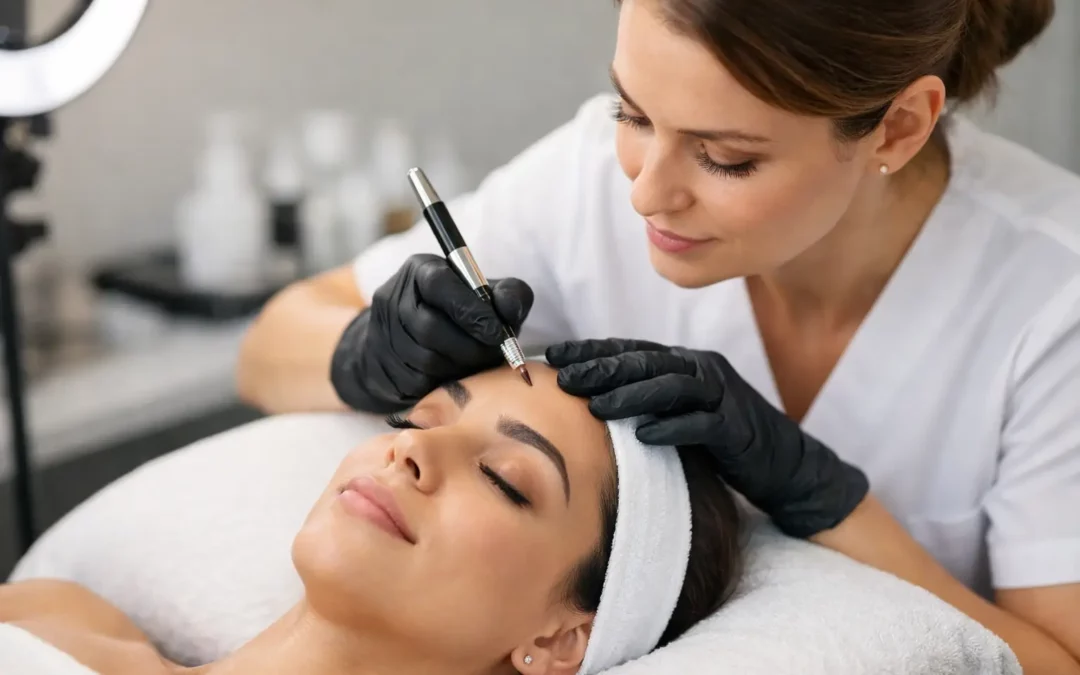
If you are asking can estheticians do microblading, the honest answer is: sometimes, but not automatically. This is one of those beauty industry questions where bad advice can cost you money, your license, or your reputation. Microblading sits in a category that often overlaps with esthetics, tattooing, permanent makeup, and state-specific body art laws, which means your esthetician license alone may or may not be enough depending on which province or state you are in.
That is exactly why this service attracts so much confusion. It is profitable, in demand, and often marketed as a natural next step for brow artists and estheticians. But wanting to offer microblading and being legally allowed to offer it are not the same thing.
Can estheticians do microblading legally?
In some provinces/states, yes. In others, no. And in many cases, the answer is more complicated than a simple yes or no.
Microblading is a form of cosmetic tattooing or semi-permanent makeup. Even though it is commonly offered in salons, spas, and brow studios, regulators do not always classify it as a standard esthetic service. Many states place microblading under tattoo, body art, or permanent cosmetics regulations. That means an esthetician may need a separate permit, a tattoo license, bloodborne pathogens certification, health department approval, or training that goes beyond a traditional esthetics program.
This is where people get into trouble. They assume that because they are licensed to perform facials, waxing, lash services, or brow shaping, they can automatically add microblading to their menu. That assumption is risky. The law does not care what social media says. It cares how your health board, local health department, or local regulator defines the service.
Why microblading (any permanent makeup) is treated differently
Microblading is not just a brow service. It involves breaking the skin and implanting pigment. That single detail changes everything.
Once a treatment crosses into skin penetration, infection control standards become more serious, consent protocols matter more, contraindications matter more, and sanitation failures carry higher consequences. A poor wax can irritate the skin. A poorly performed microblading procedure can lead to infection, scarring, pigment migration, allergic reactions, and long-term dissatisfaction that is much harder to correct.
That is why serious training matters. Not quick certification. Not a one-day class with no live model supervision. Not a trainer who cannot clearly explain your local legal requirements. If you want to build a real beauty career around advanced services, you need education that protects both your client and your business.
What estheticians need before offering microblading
If you are an esthetician who wants to add microblading, start with compliance before curriculum. The first question is not, “Where can I get certified?” The first question is, “What am I legally allowed to do where I work?”
Check your province/state board regulations, county health department rules, and any local body art requirements. Some states allow estheticians to perform certain cosmetic tattoo services with additional education. Some require a tattoo artist license. Some require you to work under a physician or in a specifically approved facility. Some prohibit estheticians from performing microblading entirely unless they hold another credential.
After that, look at training quality. A credible microblading program should cover skin anatomy, brow mapping, color theory, contraindications, client assessment, sanitation, bloodborne pathogens, healing stages, touch-up protocols, and correction awareness. It should also include supervised hands-on practice. If a course only sells you the dream of fast income and skips the legal and safety realities, that is a red flag.
Can estheticians do microblading with a certification alone?
Usually, certification alone is not enough.
This is one of the biggest misconceptions in beauty education. A course certificate proves you completed training. It does not automatically grant legal authority to perform a regulated service. If your province/state requires a tattoo permit, body art registration, facility inspection, or another license category, your certificate does not replace that.
That distinction matters. Too many students are sold on the idea that one class gives them full permission to work. Then they invest in supplies, advertising, and studio setup before confirming whether they can legally take clients. A good educator should never leave you confused on that point.
Training should prepare you to perform the service properly. Regulation determines whether you are allowed to perform it at all.
The business side most new artists underestimate
Even when estheticians can legally do microblading, that does not mean they are ready to offer it well.
Microblading is a skill-based service with a high expectation of precision. Clients are not booking a basic brow wax that grows out in a few weeks. They are trusting you with a result that can stay visible for a long time. That means consultation skills, realistic expectation setting, aftercare education, documentation, and correction planning all matter.
There is also the issue of candidate selection. Not every client is a good fit for microblading. Oily skin, mature skin, previous permanent makeup, certain medical conditions, medications, keloid tendencies, and lifestyle factors can all affect retention and outcomes. An undertrained provider may take every client who asks. A trained professional knows when to say no, when to recommend another brow service, and when powder brows may be a better option.
That kind of judgment protects your work and your reputation. It also separates a serious professional from someone who collected a certificate and started taking bookings too soon.
If you are an esthetician, should you add microblading?
For the right person, yes. But only if you approach it as an advanced service, not a shortcut.
Microblading can be a strong addition for estheticians who already work with brows, skin, and client care. It can expand your income, strengthen your brand, and help you move into more specialized beauty services. For many professionals, it becomes a gateway into permanent makeup and a more advanced business model.
But it is not for everyone. If you are not comfortable with detailed manual work, strict sanitation, healing management, and the pressure of long-lasting results, this may not be the best fit. And if you are hoping for easy money after one quick course, microblading will likely humble you fast.
The artists who do well in this field tend to treat it with respect. They practice consistently, follow regulations carefully, invest in strong education, and understand that real confidence comes from competence.
How to choose the right microblading training
If you are serious about becoming qualified, be selective. The beauty industry has no shortage of low-standard training providers promising overnight success. That kind of education often leaves students with poor technique, weak safety habits, and no real support once class ends.
Look for a program that is transparent about licensing limitations, includes infection control education, offers real hands-on instruction, and teaches business fundamentals alongside technique. You want a trainer who will answer the uncomfortable questions, not avoid them. You want mentorship, not just a certificate photo at the end of the day.
This is especially important if you are already licensed in another area of beauty. Estheticians often assume their prior experience will make advanced brow work easy to pick up. Some parts will transfer, especially client care and sanitation awareness. But pigment implantation is different. Brow design under permanent makeup standards is different. Healing and retention are different. You need education that respects that difference.
For students who want that kind of standards-driven path, Voila Academy is built around the idea that beauty training should be thorough, compliant, and career-minded – not rushed, vague, or careless.
The safest answer to can estheticians do microblading
The safest answer is this: estheticians can sometimes do microblading, but only when province/state and local regulations allow it and only after proper training.
If that sounds less exciting than the promises you see online, good. This is a field where caution is a strength. The right path may take more time, more education, and more paperwork than you hoped. But that is far better than building a business on shaky legal ground or performing a service you were never properly prepared to offer.
A serious beauty career is not built by chasing the fastest certificate. It is built by choosing skills you can stand behind, training you can trust, and standards your future clients will be glad you took seriously.