
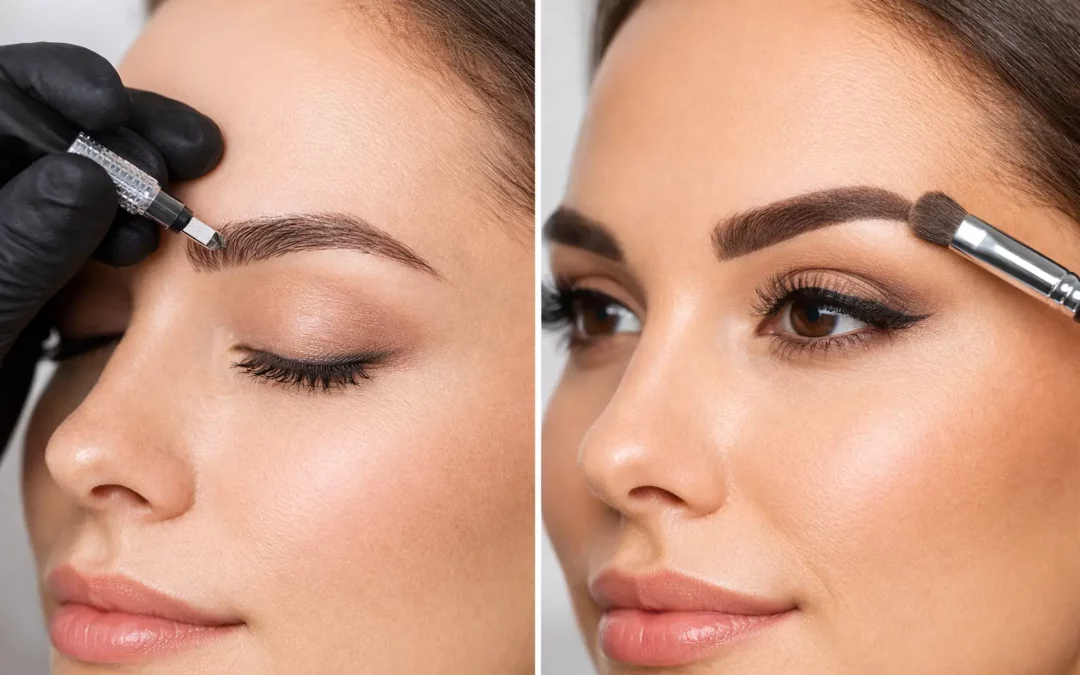
A client sits in your chair holding two saved brow photos and asks the question that comes up constantly: microblading vs powder brows – which one should I get? If you cannot answer that with clarity, you are not just missing a sales opportunity. You are risking a poor result, a difficult healing process, and a client who loses trust in your judgment.
For beauty professionals, this is not a trend debate. It is a consultation skill. The right service depends on skin type, lifestyle, medical history, pain tolerance, desired finish, healing expectations, and long-term maintenance. The wrong service can look beautiful on day one and disappointing a few months later.
Microblading vs powder brows: the real difference
Microblading is a manual technique that uses a handheld tool to create hair-like strokes in the skin. The goal is a soft, natural brow with defined strokes that mimic real brow hair. When it is done well on the right candidate, it can look subtle and refined.
Powder brows use a machine method to implant pigment in a soft, shaded pattern. The result can range from airy and sheer to more defined and makeup-like, depending on the technique and the client’s preference. Many clients describe it as the look of softly filled-in brows rather than individual hair strokes.
That sounds simple, but the finish is only part of the decision. What matters more is how each service performs over time on different skin.
Why skin type matters more than inspiration photos
This is where a lot of newer artists go wrong. They consult based on what the client wants the brows to look like, but they do not weigh whether that look is realistic for the client’s skin.
Microblading tends to perform best on normal to dry skin with smaller pores and good skin integrity. On oily, textured, mature, or acne-prone skin, crisp strokes can blur, heal patchy, or lose definition faster. That does not mean it can never be considered, but it does mean the client needs honest education before committing.
Powder brows are often the safer and more versatile option for oily skin, larger pores, sensitive skin, and clients who wear brow makeup regularly. The machine shading technique usually heals more evenly across a wider range of skin types. It can also age more predictably when compared with strokes that rely on very fine detail staying crisp in the skin.
If you are a service provider, this is where professional standards matter. A good brow artist does not force every client into the same signature service. She recommends what will heal well, hold well, and still look flattering months later.
Best candidates for microblading
Clients with fairly balanced skin, minimal pore visibility, and a preference for a natural hair-stroke effect may love microblading. It can be a strong choice for someone with sparse areas who does not want a makeup finish and understands that healed results are softer than fresh results.
Microblading can also appeal to clients who already have decent brow density and mainly want shape correction or small gap filling. In those cases, a few carefully placed strokes can make a big difference.
Best candidates for powder brows
Powder brows are often a better fit for clients with oily skin, active lifestyles, mature skin, previous brow makeup habits, or a desire for more longevity in visible definition. They are also a smart option for clients who want a polished result without the sharpness of a hard makeup brow.
For many artists, powder brows become the more dependable recommendation because the technique offers flexibility. You can create a very soft healed result or build more intensity, while still working with the skin instead of fighting against it.
Healing and maintenance are not the same
Clients often choose based on the before photo and forget to ask what happens next. As a provider, you need to lead that conversation.
Microblading usually heals lighter and softer than it looks immediately after the appointment. Some areas may fade unevenly during the healing phase, and touch-ups are a normal part of the process. Because the strokes are fine, retention can be less reliable on certain skin types, especially if the client is oily, sweats heavily, uses active skincare, or spends a lot of time in the sun.
Powder brows also go through a healing cycle, often appearing darker at first and then softening as the skin recovers. The finish tends to come back in a more even way, particularly on skin that does not hold hair strokes cleanly. Many clients find the healed result easier to maintain visually because it still reads as intentional brow definition even as it fades.
Neither service is truly maintenance-free. Both require touch-ups, aftercare compliance, and realistic expectations. But if your client wants the option that tends to be more forgiving over time, powder brows often win that conversation.
Pain, trauma, and skin integrity
Clients ask which one hurts more, but the better question is how each technique interacts with the skin.
Microblading involves fine incisions to place pigment. That is why precision, pressure control, and skin assessment matter so much. Poor technique can lead to unnecessary trauma, scar tissue, or strokes that heal too deep and shift in color or shape. This is one reason low-quality training is such a problem in this category. A short course without strong supervision does not prepare artists to judge skin properly or work conservatively.
Powder brows use a machine and can feel more comfortable for some clients, though pain tolerance always varies. The bigger advantage is often control. In trained hands, machine work can allow more consistent implantation with less pressure-related guesswork. That does not make it easy. It makes proper education even more critical.
If you are deciding what to add to your service menu, do not choose based only on what is popular online. Choose based on what you can be trained to perform safely, consistently, and appropriately for different clients.
What clients usually mean when they say “natural”
One of the biggest consultation mistakes is assuming natural means the same thing to everyone.
Some clients say natural and mean, “I want to see tiny hair strokes and almost no makeup effect.” Others mean, “I want my brows to look polished enough that I do not have to fill them in every morning.” Those are not the same request.
Microblading usually suits the first version of natural. Powder brows often suit the second. And sometimes the best answer is a blended approach, where soft machine shading and selective strokes are used together. But that should be based on skill level, skin suitability, and healed-result planning – not on trying to give every client everything at once.
Microblading vs powder brows for beauty professionals
If you are training or expanding your services, this comparison is about more than artistry. It affects liability, retention, client satisfaction, and your reputation.
Microblading is highly marketable, but it is also commonly misunderstood and oversold. Many students are drawn to it because the fresh results photograph beautifully. What they are not always taught is candidate selection, depth control, contraindications, correction strategy, and when to say no.
Powder brows require strong machine knowledge, brow mapping, color theory, and disciplined saturation control. But for many professionals, they offer a more adaptable foundation for long-term permanent makeup work. They can also open the door to more advanced services and corrections.
At Voila Academy, the standard is simple: education should prepare you for real client scenarios, not just ideal models. That means understanding why one brow service is a fit, why another is not, and how to protect both your client and your business by working within proper standards.
So which one is better?
Neither one is better across the board. Better for whom is the only question that matters.
If the client has dry to normal skin, wants realistic hair strokes, and understands the maintenance that comes with that look, microblading may be the right call. If the client has oily or mature skin, wants soft makeup-style definition, or needs a result that typically heals more evenly, powder brows are often the stronger option.
For artists, the real win is not picking a side. It is learning how to assess, educate, and recommend with confidence. That is what separates a technician who performs a service from a professional clients trust.
The brow industry does not need more rushed certifications and one-size-fits-all advice. It needs artists who know when a service is right, when it is wrong, and how to guide clients with honesty. That is how you build results people come back for – and a business people respect.