
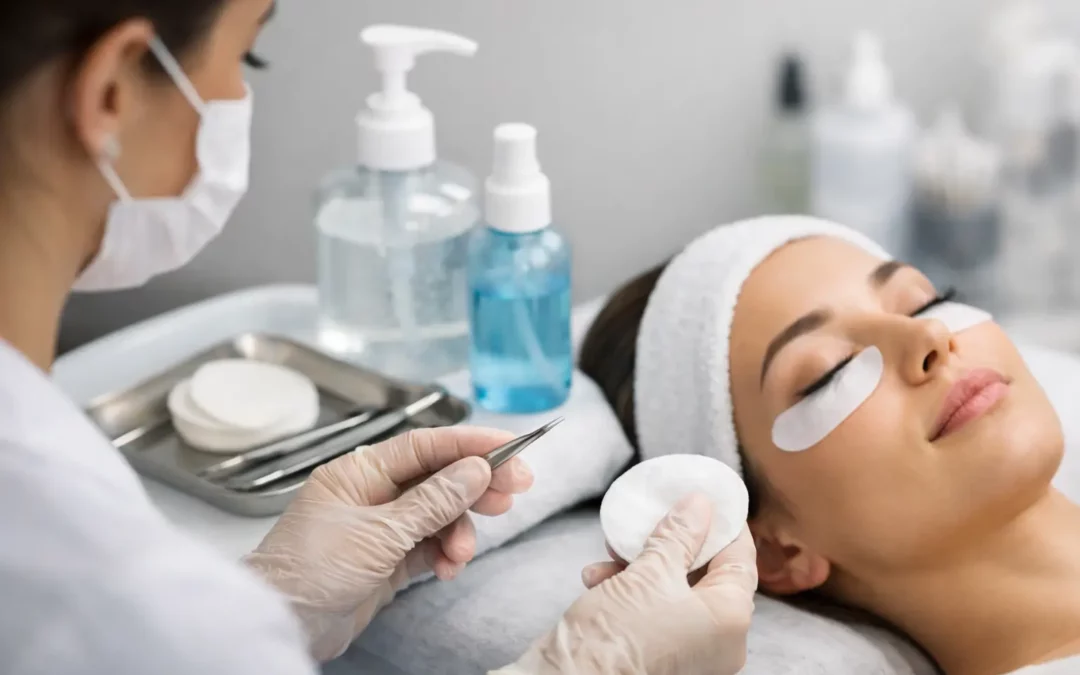
A beautiful lash set can take two hours to create and one careless shortcut to ruin. If you are serious about building a real beauty career, infection control for lash artists is not a side topic. It is part of your technique, part of your client experience, and part of your professional reputation from day one.
This is where a lot of new artists get misled. They are shown styling, mapping, and application speed, but not enough about what keeps clients safe. That gap matters. A full schedule means nothing if your setup is unsanitary, your tools are handled poorly, or your habits create risk for cross-contamination. Clients may not know every technical detail, but they can absolutely feel the difference between a polished professional and someone guessing their way through safety.
Why infection control for lash artists is non-negotiable
Lash services happen close to the eyes, skin, mucous membranes, and respiratory space. That alone puts the service in a category where hygiene standards need to be taken seriously. You are working with tweezers, adhesives, under-eye pads, spoolies, tape, cleansers, and surfaces that are touched repeatedly throughout the day. Every one of those contact points can either support a safe service or create a preventable problem.
The risks are not always dramatic, which is exactly why people underestimate them. Sometimes the issue is obvious, like contaminated tweezers or a visibly dirty bed. Other times it looks smaller – double-dipping product, touching a phone with gloved hands, reusing disposables, or failing to clean between clients with the proper contact time. Those habits add up.
Infection control is also bigger than avoiding worst-case scenarios. It protects client trust. It protects your license where required, your insurance standing, and your business longevity. If you want clients to return, refer friends, and feel safe lying down with their eyes closed, your standards have to be visible and consistent.
Clean, sanitize, disinfect – know the difference
A lot of confusion starts here. If your training did not make these distinctions clear, fix that now.
Cleaning removes visible debris like adhesive residue, skin oils, dust, and product buildup. If a tool or surface still has residue on it, disinfection will not work properly. Sanitizing generally reduces the number of microbes to safer levels, often on hands or certain surfaces, but it is not the same as high-level decontamination. Disinfecting uses an EPA-registered product according to label directions to kill specific pathogens on non-porous surfaces and implements.
For lash artists, this means you cannot wipe something quickly and call it done. Your tweezers, trays, service bed, light handle, cart, and any reusable non-porous tools need a clear process. It also means porous, single-use items should stay single-use. No amount of wishful thinking makes disposables reusable.
Your setup should prevent contamination before the service starts
A clean room is not enough. The way you set up matters just as much as how tidy your space looks.
Start each service with a reset station, not a partially used one. Disinfect surfaces before setup, then lay out only what you need for that client. When artists overcrowd a cart with extra products, open drawers repeatedly, or keep personal items in the treatment area, contamination becomes much easier. Your phone, drink cup, handbag, and lunch do not belong in your lash setup.
Think about workflow. Once you wash your hands and begin service, every touch matters. If you need to reach into a drawer, grab your phone, adjust music, or handle cash, you have broken your clean routine. That means you need to stop and address hand hygiene before continuing. This sounds basic, but it is where many newer artists get sloppy because they are focused on speed.
Professional standards are not built by rushing. They are built by setting up your station so you do not have to cut corners mid-service.
Hand hygiene is one of your strongest infection control tools
Gloves have a place, but they do not replace handwashing. That is one of the most common misconceptions in beauty services.
Wash hands thoroughly before and after every client, after touching your face or phone, after handling waste, and anytime contamination may have occurred. If soap and water are not immediately available, hand sanitizer can help in some situations, but visibly soiled hands still need proper washing.
If you wear gloves for parts of the service, use them correctly. Gloves should be changed when contaminated and never treated like a magic shield that lets you touch everything in the room. Dirty gloves are still dirty. A lash artist who wears gloves while touching door handles, drawers, adhesive bottles, and a client’s face without changing them is not practicing better hygiene. She is just spreading contamination with more confidence.
Tools, disposables, and product handling
Your tweezers deserve special attention because they come close to the eye area and are reused from client to client. They need to be cleaned and disinfected properly after every service according to manufacturer guidance and state board rules where applicable. If your process is vague, it is not good enough.
Disposables should stay disposable. Mascara wands, lip applicators used for sealants if applicable, tape pieces that contact skin, microbrushes, bed paper, under-eye gel pads, and lint-free applicators should not be reused. Saving pennies here is one of the fastest ways to look unprofessional.
Adhesive handling also matters. The bottle tip should stay clean, product should be stored as directed, and anything that touches the client should not go back into the product. Jade stones, glue rings, pallets, and adhesive surfaces need a methodical cleanup and replacement routine. Infection control for lash artists is often lost in these small moments, not just the obvious ones.
Client prep is part of safety, not just retention
Proper cleansing before a lash service is not optional. Makeup residue, skincare oils, debris, and environmental buildup all interfere with retention and create a less sanitary working area. A client arriving with dirty lashes is not just frustrating. It changes the safety and quality of the service.
That does not mean every client with buildup needs to be turned away, but it does mean you need standards. In some cases, a thorough lash bath at the appointment may solve the problem. In others, especially when there is significant debris, irritation, or signs of possible infection, the safer choice is to postpone and refer the client to a medical professional if needed.
This is where confidence matters. You do not need to apologize for protecting a client. If someone has redness, swelling, unusual discharge, broken skin, or signs of a contagious condition, do not work over it. A short-term cancellation is better than a long-term problem.
When symptoms show up, do not play doctor
Lash artists should be trained observers, not medical diagnosticians. You do need to recognize when something looks off, but you should not guess, minimize, or try to treat an eye or skin issue yourself.
If a client reports burning beyond what is typical, persistent redness, itching, swelling, or pain, stop and assess your process. Sometimes the issue is fumes, improper pad placement, sensitivity, or poor isolation. Sometimes it may point to a larger concern that should be evaluated by a healthcare provider. What matters is that you stay within your scope.
The same rule applies to aftercare concerns. Give clear, professional guidance and know when referral is the responsible next step. Protecting your business sometimes means saying, I am not the person to diagnose this.
Licensing, state rules, and training quality
Not every state regulates beauty services the same way, and that creates confusion. Some artists assume that if something is not heavily enforced, it is optional. That is a dangerous mindset.
Your local board rules, facility requirements, and insurance expectations matter. So do the standards taught by your educator. If your course spent hours on styling but brushed past disinfection, PPE, contraindications, and service-room hygiene, that is a red flag. Serious training should prepare you for real client work, not just social media photos.
At Voila Academy, this is treated as foundational because skill without safety is not professionalism. Real education should help you create beautiful work and protect the people paying for it.
Infection control for lash artists is a business decision too
Clients talk. They notice whether your bed is freshly changed, whether your tools come from a clean container, whether you wash your hands without being reminded, and whether your room smells clean instead of neglected. They may not use technical language, but they absolutely register whether your service feels safe.
Strong infection control habits also make you more efficient over time. A standardized reset routine reduces mistakes. A clean station is easier to manage. Proper product handling lowers waste. Clear policies around illness, contraindications, and rescheduling protect your calendar from avoidable problems.
There is a trade-off, of course. Higher standards take time, discipline, and supply costs. Disposable items, quality disinfectants, laundry, PPE, and proper storage are business expenses. But the alternative is far more expensive if it leads to poor outcomes, damaged trust, or a reputation that tells clients you are not ready.
The lash industry does not need more artists chasing speed while ignoring standards. It needs professionals who understand that safety is part of the service itself. Build your career that way from the beginning, and your clients will feel the difference before you ever pick up a tweezer.