
A certificate means very little if your hands are not ready for real clients. That is the problem many beauty students run into after taking crowded, low-accountability courses that promise speed but skip the details that protect results, retention, and client safety. Private beauty training classes appeal to students who do not want a rushed overview. They want real correction, real practice, and real standards.
In beauty education, personalized instruction is not a luxury add-on. In many cases, it is the difference between learning a service and actually being able to perform it confidently on paying clients. That matters whether you are brand new to lashes, adding brow services to your menu, or stepping into permanent makeup where precision and sanitation are non-negotiable.
What private beauty training classes actually offer
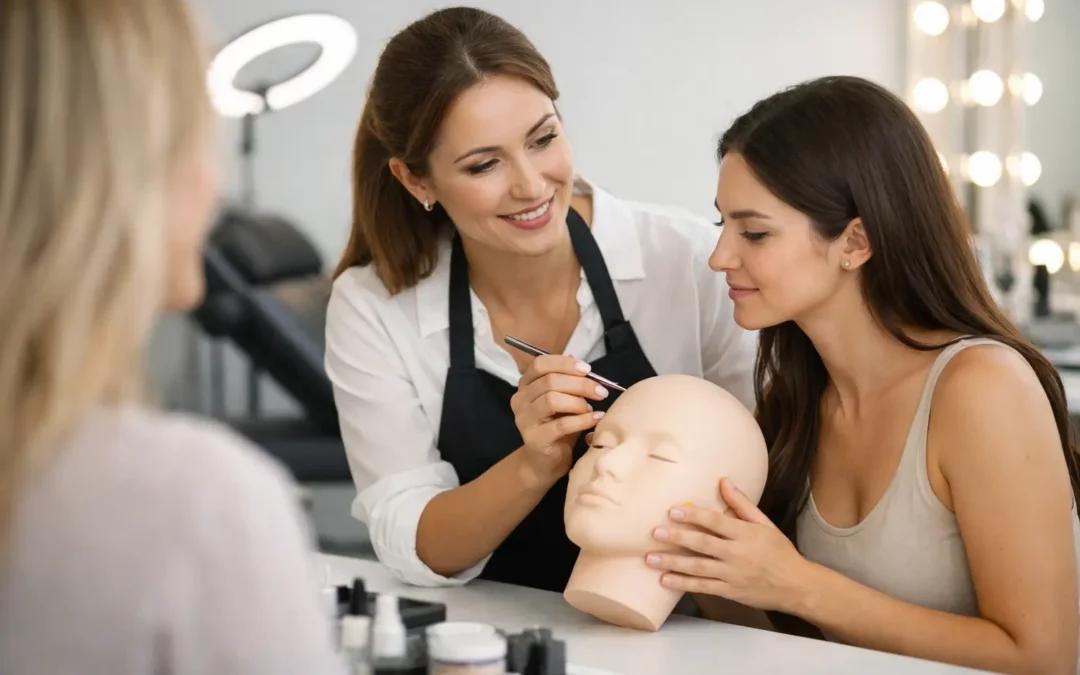
Private beauty training classes create room for focused teaching that group courses often cannot deliver. When a trainer is working closely with one student or a very small number of students, they can watch every step, from how you isolate a lash to how you hold your tool, map a brow, control pressure, or set up a sanitized station.
That level of attention changes the learning experience. Instead of quietly repeating mistakes through the entire day, you get immediate correction. Instead of leaving with unanswered questions, you can slow down and work through technique, product choice, skin considerations, contraindications, and client communication in real time.
This is especially valuable in services where tiny errors have visible consequences. Lash placement affects retention and natural lash health. Brow symmetry affects the whole face. Wax temperature and application affect skin integrity. In permanent makeup, poor depth control or weak pre-draw habits can create results that are difficult to correct. These are not minor details. They are your reputation.
Why private beauty training classes work better for many students
Not every student learns at the same pace. Some need more repetition before a movement feels natural. Others learn quickly in one area but need extra help with consultation, color theory, mapping, sanitation, or photography. In a standard class, the schedule usually moves on whether you are ready or not.
Private training gives you a chance to work at a pace that matches your actual skill level. That can make the training more efficient, not less. You spend less time waiting for a room full of people to catch up and less time pretending you understand something you are not comfortable performing yet.
There is also a confidence factor that should not be ignored. Many beginners are hesitant to ask basic questions in a group setting, especially if they are switching careers or entering the industry later in life. Private instruction creates a safer space to ask what you need to ask. That honesty often leads to better outcomes because gaps get addressed early.
For experienced artists, the value looks a little different. If you already offer services and want to expand into lash lifts, brow lamination, henna brows, facial waxing, or permanent makeup, you may not need broad beginner education. You may need targeted refinement, service integration, pricing guidance, or troubleshooting based on your current workflow. Private education can meet you where you are instead of forcing you through material that does not apply.
The real advantage is not just technique
A lot of low-cost education focuses on the exciting part of beauty training – the service itself. But professional success depends on more than learning the steps in order.
Strong training should also cover infection control, client screening, consent, aftercare, product chemistry, setup standards, contraindications, and what to do when a service should not be performed. If an educator skips those topics or brushes through them quickly, that is a serious problem. You are not just learning how to create a look. You are learning how to work responsibly on real people.
That is where private instruction can become even more valuable. You have time to discuss the why behind the rules. You can walk through scenarios that happen in real treatment rooms. You can ask what to do if a client shows up with compromised skin, previous permanent makeup, lash damage, sensitivities, or unrealistic expectations. Good mentorship prepares you for those moments before they cost you money or credibility.
Business guidance also matters. Many students are not training for a hobby. They are training because they want income, independence, and a service menu that can grow with them. A serious educator should be willing to talk about pricing, timing, model practice, client retention, portfolio building, professionalism, and what it takes to become referral-worthy. Skill without structure can still leave you stuck.
Who should consider this format
Private beauty training classes make sense for beginners who want a stronger foundation from day one. They also make sense for licensed professionals and beauty providers who are adding new services and cannot afford sloppy crossover learning.
This format is often a strong fit for students who have already taken a course elsewhere and left feeling underprepared. That happens more than it should. A certificate was issued, but the student still does not feel safe taking clients. In that situation, private retraining can help rebuild technique correctly before bad habits become harder to fix.
It is also ideal for students pursuing advanced services where mistakes carry higher stakes. Microblading, powder brows, lip blush, eyeliner, and other permanent makeup services require precise theory and controlled hands. These are not services to learn through shortcuts, vague instruction, or social media clips.
What to look for before you book
Not all private training is automatically high quality. Some educators use the word private as a selling point while still delivering weak curriculum, minimal support, or unverified experience. The format helps, but the trainer and standards matter more.
Start with transparency. You should know who is training you, what their background is, what is included, how hands-on the course will be, and whether sanitation and health guidelines are built into the curriculum. If that information is vague, take it seriously.
You should also look for signs that the educator values accountability over hype. That means clear training outcomes, honest discussion about practice requirements, and no promises that one day of class will instantly make you an expert. Serious educators do not sell fantasy. They prepare you for the work.
Insurance, licensing where applicable, and compliance education are also worth paying attention to. Beauty is full of people teaching services they are not qualified to teach or offering courses without the structure needed to support students responsibly. A lower price can become very expensive if the training leaves you with poor habits, legal confusion, or unsafe technique.
At Voila Academy, this standards-first approach is central for a reason. Students do better when training is built on mentorship, technical correction, safety, and real-world business expectations rather than shortcut marketing.
The trade-off students should understand
Private training usually costs more than a large group class, and that is not necessarily a red flag. Personalized instruction requires more trainer time, more direct feedback, and often more customized support. If your goal is to become truly competent, that higher investment can make sense.
But it depends on your goals. If you are only exploring a topic casually, private training may be more than you need. If you are building a business, protecting your license, or adding high-ticket services, the extra attention can save time, re-training costs, and avoidable mistakes later.
The better question is not whether private education is cheaper. It is whether the training prepares you to work at a professional standard.
Private training and long-term career growth
The beauty industry rewards artists who are consistent, safe, and skilled enough to keep clients coming back. That does not happen from watching a trainer perform a service once and hoping your kit fills in the gaps.
Private beauty training classes can create a stronger path because they support actual skill development, not just course completion. You learn how to think like a professional, not just copy a sequence. You build better habits early. You understand where errors come from. You become more prepared to offer services with confidence and to keep improving after the class ends.
If you are serious about building a beauty career, choose education that treats your future like it matters. Fast and cheap can look attractive at the start, but weak training has a way of showing up later in your work, your confidence, and your client results. Strong education asks more of you, but it also gives you more to build on.
The right training should leave you challenged, clearer, and better equipped than when you walked in. That is the kind of education worth betting your name on.